Get Full Government Meeting Transcripts, Videos, & Alerts Forever!
Get email alerts on the Social Services Budget And Foster Care Rate Reform topic
No spam. Unsubscribe anytime.
Maryland DHS Defends Foster-care rate reform as analysts warn of shortfalls and data gaps
Summary
At a Feb. 26 Health and Social Services Subcommittee hearing, Department of Human Services officials described a new foster‑care rate structure and data improvements while the Department of Legislative Services urged budget restrictions, a rate rollback and additional reporting to address projected deficits and reporting gaps.
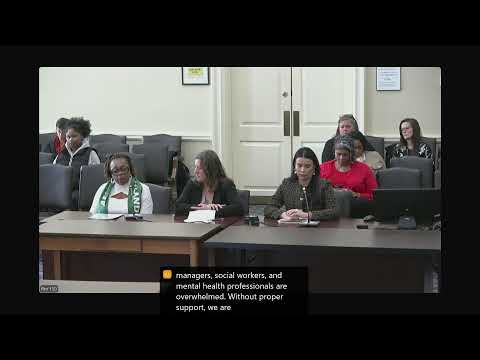
At a Feb. 26 Health and Social Services Subcommittee hearing in Annapolis, the Department of Human Services (DHS) defended a newly implemented foster‑care provider rate structure and data improvements while staff from the Department of Legislative Services (DLS) urged the committee to adopt budget restrictions and additional reporting to address projected shortfalls and gaps in federally reported child welfare data.
DLS presented an analysis saying the Social Services Administration operating allowance for fiscal 2026 increases by $11,800,000 (1.5%) to $791,200,000 and identified a proposed deficiency of $47,300,000 (including $18,500,000 in general funds and $28,500,000 in federal funds) largely tied to foster‑care shortfalls. A DLS analyst told the subcommittee that DLS estimates purchased‑institution annual costs will reach about $170,000,000 in fiscal 2026 — roughly $50,000,000 higher than fiscal 2024 — and recommended several committee actions, including adopting budget bill language to withhold funds pending submission of missing management‑for‑results (MFR) data and a 5% rate reduction for institutional providers in fiscal 2026 to save an estimated $8.5 million.
Carnitra White, principal deputy secretary of the Department of Human Services, said the department does not concur with DLS’s recommended rate reduction and emphasized that October 1, 2024, rate reform is a central strategy for reducing out‑of‑state placements, hospital overstays and hotel placements. "Rate reform is a key factor in assisting us in addressing these systemic issues in our continuum of care," White said. She described the department’s ‘‘Family Matters’’ initiative and said DHS is implementing new data systems and public dashboards to improve reporting and transparency.
DHS officials acknowledged data limitations. The department said it discovered overcounts in federally reported child maltreatment fatalities in NCANDS (the National Child Abuse and Neglect Data System); DHS reported it submitted corrective reports for federal fiscal 2024 and is working with federal partners to correct 2023 data. The principal deputy secretary said DHS will build a data office and publish interactive dashboards that break out placement and permanency measures by jurisdiction and that the department will revise MFR measures to align with the new data approach.
On placement and cost trends, DLS told the subcommittee that foster‑care maintenance payments account for the largest share of agency spending (about $395.6 million, or roughly 50% of the administration’s budget) and that personnel expenses are the second largest category (about $297.6 million, or roughly 38%). DLS reported that average monthly payments for purchased institutions rose about 19.5% in fiscal 2025 prior to rate reform and increased a further 19.2% after the reform’s implementation; DLS flagged these increases as a primary driver of the forecasted shortfalls.
DHS officials described steps they say are already reducing hospital overstays and hotel placements. White said DHS counted 16 youth in hospital overstays and 28 in hotels on Feb. 26, 2025, and later reported that the number of youth in hospital overstays had declined to 12. She said the agency worked with local departments, schools, Behavioral Health Administration and Developmental Disabilities Administration to create enhanced programs for youth with complex needs; DHS officials credited the new rate categories with creating incentives for providers to develop programming for difficult placements.
On federal reimbursement and program eligibility, DHS reported it is working with the Maryland Department of Health and Department of Budget and Management on Medicaid claiming for residential interventions and on changes required under the Family First Prevention Services Act (FFPSA) and Title IV‑E. Dr. Algiers Studd Still Jr., identified as executive director of the Social Services Administration, said the department has revised how providers obtain Qualified Residential Treatment Program (QRTP) designation and reported that the number of QRTPs grew to eight in fiscal 2025.
Child welfare workforce and reporting were also discussed. DLS noted a vacancy rate of about 8.4% as of December 2024 and said total vacant positions had declined by approximately 120 since December 2023, with the largest number of vacancies in child welfare services. DHS described continuous recruitment efforts, including outreach to bachelor‑level candidates and other strategies to reduce vacancies.
Advocates and providers who testified urged full funding for rate reform. Teresa Hessler of the Maryland Association of Resources for Families and Youth (MARFY) and Shannon Hall of the Community Behavioral Health Association of Maryland asked the committee not to adopt DLS’s proposed cuts, saying underfunding jeopardizes placements and staffing and can force children into hospitals, motels or unlicensed settings. Mary Towns, AFSCME Local 112, urged additional front‑line staffing and local supports to keep youth safe.
DLS recommended a package of committee actions — including withholding specified funds until DHS provides updated MFR and placement data, requiring reports on hospital overstays and hotel placements, and adding language to the Budget Reconciliation and Financing Act of 2025 to limit rate increases — but no formal committee vote occurred during the hearing. DHS asked for different report due dates in several cases and reiterated its opposition to the proposed 5% reduction in provider rates for fiscal 2026.
What happens next: DLS’s analysis and recommended language will inform negotiations over the fiscal 2026 budget and any budget bill amendments. DHS told the subcommittee it plans to publish interactive dashboards and said it will submit several reports requested by DLS on timelines the department proposed during the hearing. The subcommittee did not take a formal vote during the session.
Sources: Department of Legislative Services presentation and recommended actions to the Health and Social Services Subcommittee; testimony from Carnitra White, principal deputy secretary, Department of Human Services; testimony from Dr. Algiers Studd Still Jr., executive director, Social Services Administration; testimony from provider and labor representatives.