Maglev funding ban draws divided testimony as proponents warn it could foreclose future options
Summary
House Bill 400 would bar Maryland appropriations for magnetic levitation (Maglev) systems. Supporters said it protects state finances and the environment; opponents argued the prohibition is premature and could prevent future intermodal investments or fiscal choices.
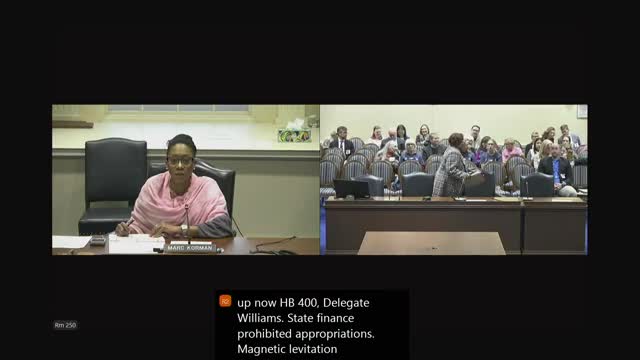
House Bill 400, sponsored by Delegate Nicole Williams, would prohibit Maryland from using appropriated state funds for a proposed magnetic levitation (Maglev) passenger rail system. The committee heard sharply divided testimony on the bill; proponents said the state should not commit taxpayer resources to an unproven, expensive private project, while opponents — including project proponents, contractors and some business and labor groups — said an outright ban could create unintended consequences and foreclose future state decisions.
Delegate Williams, the bill sponsor, told the committee she supported mass transit generally but argued private companies that propose speculative, high‑cost technologies should not expect state taxpayers to finance construction. "We feel that that private entity and that private company should absorb the cost for the construction of that transportation system," Williams said.
Supporters of HB 400 included labor and municipal officials who cited uncertain project financing, possible environmental impacts, and the need to prioritize investment in existing rail and transit services. David Pendleton, representing SMART Transportation Division members in Maryland, said the estimated Maglev construction costs (testimony referenced estimates from $10 billion to $26.5 billion) would not be an appropriate diversion of scarce public funds.
Opponents — including Baltimore Washington Rapid Rail (project proponent), the Maryland Hispanic Chamber of Commerce, and several minority‑business advocates — requested an unfavorable report. Project advocates said the private developer has not requested state funds, argued the project could relieve capacity pressures on MARC and Amtrak, and warned that a statutory prohibition could prevent future legislative consideration of intermodal or connectivity investments tied to any high‑speed project.
Committee members focused questions on the bill's potential to close off future options. Project opponents said that while the developer is not seeking state appropriations now, future choices (for example intermodal connections, rights‑of‑way, or targeted state investments) could benefit from legislative flexibility. Several witnesses asked the committee to allow studies, permitting and federal reviews to proceed and to avoid an absolute, long‑term ban.
Ending: The hearing concluded with no committee vote. Supporters urged a favorable report to block future state expenditures tied to Maglev; opponents asked for an unfavorable report so future options would remain available and noted federal and private funding processes were ongoing.