Get Full Government Meeting Transcripts, Videos, & Alerts Forever!
Get email alerts on the State Finance Investments topic
No spam. Unsubscribe anytime.
Wyoming debate over 'Wyoming Gold Act' centers on physical metal, alternative investments and bitcoin
Summary
Lawmakers in the Wyoming House debated Senate File 96, the "Wyoming Gold Act," for more than an hour, considering amendments on study funding, how the state would hold precious metals, and whether to allow investment in bitcoin and other instruments. Several amendments failed on recorded roll calls.
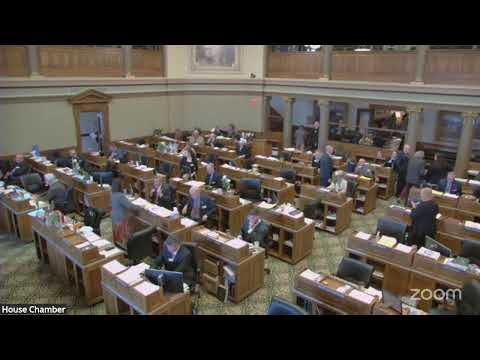
The Wyoming House debated Senate File 96, titled the "Wyoming Gold Act," which would give the state authority to acquire gold and related precious-metal investments, during a lengthy floor session on Feb. 18.
Supporters said the measure would give the state an inflation hedge and another asset class for state reserves. Opponents warned of costs, storage logistics and that the state's existing investment apparatus already holds inflation-protecting assets.
The bill drew a string of floor amendments. Representative Larson moved an amendment to appropriate $50,000 to the Department of Revenue to fund a study the bill would require; the amendment was moved on the floor. Representative Yen and other members then offered additional amendments to change whether the state holds physical metal or certificates, to broaden allowable investments to include exchange-traded funds and Treasury Inflation-Protected Securities (TIPS), and to allow bitcoin purchases.
Lawmakers debated whether the state should hold physical bullion, certificates that represent ownership, or financial instruments that permit delivery of metal. Speaking in favor of holding physical metal, several members argued bullion would provide a tangible hedge in an economic collapse scenario. Those favoring nonphysical instruments said certificates, ETFs or TIPS reduce storage and custody costs while preserving exposure to precious metals.
A floor amendment to require the Department of Revenue study was presented as a way to give the agency resources (the amendment referenced $50,000). Representative Larson argued the appropriation was needed because the original bill required a study without providing funding. Representative Bair and others countered that the state’s investment apparatus already invests in inflation-hedging assets and that additional line-item funding may be unnecessary.
A high-profile amendment proposed adding bitcoin as an allowable asset. Representative Wasserburger moved that the state invest $1 million in bitcoin alongside gold; proponents said bitcoin and gold are complementary stores of value, portable and divisible, and that bitcoin has outperformed other asset classes in recent years. Opponents said bitcoin’s volatility and technical risks (including concerns raised about future quantum computing advances) made it inappropriate to graft into this bill; some members urged a standalone bill if members wished to pursue cryptocurrency investments.
Recorded roll calls on the floor showed several amendments were not adopted. The chamber recorded a vote rejecting a Yen amendment (second reading amendment number 2) by voice and later roll call: 14 ayes, 46 no, with 2 excused. Another amendment to add bitcoin (second reading amendment number 4) was not adopted; the division count reported later was 28 ayes and 32 no. Other proposed amendments to broaden investment options or require delivery through funds that enable delivery of physical gold were also considered but ultimately not adopted on the floor.
Throughout the debate, members repeatedly framed the issue two ways: as a hedge against inflation and as a precaution for a low-probability “black swan” event. Multiple members urged caution about custody costs and counterparty risk; others urged giving the state flexibility to use instruments (ETFs, futures or funds that can take delivery) rather than always requiring direct possession of bullion.
The floor record shows numerous failed amendment votes and extended debate, but does not record final enactment of the bill in this session excerpt. Several amendments were explicitly rejected on recorded roll calls; the bill remained on the calendar for further action beyond the debate captured in the transcript.
The debate illustrated divisions among lawmakers over the state's role as an investor, how to weigh inflation protection against custody costs and whether the Legislature should direct specific asset classes rather than leave allocation decisions to the state's investment professionals.