Get Full Government Meeting Transcripts, Videos, & Alerts Forever!
Get email alerts on the Infrastructure topic
No spam. Unsubscribe anytime.
Long Beach receives update on sewer consolidation; pipeline and marsh restoration work underway
Summary
Engineers told the council the city’s wastewater treatment plant will be converted to an influent pump station and a 24-inch force main will carry flows to the South Shore plant. Construction is scheduled through 2027 with major disturbance of park areas expected to end this summer.
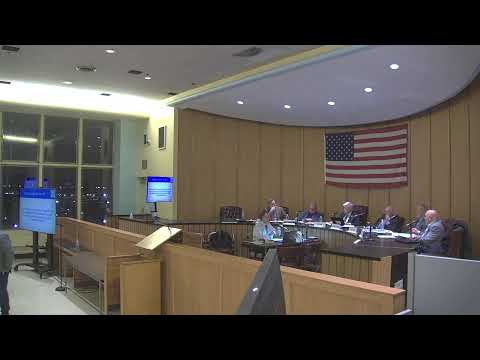
City officials and the engineering team gave the Long Beach City Council a progress report on the sewer consolidation project, which will convert the city’s wastewater treatment plant into a storm- and flood-hardened pump station and send treated flow through a new force main to a county facility for higher-level treatment.
Eric Mills, representing Hazen (the joint-venture contractor), said the project’s core work includes converting the plant’s influent pump station, installing an equalization tank to manage seasonal flow swings, and building a 24-inch force main using horizontal directional drilling in three segments.
Mills said the first HDD segment — from The Mainland area over to Pearsall’s Hassock — has been completed and crews are drilling the second segment. He said the contractor expects to be “totally out of this space by July,” with the broader construction program continuing through March 2027. He added the county will take over key pump stations and perform storm-hardening work so service continues during major storms.
Project proponents said the consolidation should reduce nitrogen loading in the Western Bays and work in tandem with the Bay Park Conveyance Project, which will send much of the area’s dry-weather flow to a deep ocean outfall at Cedar Creek. One councilmember called the combined program “probably the biggest environmental project Nassau County has done in decades.”
Mills also described wetlands and marsh restoration that will be executed as part of permitting commitments and mitigation; he said the restoration will repair previous scars created by outfall construction in the 1960s and extend remediation to areas affected by nitrogen pollution.
On funding, Mills said early state grant support had been front loaded through the Governor’s Office of Storm Recovery (GOSR); when that office transitioned to an office called Resilient Homes and Communities (RHC) the funding pathway was preserved. He told the council the structure had been designed to avoid risk of losing grant dollars.
Councilmembers asked about past delays and whether the project is now likely to meet the spring 2027 target; Mills pointed to earlier permitting issues and an unexpected mercury discovery during construction that required DEC coordination but said the major hurdles have been cleared.
Mills summarized the water-quality impact: during dry weather today roughly 70 to 75 million gallons a day of treated effluent are discharged near the Long Beach coast; the new projects will stop most of that local discharge and send it offshore for higher treatment and dilution.
The presentation closed with schedule and public-notice commitments; county cut-and-cover work on the far side of the conveyance will continue as Long Beach pipeline work winds down during the calendar year, and staff said updates will be posted on a project website.