Get Full Government Meeting Transcripts, Videos, & Alerts Forever!
Get email alerts on the Special Education topic
No spam. Unsubscribe anytime.
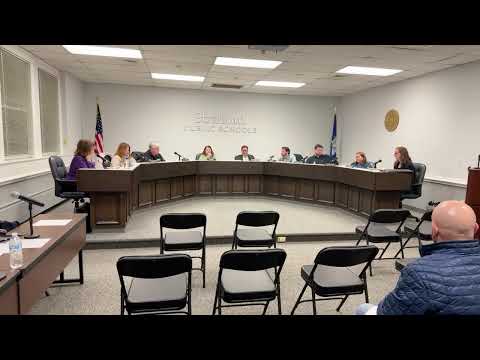
Stratford projects roughly $1 million special-education shortfall; superintendent urges state action
Summary
At a Jan. 27 finance committee meeting, Stratford School District staff reported a multi-million-dollar special-education deficit and described ongoing steps to reduce costs while urging the state for greater excess-cost funding and oversight of out-of-district placements.
Jan. 27 — Stratford School District officials told the district finance committee that special-education costs remain significantly above budget and that current projections show about a $1,000,000 shortfall for the fiscal year unless state aid or other offsets materialize.
The committee heard that the district’s special-education deficit was about $2,500,000 as of December and that the transportation line for special education was roughly $162,000 in deficit. District finance staff said they expect some savings in salaries, benefits and fuel, but cautioned the figures are fluid and can change as positions are filled or new needs arise.
The shortfall matters because the district may need a supplemental appropriation from the town if state excess-cost funding does not cover the increase. Miss Mangini, Stratford School District finance staff, told the committee, “it is approximately 2500000.0 as of the December. And the transportation account for SPED is about a hundred and $62,000 in deficit currently.” She added, “we are projecting approximately a $1,000,000 deficit.”
Superintendent (name not specified in the transcript) described both local cost-control steps and a push for state-level changes. The superintendent said Stratford has renegotiated contracts with some service providers and reduced the high-cost figure from about $2,800,000 to $2,508,000 through those talks. The superintendent also said she has co-signed letters with regional superintendent groups asking the state for sustainable excess-cost funding and for caps or limits on what out-of-district placements may charge districts.
“We are now up a hundred and 6 students more. We're at the highest our district has ever been with 1,482 students with exceptionalities,” the superintendent told the committee, adding that the district seeks stronger oversight of out-of-district placements and more reliable, predictable state funding.
Committee members and staff described how state guidance on excess-cost reimbursement is still preliminary. Town staff said the state had, at the time of the meeting, indicated a conservative preliminary funding level of about 62% of the prescribed formula (up to four times the per-pupil amount), but that districts and towns were monitoring related legislation and awaiting final figures. District staff said the first state payment usually arrives in March and that the percentage the state uses will materially change the town’s revenue picture and whether a supplemental appropriation is needed.
On cost-control measures, district staff said they had renegotiated with multiple vendors who supply behavioral therapists, nurses and related contracted services. The superintendent and finance staff emphasized that special-education expenditures are volatile — driven by new student registrations, evaluations and out-of-district placements — and asked the board and community to join in advocacy for state funding changes.
Looking ahead, district staff said they will continue to monitor spending and update the committee and that they will provide the board with copies of advocacy letters and additional monthly projections as the state releases updated excess-cost figures.