Get Full Government Meeting Transcripts, Videos, & Alerts Forever!
Get email alerts on the Budget topic
No spam. Unsubscribe anytime.
Stratford superintendent proposes modest, stability-focused 2025–26 budget; no staff cuts
Summary
Acting Superintendent Heather Burgess presented a proposed 2025–26 budget that aims for stability, funds negotiated wage increases and special education, and relies on state excess-cost funding for some special-education placements. Board members asked for more detail on special-education tuition, transportation and CTE expansion plans.
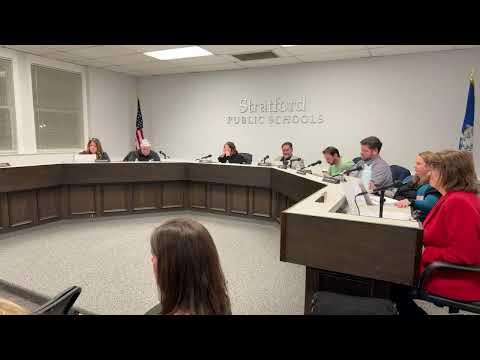
Acting Superintendent Heather Burgess presented the Stratford School District’s proposed budget for the 2025–26 school year at the finance committee meeting on Monday, Feb. 3, emphasizing stability and no reductions in staff.
Burgess said the proposal is “not just a budget. It's a commitment to advancement, to excellence, and to ensuring that the Stratford Public Schools is positioned to thrive.” She described the plan as a modest increase over the current year and said it prioritizes contract commitments, staff wages and services for students with disabilities.
The superintendent’s office identified three primary drivers of the increase: staff wages (a $4.2 million, roughly 3.2% increase tied to negotiated contracts and step movement), benefit costs (about $2 million, or 1.5%), and special-education services (about $1.2 million, or 0.9%). Burgess said administrators are not proposing cuts to positions for 2025–26.
Special-education tuition and the district’s budgeting methodology drew detailed questions. Burgess told the committee that the district’s method reduces the budgeted tuition line by roughly $3.0 million and that the district would request the remainder through the state’s excess-cost grant as needed. She said, “so we're taking a conservative approach knowing we have the excess cost funding that we can go for. So we reduced this budget by 3,000,000, and we will request that money through the excess cost funding as we need it. We may need less than 3,000,000 if they cap things or do things appropriately. We may need more. We don't know.”
The presentation also noted a substantial methodological change in how special-education tuition is presented in the budget book: the tuition line shown to the committee reflects a netting approach, and Burgess said the district expects total proposed special-education tuition of about $8.2 million under the revised presentation. The committee identified a discrepancy between a figure on the committee summary page and the detailed 500-series lines in the budget book; staff explained the difference is that the summary line mixes regular and special-education tuition entries, and the fuller breakout appears deeper in the budget documentation.
Transportation costs are projected to rise even as regular-route ridership falls due to redistricting. Regular student transportation was projected at about $2.6 million; the district’s special-transportation budget was presented as $6,058,990 and described as up roughly 3.95% overall, with special-education transportation increases larger (about 4.56% in the 500-series). Burgess and staff explained the increase is driven by limited vendor availability and higher prices for specialized out‑of‑district routes, and by increases in some vendor contracts (Durham was cited by staff as a vendor with a modest increase).
Committee members raised curriculum and program concerns. Several members asked why the proposed budget does not include expansion of career and technical education (CTE) programs such as culinary or medical pathways. Burgess and other administrators said expansions will likely depend on grant funding and capital improvements; she noted capital and feasibility planning (including a Bunnell feasibility study funded in the capital plan) could enable future CTE growth, but the operating budget as proposed focuses on a foundational year without adding recurring positions.
Board members also asked about federal and state grant risk. Burgess said district staff had received notifications indicating Title I and certain federal safety-related grants were expected to continue; she and staff said they are actively pursuing additional competitive grant opportunities and had brought in additional LEAP grant funds for chronic-absence interventions and expanded health-clinic funding.
Discussion touched on negotiated contracts. District staff confirmed the negotiated teacher and other contracts include both a flat percentage increase and step movement, and that the combined effect is reflected in the roughly 5.6% increase shown in salary lines when step movement and contract increases are combined.
Committee members generally praised the presentation as a “foundational” budget year; several said they would like one or two additional budget workshops to digest line‑item details before final action. The meeting closed without a vote on the budget; the only formal action recorded at the session was a motion to adjourn, which passed unanimously.
The administration said next steps include further finance-committee review, workshop sessions on salary/benefits and curriculum, and a final approval by the full board before submission to the town. Staff invited committee members to submit written questions ahead of the next workshop to allow more detailed answers.