Get Full Government Meeting Transcripts, Videos, & Alerts Forever!
Get email alerts on the Curriculum topic
No spam. Unsubscribe anytime.
Goose Creek CISD reviews Bluebonnet Learning materials amid concerns about historical accuracy and religious references
Summary
Board and staff reviewed the state'driven Instructional Materials Review and Approval process and local feedback on the Bluebonnet Learning curriculum; speakers described a committee process, public comment window and plans to "adopt, adapt, advise or abandon" specific lessons before classroom implementation.
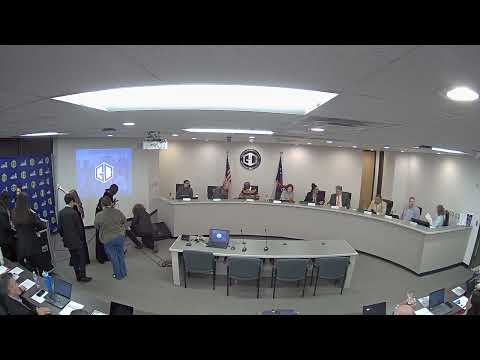
Anaya Garcia told the Goose Creek CISD Board of Trustees on Feb. 17 that she opposed adopting the Bluebonnet Learning curriculum, saying the materials "downplay critical historical events such as the systemic oppression of indigenous people and the institution of slavery" and that some lessons "present these ideas from a particular religious perspective." Garcia addressed the board during citizens participation after signing up to speak.
The board then heard a detailed presentation from curriculum staff and the district'wide committee that reviewed Bluebonnet under the state'mandated instructional material review process. Superintendent Randy O'Brien and instructional staff described a multi'step review established under House Bill 1605 and the Instructional Materials Review and Approval (IMRA) process, and recommended using a local adoption approach that would allow revision before or after classroom rollout.
Why it matters: The Bluebonnet review touches on academic content, religion in schools and local control of reading and language arts instruction. Staff told the board that the district can revise or remove individual lessons while still adopting the larger curriculum framework, and that state law and TEA guidance require districts to make any local adjustments public.
Staff described the review and the committee'driven decision framework. "Adopt, adapt, advise, and abandon" were the four recommendation options used by the committee, according to staff. Curriculum staff said the district sent 146 invitations to participate; 74 people accepted and committees reviewed public feedback. One staff presenter said the committee received 60 direct parent responses during the district comment window and later referenced a larger set of about 160 public comments gathered through TEA and local outreach.
The presenters singled out three areas of concern reported by parents and committee members: curriculum appropriateness and engagement, historical accuracy and diversity of perspectives, and the volume or partiality of religious references in some reading'language arts (RLA) units. A district staff member summarized the committee'level findings for ELA: many units were recommended for adapt or advise rather than wholesale abandonment, but certain lessons or passages were identified for removal or replacement where they contained explicit religious language or where lesson removal would not create unacceptable skill gaps.
On religious content, staff told the board that the skills portion of the curriculum contained almost no religious references and that the references were concentrated in the RLA knowledge units. One presenter said, depending on the grade level audited, about "4 to 8% of those lessons" in the RLA units contained religious references and later summarized that roughly "2 to 6%" of audited lessons had material that might need advisement or removal. The presentation emphasized that local pacing guides would note any adjustments and that House Bill 1605 requires the district to publish those changes to families.
Board members asked how revisions would be made and who would make them. Staff said the district will use committees made up of teachers, campus leaders and community representatives to recommend specific adaptions and that local pacing guides would record lesson-level adjustments. "We will have a committee. We have teachers, TLCs, and even community people that are involved in that," a staff member said. The Bluebonnet materials are already available online, staff said, and the district'hosted web page includes unit materials, family letters and a mechanism for submitting feedback.
On implementation and timeline, staff told the board that if the board approves moving forward, the district would begin professional development and onboarding in spring and summer 2025. Staff also noted that some campuses have piloted related materials (referred to in the presentation as Amplify or Bluebonnet math products such as Eureka/Carnegie) and cited early local assessment gains when the materials were used in combination with targeted tutoring.
Public and board reaction: A number of board members asked whether the district should delay a formal adoption vote until the committee had completed revisions to any lessons that raise constitutional concerns about religious instruction. One trustee said it would be difficult to vote for materials that were "potentially unconstitutional" without first seeing proposed revisions; other trustees and staff replied that the locally driven adopt/adapt/abandon process and the publication requirements under HB 1605 were designed to allow a district to adopt the curriculum while still removing or modifying problematic lessons.
The district recommended continuing with the IMRA process and completing committee revisions and public posting of any modifications before classroom instruction begins. No formal vote to adopt Bluebonnet Learning was recorded in the Feb. 17 meeting; staff said a later action item would be brought to the board after committee recommendations and required public posting of revisions.
Staff and speakers (selected): Anaya Garcia, public commenter; Randy O'Brien, superintendent; Ms. Flusche, instructional staff (IMRA presentation); Ms. Cornelius, math lead (secondary); Sarah (committee member/staff, named in presentation); Trustee Jackson (board member) and other board trustees who asked questions.
What happens next: Curriculum staff said the district will post the Bluebonnet materials and a new ongoing feedback link on the district webpage, continue committee work through spring, produce pacing guides that document lesson'level changes, and provide summer professional development before any districtwide classroom implementation.