Get Full Government Meeting Transcripts, Videos, & Alerts Forever!
Get email alerts on the Water Policy topic
No spam. Unsubscribe anytime.
Ivins commission begins review to remove secondary irrigation requirement from subdivision ordinance
Summary
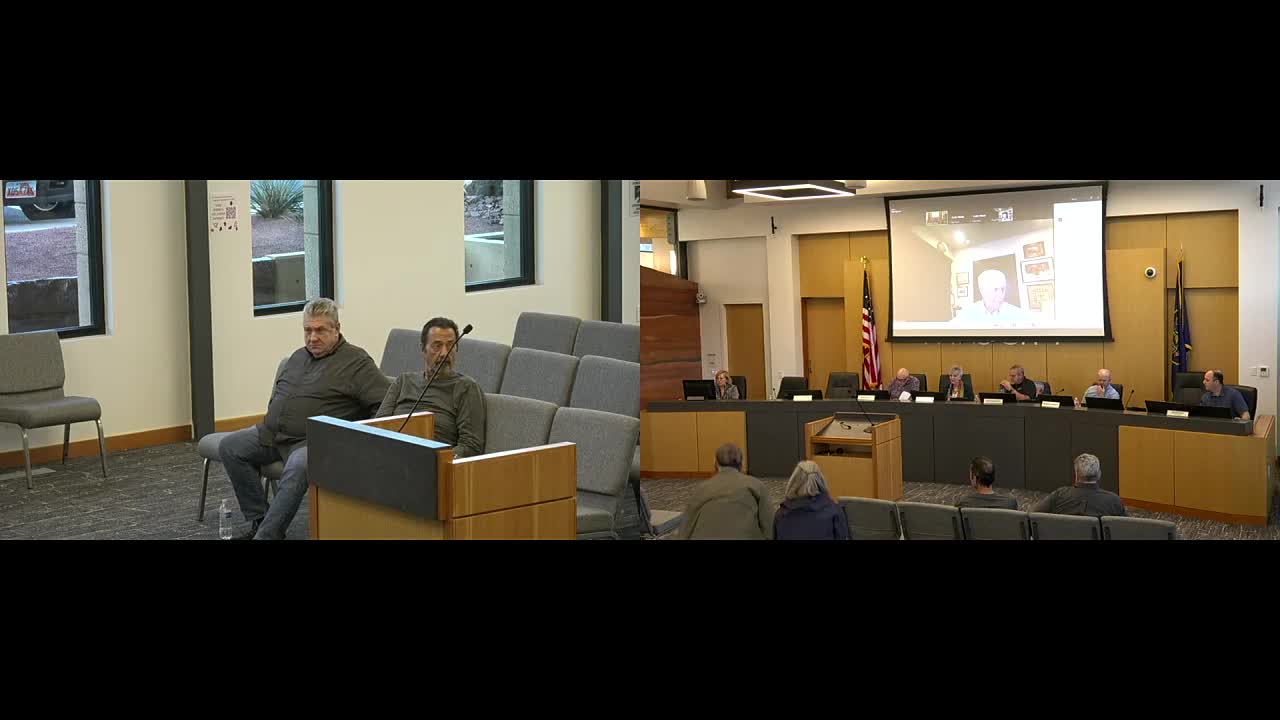
The Ivins City Planning Commission discussed Feb. 28 a proposed amendment to the subdivision ordinance that would remove the requirement for new developments to install a separate secondary irrigation water system.
The Ivins City Planning Commission on Feb. 28 discussed proposed changes to the subdivision ordinance that would eliminate the requirement for new developments to install a separate secondary irrigation water system.
City staff explained the change reflects updates in the water conservancy district’s master plan, which no longer requires a secondary irrigation system for new subdivisions. City planner Mike Haycock told the commission that the ordinance language will be edited to remove references to the secondary system and renumber affected sections; the edit will return to the commission in a cleaner redline form and a public hearing is required.
Commission discussion covered cost, infrastructure and future water options. One commissioner asked about a previously discussed reservoir project; staff said the reservoir has been removed from the current master plan and is not an active short-term project. Commissioners and staff discussed recycled water (sometimes called “purple pipe”) in the context of long-term conservation; one commissioner noted that some communities use a high percentage of recycled water and that trends in water management have changed over decades.
When asked about the financial effect on development costs, staff estimated the requirement added only a small percentage to development costs, saying, “Probably a couple percent because, most of the other infrastructure is in the cost of the land in itself.” Commissioners also asked about whether the change would affect existing secondary systems; staff said the proposed amendment would not mandate removal of existing systems — it would only eliminate the requirement for new developments going forward.
The commission did not adopt the ordinance at this meeting. Staff and the city attorney plan to present a finalized redline that removes the secondary-water references and renumbers the ordinance sections; the change will come back for the required public hearing and formal action.