Get Full Government Meeting Transcripts, Videos, & Alerts Forever!
Get email alerts on the Public Health Overdose Response topic
No spam. Unsubscribe anytime.
House committee approves Good Samaritan immunity for drug overdose reporting
Summary
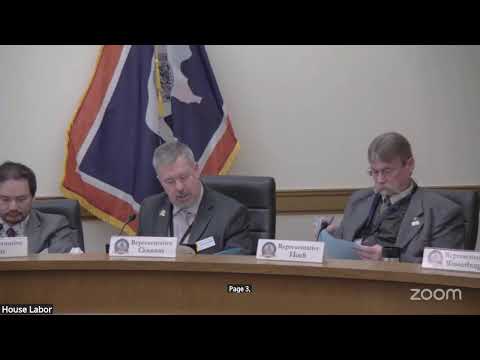
The House Labor, Health & Social Services Committee passed Senate File 74, a Good Samaritan–style immunity bill for people who call for medical help during a suspected drug overdose, by an 8-0 roll-call vote with one member excused.
The House Labor, Health & Social Services Committee passed Senate File 74 (immunity for drug overdose reporting) on a roll-call vote of 8-0, with one member excused, advancing the bill to the House floor.
Representative Yen introduced the committee bill, described as a Good Samaritan-style measure intended to encourage bystanders to summon medical help for someone experiencing a suspected drug overdose. Co-presenters included Lindsay Simineau of the Wyoming Behavioral Health Alliance and Dr. Angela Farren, chair of the Wyoming Naloxone Project, who said stakeholders drafted and supported the measure to reduce barriers to life-saving care.
The bill provides immunity from two misdemeanors—possession of a controlled substance and use of a controlled substance—when someone in good faith seeks emergency medical assistance for a person believed to be overdosing. Testimony clarified that the immunity applies only to the enumerated misdemeanors and does not cover felony-level offenses such as delivery or possession of larger amounts.
The Senate had added language limiting certain immunity protections and tying second-time immunity to a treatment requirement; Representative Clauston moved an amendment in committee to delete the Senate-added section (page 3, line 22 to page 4, line 14). The committee adopted Clauston’s amendment by voice vote, removing the treatment-trigger provision and restoring broader protections. Committee members and witnesses discussed practical enforcement questions including whether law enforcement or EMS would track repeat incidents; witnesses said local law enforcement records and EMS reporting would likely be the practical way to identify repeat events.
Public testimony was broadly supportive: Alan Thompson, executive director of the Wyoming Association of Sheriffs and Chiefs of Police, told the committee law enforcement generally supports the intent and said the bill largely codifies existing practice to prioritize life-saving care. Paramedic Bryce Jacobson described field experience where fear of arrest leads people to hide overdose victims, and said the immunity provision can remove a barrier that prevents people from calling for help. Sofia Gomelski, director of governmental affairs for the Associated Students of the University of Wyoming, presented a student survey showing 21% of respondents reported they had refrained from calling for help in a drug- or alcohol-related emergency because of fear of legal consequences; Gomelski urged the committee to keep protections broad and simple so education campaigns are effective.
Witnesses and committee members also discussed how agencies would learn which substances were involved: Dr. Farren and witnesses said hospital testing and law-enforcement lab testing of seized materials provide supply-side data; HIPAA limits patient-level reporting of clinical toxicology results.
After adopting the deletion amendment and other technical edits, the committee approved Senate File 74 as amended and volunteered House members to carry the bill on the floor. The committee record shows broad stakeholder support from community mental health centers, sheriffs’ associations and recovery groups.