Get Full Government Meeting Transcripts, Videos, & Alerts Forever!
Get email alerts on the Occupations Cosmetology topic
No spam. Unsubscribe anytime.
House committee advances bill to exempt natural hair braiding from Wyoming cosmetology law
Summary
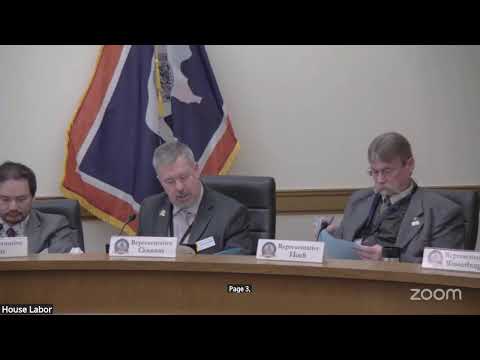
The House Labor, Health & Social Services Committee voted 8-0 (1 excused) to pass Senate File 113, which would exempt natural hair braiding from the Wyoming Cosmetology Act and allow salon owners to require private certification. The committee also adopted an amendment making the law effective immediately.
The House Labor, Health & Social Services Committee advanced Senate File 113 on a roll-call vote of 8-0 with one member recorded as excused, sending the Greater Opportunity Act to the House floor.
Senator Lynn Hutchings sponsored the bill and told the committee the measure would exempt the practice of natural hair braiding from the Wyoming Cosmetology Act and allow salon owners to require certification for braiders who work in their salons. Hutchings said the change would "open the door" to jobs and local business activity and noted that most cosmetology schools do not teach braiding as part of their curriculum.
The bill’s sponsors and supporters said the change is small in scope but broad in potential impact. Lolly Gunn, a cosmetologist who brought the bill to Hutchings, described shorter, targeted sanitation and blood-borne pathogen training courses as an alternative to completing a full cosmetology program. Gunn said cosmetology school costs are a barrier and estimated the hairstyling/cosmetology route costs “more than $15,000 and under $20,000” (approximate), making a narrow exemption a lower-cost pathway into work.
A public commenter said hundreds of Wyoming customers previously traveled to Colorado for braiding services and that adding local services keeps money in-state. Sophie Mars of the Institute for Justice, testifying remotely in support, said 35 states exempt braiders from licensure and described full cosmetology licensing as an unnecessary barrier for a manual, chemical-free skill. Mars said Wyoming is one of three states that still require a full cosmetology license for braiders and urged the committee to deregulate the practice.
Committee members questioned whether braiders should be limited to salon locations and whether salon owners could require private certification. Senator Hutchings said her preference is that braiding occur in a salon so the salon owner can oversee practice; Gunn told the committee salon owners could require 30-hour sanitation or blood-borne pathogen courses or shorter online modules so owners would have confidence in a braider’s sanitation practices.
Representative Wasserburger moved an amendment to make the bill effective immediately upon the governor’s signature; the committee approved the amendment by voice vote. The committee then approved the bill as amended on a roll call (8 aye, 0 no, 1 excused).
The bill text defines ‘‘practice of natural hair braiding’’ and specifies that a person ‘‘solely engaged’’ in braiding is not subject to the cosmetology licensing requirement. Representative McCann asked for staff clarification on the statute’s draft language (she described the phrasing as potentially confusing); Senator Hutchings said she would follow up with Legislative Service Office staff to confirm the final statutory wording.
Senator Hutchings named a House member to carry the bill on the floor; committee staff will prepare the amended bill for House consideration.