Get Full Government Meeting Transcripts, Videos, & Alerts Forever!
Get email alerts on the Airport topic
No spam. Unsubscribe anytime.
Porterville council pauses airport lease and rate changes after community outcry; directs airport committee formation
Summary
After a lengthy public hearing, the City Council directed staff to pause proposed airport lease rate increases and lease-policy changes and to form a standing committee with airport stakeholders to work through lease, policy and compliance issues before returning to the council.
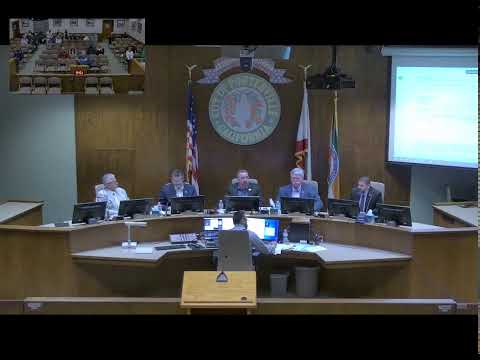
Porterville City Council members on Tuesday heard more than two hours of public comment about proposed lease rate increases, a new master ground lease, and a draft hangar rental agreement for Porterville Municipal Airport, then directed staff to pause action and form a standing committee to work with the airport community before bringing recommendations back to the council.
The public hearing drew large turnout from aircraft owners, business operators and parents involved with the Porterville Military Academy. Speakers from the airport community asked that the council postpone the proposed changes so stakeholders could review the draft documents and negotiate revisions. Common concerns included proposed reversion clauses that could deprive hangar owners of improvements at lease termination, a proposed ownership threshold for hangar lessees, steep rent increases cited in the market analysis, and short notice for lease reassignment requests.
City staff opened the hearing with a market-analysis summary and said adjusting rates and standardizing lease language is needed to align Porterville with Federal Aviation Administration (FAA) grant-assurance requirements and to protect the city's ability to accept federal airport funding for projects such as runway rehabilitation and lighting improvements. Staff said the appraisal was completed on Nov. 15, 2024, and recommended lease-rate adjustments effective March 1, 2025, only for new leases and lease renewals executed after that date. The staff report estimated the adjustments could generate up to about $72,000 annually if applied across all leases, with roughly $27,000 expected in the first year because many leases will not renew immediately.
Hundreds of combined minutes of public comment followed. Retired Air Force pilot and local aviation educator Fred Donque asked the council to table the item and to allow an "airport council" of local users to provide input. Hangar owners, fixed-base operators and longtime aviation businesses described difficulties with late notices on lease reassignments, said earlier leases and local practice allowed private investment in hangars, and said the proposed reversion and insurance provisions would threaten those investments. Several speakers urged a lower rent level than the consultant recommended and asked the council to compare nearby airports' actual current rates.
Several council members said the remarks showed the need for more community engagement. Councilman Beltran and others proposed forming a formal, standing committee composed of airport stakeholders and council representatives to review revised lease language, the market analysis, and compliance steps needed to remain eligible for FAA funds. Mayor Meister and Council members expressed support for tabling the ordinance and for a participatory process that would not jeopardize federal funding. Staff confirmed the city already receives FAA funding for airport projects and said no immediate federal penalty was expected if the council delayed action while working to align leases and policies.
At the conclusion of discussion, the council gave staff direction to table the rate and lease adoption and to return with a proposed standing committee structure and timeline for collaborative review with aviation stakeholders. A formal roll-call vote to table was not recorded in the public hearing transcript; staff recorded the council direction and agreed to return with a committee proposal and a schedule for additional public engagement.
Why it matters: Porterville's airport is used by training programs, maintenance businesses and community aviation groups. The council must balance FAA grant-assurance compliance and the airport's financial sustainability with preserving a local aviation ecosystem that speakers said supports youth training programs, volunteer flight events and small businesses.
What happens next: Staff will draft a standing committee structure (the council directed a committee of community representatives and two elected members), return to council with a scope and timeline, and continue working on FAA compliance items while seeking stakeholder input.