Get Full Government Meeting Transcripts, Videos, & Alerts Forever!
Get email alerts on the Land Use Planning topic
No spam. Unsubscribe anytime.
City attorney summarizes planning commission training on land‑use roles, due process and CEQA
Summary
The city attorney briefed the council on a prior joint planning commission/city council training covering roles in land‑use decisions, due‑process requirements, ex parte communications, CEQA review (initial study, mitigated negative declaration, EIR) and the neutral role of city‑hired environmental consultants.
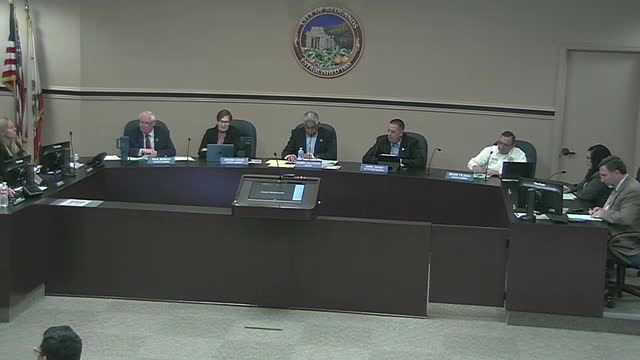
City Attorney (name not specified in the record) summarized a prior joint training between the Redlands City Council and the Planning Commission, reviewing each body's roles in land‑use decisionmaking and procedural safeguards for discretionary project review.
The attorney said, "the city council is the legislative body. It is the body that adopts general plan, adopts land use and zoning rules. It is also the reviewing body for planning commission decisions." He described the Planning Commission as the city’s planning agency that evaluates permit applications and acts in a quasi‑judicial capacity, hearing evidence and issuing findings that are compiled in a resolution when a decision is made.
The presentation emphasized due process, the legal purpose of making findings, and best practices such as avoiding bias, disclosing ex parte communications at hearings, and turning evidence submitted outside hearings over to staff so it can be included in the public record. The attorney cautioned that ex parte communications are not necessarily illegal but can create legal risk and fairness issues if they result in a decision maker appearing to have pre‑judged a case.
The attorney also explained environmental review basics under the California Environmental Quality Act (CEQA), describing initial studies, mitigated negative declarations (MNDs) and when an environmental impact report (EIR) is required. Council members asked about the firm list for environmental consultants; planning staff answered that the city uses multiple consultant firms (about five or six) for significant environmental documents and that contracts are administered by the city with consultant deposits required from applicants.
Public commenters raised concerns about how technical studies are prepared and urged council members to press developers for mitigation when projects are proposed. Michael Pazner said technical assumptions can be selected to achieve desired outcomes and encouraged the council to use its authority to negotiate project conditions.
Provenance: The training summary presentation begins at transcript block starting at 1289.58 and runs through the attorney’s remarks in the 1289–2006 range; follow‑up questions and staff answers appear later in the transcript blocks beginning at 1993.635.