Get Full Government Meeting Transcripts, Videos, & Alerts Forever!
Get email alerts on the Downtown Ambassador Program topic
No spam. Unsubscribe anytime.
Pilot Downtown Denton ambassador program reports trash removal, safety assists; council told PID likely funding path
Summary
City staff reported Feb. 18 that Downtown Denton’s ambassador pilot removed over 26,000 pounds of trash, provided 87,000 visitor greetings and delivered ongoing nonemergency safety and hospitality services; staff said the two-year pilot costs about $703,000 a year and recommended pursuing a downtown PID to fund the program beyond the pilot.
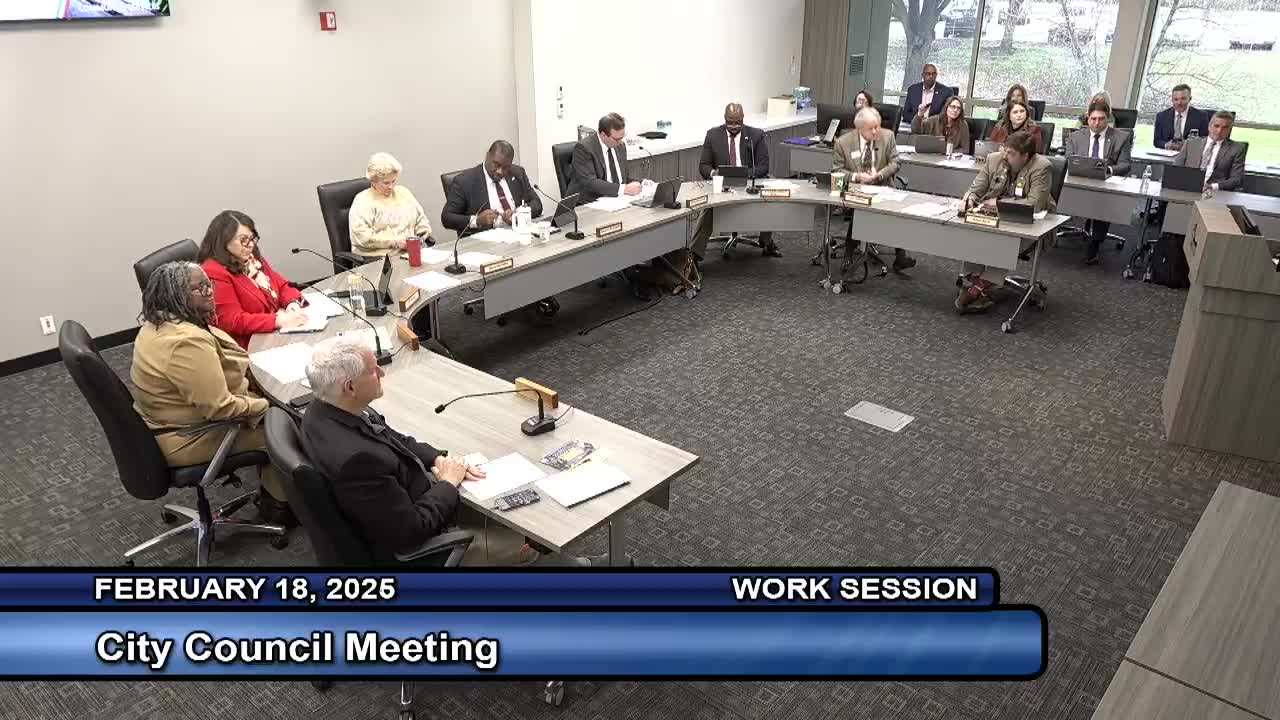
City Council received an update Feb. 18 on the city’s first-year Downtown Denton ambassador pilot, a two-year, city-funded program intended to increase cleanliness, hospitality and nonemergency safety services in the central business district.
Courtney Duangdara of Community Services presented program metrics to council and said the city contract with vendor Block by Block staffed two teams: a “clean” team and a “safety” team. Duangdara said ambassadors removed more than 26,000 pounds of trash in 2024, performed 288 power-wash or pressure-wash events, and logged roughly 87,000 visitor greetings. She said businesses reported cleaner side streets and fewer overflowing trash containers.
Duangdara described the safety team’s work as de-escalation, rapport-building with people who are unhoused and referrals to social services. The team, she said, “regularly follow up with businesses and the police department after situations that require police intervention.” In a few examples, staff described ambassadors intervening to prevent a motorist from striking a protester and helping a local employee fix a flat tire so the employee could get home safely.
Cost and funding: council materials and Duangdara said the two-year pilot has an annual cost of approximately $703,000 paid from the city’s general fund. Staff said they would survey property owners about forming a PID to provide a sustainable funding source; if a PID is not viable the recommendation would be to discontinue the program after the pilot period.
Program feedback and next steps: city-conducted surveys of downtown businesses and community respondents found positive ratings (responses of 4 or 5/5) for cleanliness and hospitality, with 60% of businesses identifying enhanced cleanliness and maintenance as the most beneficial aspect. About three in four community respondents said they felt a strong sense of downtown safety. Duangdara told council staff had begun outreach to property owners and planned further engagement in spring, with a follow-up during the budget process.
Council questions: council members asked about employee attrition and vendor performance; staff said the contractor reports the operation is “going well” and that the principal sustainability strategy is a property-owner-funded PID. Council also asked for a clearer apples-to-apples comparison of services the ambassadors provide versus baseline city services; staff said the ambassador model delivers enhanced response levels (for example, more frequent power washing and real-time assistance during large events) that would not be funded at current city staffing levels without a dedicated revenue source.
Ending: council took no formal action beyond receiving the report; staff will continue property-owner outreach and return with further details in the budget process or recommend discontinuation if PID funding is not available.