Get Full Government Meeting Transcripts, Videos, & Alerts Forever!
Get email alerts on the Human Resources topic
No spam. Unsubscribe anytime.
Milpitas HR director reports single‑digit vacancy rate, warns recruitment challenges remain
Summary
Human Resources Director Kelly Parmley told the Milpitas City Council that the city is sustaining a single‑digit vacancy rate and has hired dozens in the past year, but faces continued recruiting challenges for public‑safety and technical roles and must prepare for retirements and succession planning.
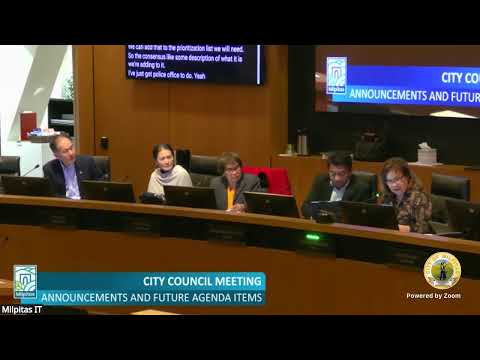
Kelly Parmley, the City of Milpitas human resources director, told the City Council on Feb. 18 that the city is sustaining a single‑digit vacancy rate while continuing efforts to recruit and retain staff.
Parmley told the council the city is authorized for 455 full‑time equivalent positions and that, as of Dec. 31, the city showed 43 vacancies, about 28 of which were “in process.” She said HR hired 35 people in the most recent six‑month period (12 internal promotions and 23 external hires) and a total of 60 people in the previous year, while 29 employees separated during the year, about 17 of those by retirement.
The presentation laid out why the city has been able to keep vacancy rates in the single digits: active recruiting, internal promotions and targeted outreach. Parmley said nearly 50 percent of full‑time employees have been with the city for less than five years; roughly 16 percent of employees live in Milpitas, about 24 percent live elsewhere in Santa Clara County and about 60 percent live outside the county. She said roughly 33 percent of full‑time employees identify as female and about 66 percent identify as non‑white.
Parmley summarized labor‑market research from NeoGov, a government recruiting provider, that shows fewer qualified applicants per government job than before the pandemic, though Tol increase over the last year. She highlighted that certain classifications remain hard to fill: law enforcement, engineering, planning, utilities and skilled trades.
Parmley also described recruiting process changes: HR screens applications to confirm minimum qualifications, then implements a blind review process for hiring managers, and uses assessments and background checks before final offers. She said part‑time and seasonal staff are primarily in Parks and Recreation; HR estimates “on the books” part‑time positions total about 200, with roughly a hundred or so actually on payroll at a given time.
Parmley noted a statutory reporting obligation under AB 2561 to report vacancy rates by bargaining unit; she said that as of Dec. 31 every bargaining unit at Milpitas was below the 20 percent threshold that would trigger additional reporting requirements.
Council members asked detailed operational questions. Councilmember Lam pressed about positions being intentionally held vacant; Parmley said 11 of the vacancies were being strategically held and that about seven of those were in Public Works while others depend on department plans. Finance Director Luz Cafresi Howe and City Manager Ned (surname not provided in the public transcript) joined parts of the discussion to clarify budget implications and to confirm that “vacancy savings” arise when salary monies are unspent in a fiscal year.
City Manager Ned announced the city will begin opening City Hall on Fridays for full public service starting March 1 to address concerns about access when staff are working off‑site on a staggered schedule.
Councilmembers pressed HR on remote‑work practices and standardization. Parmley and the city manager said departments have discretion but agreed the council should consider a citywide policy that standardizes how many remote/off‑site days can be used for administrative staff; they said directors have largely used remote schedules “judiciously” and HR will bring additional proposals.
On succession planning, Parmley said the city does not yet have a formalized, citywide program but that directors have been preparing informally within departments; she proposed an upcoming facilitated process to identify skills the city will need and to develop leadership and training pathways. The city manager and several councilmembers said executive‑level leadership training is already underway and that the administration plans to expand development offerings to assistant and deputy directors in coming months.
No binding action was required or taken on the presentation itself: Parmley told the council HR was presenting an informational update and asked the council to accept the report for the record; the public hearing was opened and closed and council members asked questions but there was no recorded vote to adopt policy on the floor during the Feb. 18 meeting.
— Key numbers and procedural details from the presentation: authorized FTE 455; 43 vacancies as of Dec. 31; 28 vacancies in active recruitment; 35 hires in the most recent six months (12 internal, 23 external); about 60 hires in the prior year; 29 separations in the prior year (about 17 retirements). AB 2561 vacancy reporting by bargaining unit showed no unit above the 20 percent threshold as of Dec. 31.
Councilmembers requested follow‑up information including: a breakdown of vacancies by department and classification; data on part‑time employees and how many are on payroll at a point in time; EEO/management diversity counts; and proposals for standardizing remote‑work expectations and developing succession planning.
Parmley and the city manager said staff will return with more detailed data and with proposals on remote‑work policy, leadership development and succession planning. The presentation and attendant Q&A will be included in meeting materials available in the city record.