Get Full Government Meeting Transcripts, Videos, & Alerts Forever!
Get email alerts on the Immigration Enforcement topic
No spam. Unsubscribe anytime.
Pender County commissioners kill resolution backing ICE 287(g) after public outcry and questions about costs
Summary
The Pender County Board of Commissioners voted to remove a resolution expressing support for an ICE 287(g) program after extensive public comment, questions about cost and local control, and a request that sheriff and staff provide more details before any endorsement.
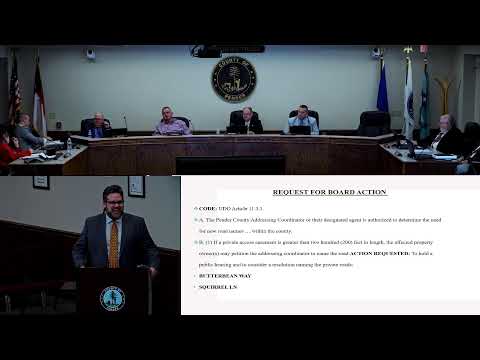
Pender County commissioners on Feb. 18 voted to remove from their agenda a proposed resolution expressing support for U.S. Immigration and Customs Enforcement’s 287(g) authority after extensive public comment and questions from several commissioners.
The resolution as drafted said the county supported the Pender County Sheriff’s Office entering a memorandum of understanding with ICE under Section 287(g) of the Immigration and Nationality Act, which authorizes ICE to delegate immigration-enforcement duties to state and local officers. Commissioners ultimately voted to “kill” the item so that sheriff’s office leadership could meet with county staff and the board for further discussion.
The action followed more than an hour of public comment dominated by opposition. Dozens of residents told the board that 287(g) would erode trust between immigrant communities and local law enforcement, risk family separations, and could increase county costs for detention, transportation and overtime. Speakers cited examples from other counties where local governments paid substantial sums for program-related expenses and then ended participation. Jim Harris said some jurisdictions set aside hundreds of thousands of dollars for initial costs and millions for ongoing program expenses; Alicia Taylor noted the county already faces large capital obligations and warned local taxpayers could be asked to subsidize federal enforcement.
Sheriff Alan Cutler told commissioners the sheriff’s office already responds to ICE detainers and cooperates with federal authorities and that the office would not conduct raids in schools or churches. Cutler said he would not sign an MOU with ICE at this time and that the office would continue current cooperation while further questions are resolved. Commissioners and the sheriff agreed more detail was needed on program scope, costs, and whether specific forms of 287(g) participation would require additional county staffing, facilities or overtime.
Commissioner discussion focused on financial risk and transparency. Several commissioners said they had received numerous constituent emails and that the county needed specifics — including the proposed memorandum of agreement and projected local costs — before voting to endorse any delegation of federal authority. Commissioner Groves moved to remove the resolution from the agenda; the motion passed.
The board did not adopt a new policy on immigration enforcement. Commissioners said the sheriff may continue cooperating with ICE on detainers, which occurs without a formal 287(g) MOU, but any step toward a formal agreement would require more review of costs, legal responsibilities and the sheriff’s operational needs.
The board’s decision effectively pauses county-level consideration of 287(g) while county staff and the sheriff’s office prepare a clearer briefing for the board that addresses budgetary impacts, legal terms of potential agreements, and operational safeguards.
Votes at this meeting show the board preferred further fact-finding and local review rather than immediate adoption of the proposed resolution.