Get Full Government Meeting Transcripts, Videos, & Alerts Forever!
Get email alerts on the Water Sewer Rates topic
No spam. Unsubscribe anytime.
DeKalb County delays vote on proposed 10% annual water-sewer rate increase amid calls for shorter plans and affordability safeguards
Summary
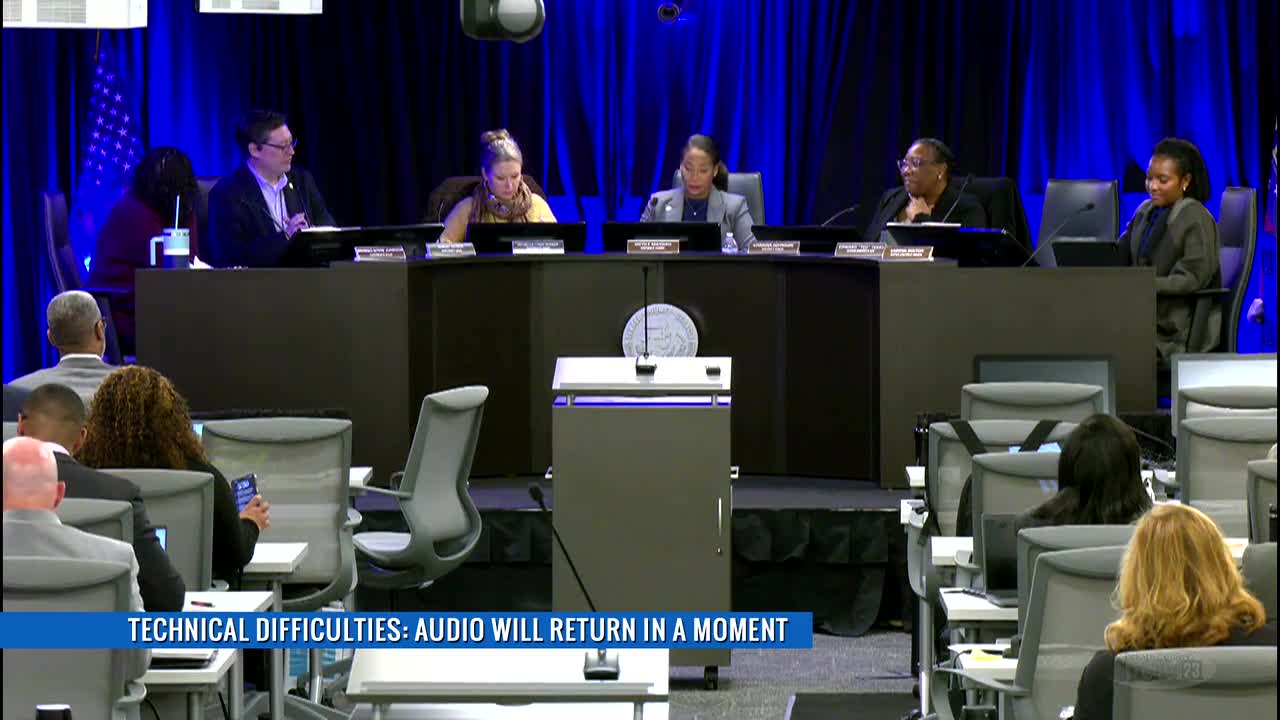
DeKalb County’s Public Works and Infrastructure Committee on Feb. 13 debated a proposal to raise water and sewer rates 10% annually for 10 years to fund operations, debt service and a capital improvement program, but the committee deferred the matter to the board and did not vote.
DeKalb County’s Public Works and Infrastructure Committee on Feb. 13 debated a proposal from county administration to raise water and sewer rates by 10% a year for 10 years to fund operations, debt service and a capital improvement program, but the committee did not vote and sent the matter to the full board for consideration on Feb. 25.
The proposal, presented by Chief Operating Officer Zach Williams, calls for a 10% annual increase over 10 years. “What we are proposing, what we have proposed and continue to propose is a 10% per year for 10 years,” Williams told the committee, saying the revenue would be used to address long-standing infrastructure needs, sanitary sewer overflows and consent-decree requirements.
Committee members said they recognize the system’s needs but disagreed about the appropriate pace and oversight for a multi-year increase. Commissioners suggested alternatives including a short-term “proof of concept” increase (Commissioner Messiah proposed 12% through the end of the year followed by 10% for two years), a five-year plan at 8%, or holding to a longer 10-year plan coupled with accountability measures. Several commissioners and staff emphasized concurrent adoption of customer protections and an affordability program.
Why the proposal matters: DeKalb County’s water system includes aging assets—Williams and others repeated that the Scott Candler water-treatment plant dates to the 1940s—and officials say capital and operating shortfalls contributed to sanitary sewer overflows and obligations under a court-ordered consent decree. Williams estimated the county needs roughly $4.3–$4.5 billion for the capital program outlined through roughly 2034, and said 10 years of 10% increases is intended to stabilize the system and attract long-term investment.
Key debate points and details
- Funding scale: Williams said the proposal would raise “approximately $4,300,000,000” over the life of the 10-by-10 plan. When commissioners asked about average annual revenue, Williams replied that it equates to about $450,000,000 per year on average. Commissioner Messiah said the town-hall feedback indicated public awareness of the need to raise rates but expressed concern about asking ratepayers to absorb a decade-long program.
- Alternatives discussed: Commissioner Messiah proposed an alternative timetable — 12% from midyear through the end of the first year followed by two years at 10% — to allow commissioners more time for oversight and a two-year trial of results. Commissioner Bolton suggested a five‑year plan at 8%, noting an Arcadis analysis showed five years at 8% would yield about $1.6 billion in capital improvements, roughly comparable to early-year proceeds under the 10-by-10 plan.
- Oversight and affordability: Multiple commissioners said any rate plan must be paired with accountability and affordability protections. Commissioner Spears urged creation of an “office of water customer advocacy” and supported an independent auditor; she called the affordability items “human‑right” protections to keep water accessible for seniors, people with disabilities and low-income residents. COO Williams said the administration expects protections and assistance programs to be implemented concurrently with any rate action and that staff have been discussing customer assistance programs with community members and commissioners.
- Timing and implementation: Committee members were told implementation requires roughly four months after a vote for billing systems and administrative steps. That schedule pushed an initial May 1 target into June or July depending on vote timing. Chair Robert Patrick reminded the committee that a separate bond authorization discussion will run in parallel and that bonding authority and timing affect the county’s ability to begin projects.
- Court and compliance context: Commissioners repeatedly framed the funding decision in the context of compliance with the county’s consent decree and possible fines. Commissioner Shekira Johnson, who identified herself as a civil engineer, warned that short-term fixes risk undermining a long-term plan and a modified consent-decree request to the courts.
Outcome and next steps
Instead of voting, the committee deferred the item for further deliberation and scheduled it for the full Board agenda on Feb. 25. No formal count or roll‑call vote on the rate proposal was taken in committee.
Also at the meeting: the committee approved three sets of committee minutes (items 0190, 0203 and 0269) by a voice vote; the motion and second were recorded but individual vote counts were not specified in the transcript.
What the transcript shows and what remains open
- Administration view: COO Zach Williams and watershed staff presented the 10-by-10 proposal as the administration’s solution to stabilize the system and fund the capital improvement program.
- Commissioners’ concerns: Several commissioners (including Commissioner Messiah, Commissioner Spears, Commissioner Jakayra Johnson, Commissioner Shekira Johnson, Commissioner Bolton and Commissioner Maria Davis Johnson) asked for more time, independent review, clearer phasing by project, and explicit affordability safeguards before committing to a decade‑long increase.
- Fiscal specifics still pending: Committee members noted the absence of a completed cost-of-service study (expected to take months) and requested more detailed, year-by-year CIP phasing tied to design and construction phases before approving a long-term rate plan.
The item will be reconsidered at the Feb. 25 board meeting; staff said they will return with additional detail on customer-assistance programs, auditing/oversight proposals and CIP phasing. Ending details: the discussion included repeated references to prior funding mistakes (negative arbitrage referenced in prior bond programs) and a broad warning from both administration and elected officials that infrastructure needs are substantial and that delaying large, long-term funding risks higher future costs.