Get Full Government Meeting Transcripts, Videos, & Alerts Forever!
Get email alerts on the County Budget topic
No spam. Unsubscribe anytime.
Prince William County executive proposes balanced $1.99 billion FY2026 budget, holds real-estate tax rate at $0.92
Summary
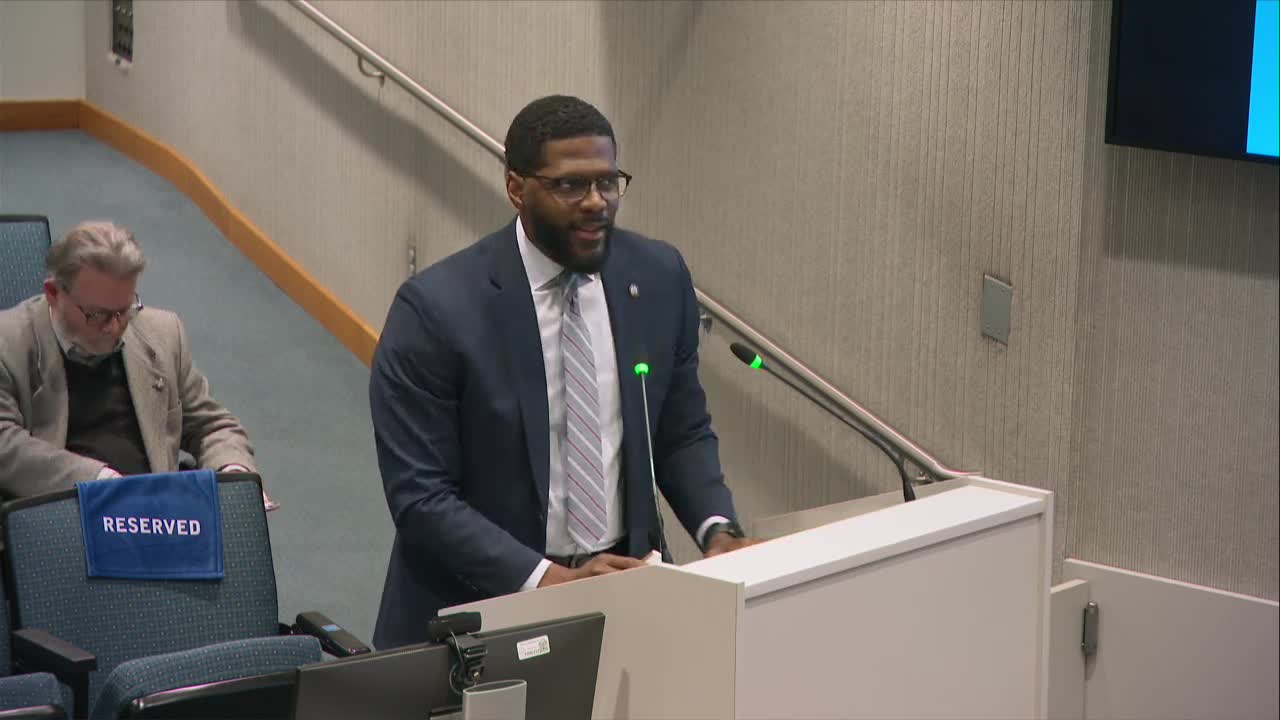
Prince William County Executive Chris Shorter on Tuesday presented a proposed fiscal 2026 general fund budget of about $1.99 billion that would keep the real-estate tax rate at $0.92 per $100 of assessed value and hold the fire levy at 7.2 cents.
Prince William County Executive Chris Shorter on Tuesday presented a proposed fiscal 2026 general fund budget of about $1.99 billion that would keep the real-estate tax rate at $0.92 per $100 of assessed value and hold the fire levy at 7.2 cents.
Shorter said the proposed budget is balanced and builds on strong revenue growth: "This budget also meets the policy and principles of sound financial management," he said during the evening budget presentation. He noted a $183.6 million, or roughly 13 percent, increase in general revenue in FY2025 that underlies the FY2026 recommendations.
The nut of the proposal is a $82.5 million increase in the county transfer to Prince William County Public Schools (a 9.1 percent increase from the FY2025 base), a series of personnel and market adjustments, and targeted investments in public safety, housing and IT. Shorter described the plan as a mix of ongoing and one-time funding that attempts to respond to growth and service demands.
Key items in the proposed budget include: - Schools: an $82.5 million increase in the county transfer (9.1%), continued class-size grant funding and maintenance of certain school security and debt-service commitments. - Compensation: a 3 percent merit/step pool for FY2026 across general government and public safety staff, $3.4 million for health and dental, and a $100,000 adjustment to retiree health to maintain the FY2025 retiree-health benefit level. - Collective bargaining and public safety: Shorter said the county has already committed about $8.3 million to collective-bargaining obligations carried into FY2026. The proposed budget includes $6.5 million for Fire & Rescue (continuing investments in the multi-year staffing plan) and $6.9 million for police, which the presentation says funds 20 sworn positions and three professional staff for the police department. The sheriff and Adult Detention Center (ADC) receive separate market adjustments in the proposalthe sheriff about $600,000 and ADC about $4 million, aimed at reducing turnover and improving competitiveness. - Crisis Receiving Center (CRC): a one-time $5.7 million allocation to support opening and initial operations as the county pursues a state Medicaid waiver expected to take 18 to 24 months for final determination. - Technology and cybersecurity: the proposal lists roughly $7.6 million for critical IT contracts and systems and recommends a multiyear technology improvement plan to catch up on network, firewall and other enterprise needs. - Parks and recreation: continued expansion of maintenance funding for new and recently completed projects, plus user-fee supported staffing for indoor rentals and programming. - Mobility and transit: the county executive recommended maintaining OmniRide funding and using targeted non-general-fund sources (motor fuels tax, recordation, transient-occupancy-tax and available fund balances) rather than general fund dollars. The budget proposes increasing each districtmembertrip fund from $225,000 to $450,000 (sourced from recordation tax) for local transportation projects. - Landfill operations: staff proposed shifting hours to open seven days with limited extra pay and one additional scale-house operator position and asked for lead time to coordinate with haulers; no immediate solid-waste fee increase is proposed.
Shorter said the budget preserves the countyschool revenue-share commitment and keeps the overall tax rate unchanged; he described the FY2026 package as a starting point for public review and a set of proposals the board can adjust during the public process.
Why it matters: the proposal funds ongoing recruitment and retention for public safety, a large increase for schools and multiple new programs while preserving the county tax rate. The document also surfaces trade-offs the board must make during the coming mark-up and public hearings.
Whathappens next: the county executive and budget staff plan a series of public work sessions, department Q&A and revenue forecasts through March and April. Shorter said staff will open an online question portal and hold subject-specific work sessions (IT, landfill, fire-and-rescue capital and others) before the board votes on adoption in late April.
"We are in a position to recommend a balanced budget," Shorter said. "This is the start of the public process."