Get Full Government Meeting Transcripts, Videos, & Alerts Forever!
Get email alerts on the Public Safety Fire Ems topic
No spam. Unsubscribe anytime.
Colleyville fire chief reports rising EMS demand, new training facility and community programs
Summary
Fire Chief Mark Cantrell told the Colleyville City Council on Feb. 18 that EMS calls are rising, the department is updating technology and facilities, and the city will build a small on-site training building to keep crews in service.
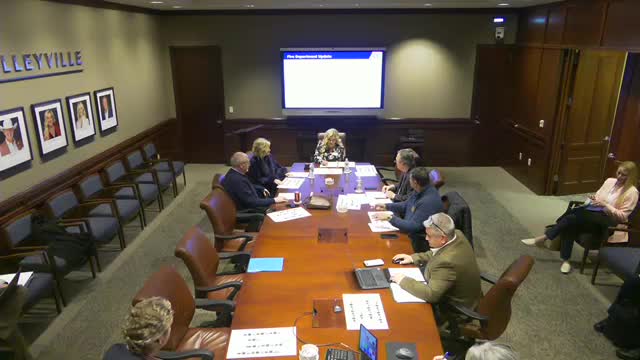
Colleyville Fire Chief Mark Cantrell updated the City Council at a Feb. 18 work session on staffing, awards, training and rising emergency medical service (EMS) demand, and said the department will build an on-site training facility and is implementing new incident- and pre‑fire planning software.
Cantrell told council members the department runs three rotating 48-on/96-off shifts and that all firefighters are required to become paramedic-certified (new hires may start as EMTs and must obtain paramedic certification within 36 months). He said the department currently has six positions budgeted to EMS, four active EMTs, three new hires scheduled to start in early March and three personnel enrolled in paramedic school.
Why it matters: Cantrell said EMS now accounts for the majority of calls and the city is adjusting training, equipment and deployment to match that shift. He warned that mutual‑aid ambulance requests doubled last year and said the city is watching those numbers to determine whether deployment or staffing changes will be necessary.
Cantrell outlined equipment, awards and facility work. He said Colleyville has received Mission: Lifeline gold-plus recognition for cardiac care and the Heart Safe Community award; one Colleyville crew will be recognized by Baylor Grapevine for a December cardiac response. Equipment highlights included purchase of video laryngoscopes, a smaller nimble engine designed for village streets, a new UTV, and a grant-funded fire-extinguisher trainer for community and school outreach. He described electric vehicle fires as a growing concern because of the smoke’s destructive nature and said the department continues to monitor best practices.
Cantrell said the department’s incident reporting vendor discontinued support for the previous product; a different chief is overseeing implementation of new reporting software and new pre‑fire planning software to help keep annual business inspections current. He described a planned roughly 1,100‑square‑foot training building behind one station that will allow simulated roof, ladder and EMS training without sending crews off site; the building will not be used for live‑burn exercises.
On statewide mobilization, Cantrell said Colleyville personnel participated in a statewide emergency medical task force (EMTF) and in multiple large incidents, including hurricane response, tornadoes and a major wildland fire. He said those deployments are reimbursed for personnel costs, backfill and equipment at per‑diem rates, and that the relationships built during deployments provide mutual assistance if a large event happens locally.
Cantrell gave figures for response and call‑mix trends. He said the department’s dispatch time is about 45–50 seconds and the department’s goal is to be out the door within 1 minute 30 seconds; he reported the current “out the door” time is approximately 1 minute 3 seconds. He said about 65% of call volume is EMS and that the average patient age has inched upward about one year per year. Cantrell provided an EMS billing breakdown he said the department is seeing: “Medicare about 60%, private insurance about 26% and self‑pay about 13%,” and noted the transcript included an additional small category that was not named in the presentation.
Cantrell said Colleyville does not balance‑bill city residents transported by a Colleyville ambulance: the city accepts Medicare or insurance payments and does not send an additional bill to Colleyville residents; nonresidents transported or outside ambulances may receive balance bills.
He described community outreach programs the department runs or supports: city employee CPR/Narcan/Stop the Bleed training, pool safety checks, distribution of life jackets (partnering with Cook Children’s), certified car‑seat installation events, smoke‑detector battery checks and assistance visits for some seniors (including temporary provision of smoke detectors or portable air units when needed). Cantrell also discussed crew health and wellness efforts, including annual physicals with cancer screening, fitness testing, and mental‑health resources funded in part through a grant to a regional responder readiness group.
Cantrell said the department is using decontamination extractors and gear‑drying units and sends gear out annually for inspection and certification; he acknowledged there is no universally accepted, fully effective method to eliminate all carcinogens from turnout gear and said the department follows current industry best practices.
No formal council action was taken at the work session on Feb. 18; the item was presented for information and council members asked questions about apparatus maintenance contracting and the training building. Cantrell said apparatus major maintenance is contracted (Simmons Martin Group) and that the training building is a priority for the department.