Get Full Government Meeting Transcripts, Videos, & Alerts Forever!
Get email alerts on the Education Finance topic
No spam. Unsubscribe anytime.
Committee approves select panel, $920,000 for school finance recalibration
Summary
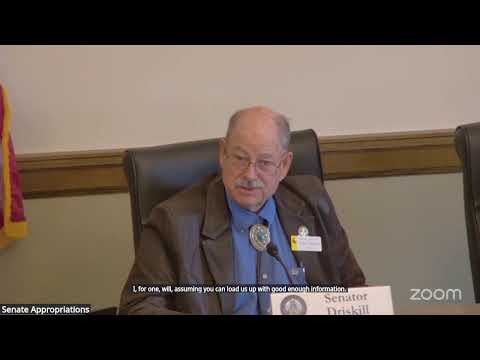
The Appropriations Committee voted 4-1 to advance House Bill 316, which creates a 12-member select committee to recalibrate Wyoming's school finance model and appropriates $920,000 to the Legislative Service Office for consulting and committee expenses.
The Appropriations Committee advanced House Bill 316 on a 4-1 vote, approving the creation of a 12-member select committee to "recalibrate the education resource block grant model," and appropriating $920,000 to the Legislative Service Office to support the panel and hire professional consulting expertise.
Tanya Heitrick, Legislative Service Office operations administrator, told the committee: "This bill comes to you from Management Council and it establishes a select committee on school finance recalibration to be comprised of 12 members, 6 from each House." She said the committee must provide necessary data to LSO and that the work would be completed "not later than March 30, 2025." She told members the appropriation covers both consultant costs and committee expenses.
The Fiscal Note that Heitrick summarized estimated about $120,000 would cover committee expenditures such as per diem and salaries, with the remaining roughly $800,000 reserved for professional consulting services. Heitrick said the precise contractor selection and allocation of consultant funds are decisions of Management Council and therefore not specified in the bill text.
Committee members asked about the scope of the recalibration. Senator Sandra Driscoll asked whether the work would "redo[] the basket of goods or just a basic recalibration." Heitrick replied that recalibration is a "recasting of the education resource block grant model" and that a separate, distinct review would be required to change the basket of goods. She pointed committee members to "Wyoming Statute 20-19-101 and 20-19-102," which she identified as the statutes commonly referenced as the basket of goods.
Heitrick noted that prior recalibrations had also commissioned consultants to cost out additional elements when requested, including lunch programs, school resource officers and virtual education, and said consultants typically bring forward "novel or different" delivery recommendations based on changing circumstances since the last recalibration.
The bill requires Management Council appointments, including minority party representation, and directs that the Speaker and the President appoint co-chairs. The committee considered timing and workload: LSO staff said past recalibration efforts generally required about 12 meeting days (six two-day meetings) and that adding a basket-of-goods review could substantially increase both meeting days and cost.
During roll call on the engrossed bill, the committee recorded four ayes and one no; the chair announced "do pass." The committee did not adopt language to require the select committee to alter the basket of goods; a Senate Education Committee amendment had removed a provision that the committee study charter school funding and offer suggestions for a funding formula.
The vote advances the bill to the floor for further consideration.