Get email alerts on the Emergency Services topic
No spam. Unsubscribe anytime.
Cole County EMS reports surge in calls; training pipeline expanded
Summary
Cole County EMS reported a year-over-year increase in calls and described steps to expand training and recruit first responders, including an in-house EMT class starting May 17 and ongoing emergency medical responder courses.
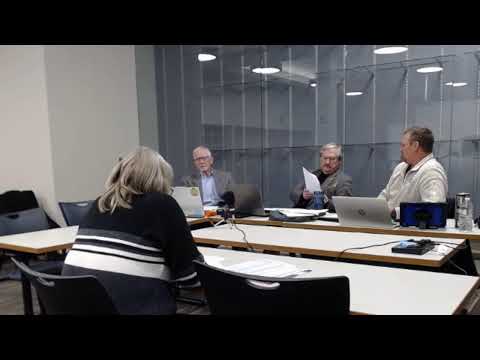
Cole County EMS presented its 2024 annual report at the Feb. 18 Cole County Commission meeting, telling commissioners the service saw about 1,300 more calls than in 2023 and that staffing and training efforts are expanding to meet growing demand.
“...the big one that we want to talk about is a 1,300 call increase, from 2023,” the EMS chief said during the presentation, noting the last 90 days had put the service on a roughly 15,000-call annual pace. “If we do maintain a 15,000 call pace, probably gonna need to look at expanding yet again,” the chief said.
Nut graf: County EMS provided operational metrics — including response-time benchmarks and commitment-factor statistics — and described recruitment and training efforts intended to bolster volunteer and career staffing in both urban and rural areas.
Key metrics and operational details: the department reported an average of about 96 seconds to get crews out the door and an average en-route-to-scene time of 7 minutes, 19 seconds; combined, those figures place overall average response just above the 9-minute benchmark frequently used for urban departments. Department-wide commitment factor — the portion of time crews are assigned to emergencies from alarm to hospital clear — was reported at about 24.32%, meaning crews are assigned to calls roughly six and a half hours per 24-hour period on average.
EMS staff highlighted local variations: downtown medic units answered 3,003 calls with individual medic commitment factors near the mid-30% range, while the addition of new units in town shifted some call volume between stations. The department reported strong community engagement, including a Toys for Tots drive and other outreach.
Recruitment and training: EMS said it is expanding in-house training. An eight-week Emergency Medical Responder course is in its second week with six enrollees from local fire districts; the department will begin its first in-house EMT class on May 17 with capacity for 20 students and 14 already enrolled. Officials said the training center will receive upgrades in classroom and technology capabilities as part of 2025 efforts to grow the first-responder pipeline.
Commissioners asked about revenue and fees: one commissioner noted a pie chart showing 49% of EMS revenue from fees for service and about 32% from a sales-tax subsidy; EMS staff said their operation is “pretty light on the sales tax portion” because a portion of sales-tax receipts are used elsewhere in county budgeting, and said their revenue mix leans more heavily on fees than many ambulance districts.
The presentation closed with staff offering to answer further questions and to return with more detail at future meetings if commissioners ask for it.
AI generated
The text on this page is AI generated. Summaries, highlights, analysis, and video transcripts are all produced from the original source material.
AI can make mistakes, so if you spot one, and we will fix it for everyone.
Note: the source content is unaltered by us. Any content source we link to, be it a video, an audio recording, or a document, is presented exactly as its publisher released it. That publisher is usually a government body, sometimes an individual official or another organisation.