Get Full Government Meeting Transcripts, Videos, & Alerts Forever!
Get email alerts on the Hacm Finances topic
No spam. Unsubscribe anytime.
Comptroller: Housing Authority owes Milwaukee about $5.1 million; recommends tighter oversight
Summary
City Comptroller Bill Christiansen told the Steering and Rules Committee that, excluding a 2024 pilot payment, the Housing Authority of the City of Milwaukee (HACM) owed the city roughly $4.1 million — a mix of accounts receivable and unreimbursed charges — and urged legal review and stronger collections and oversight.
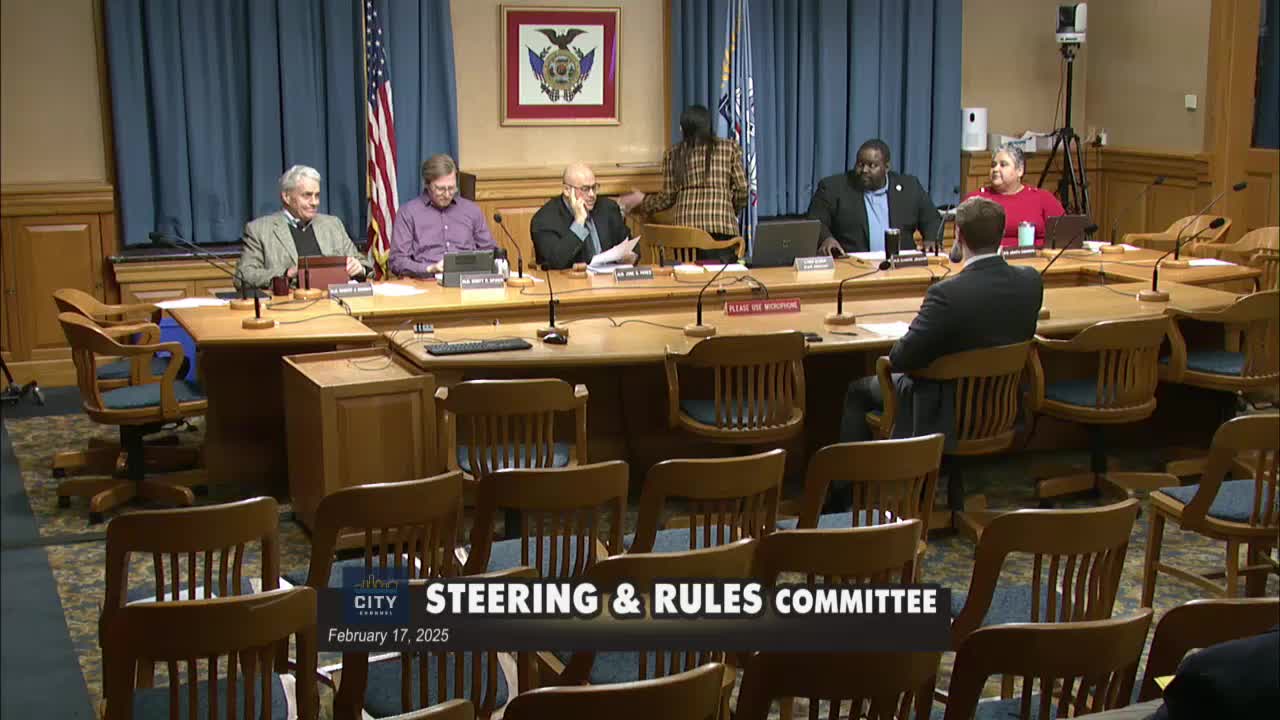
MILWAUKEE — City Comptroller Bill Christiansen told the Common Council's Steering and Rules Committee on Feb. 17 that the Housing Authority of the City of Milwaukee (HACM) owed the city roughly $5.1 million when a withheld 2024 pilot payment is included, and he urged clearer agreements, centralized collections and tighter controls over access to the city's financial system.
Christiansen said his office found no evidence that HACM misused the $9,000,000 in American Rescue Plan Act funds the city awarded to HACM in April 2022 for construction at Westlawn. But, he said, the city's records show $4,100,000 in outstanding amounts aside from the pilot payment: about $531,000 in accounts receivable and about $3,600,000 in "unreimbursed reimbursables" tied to positions that were on the city payroll in name only.
"Our review did not encounter any evidence that these funds were used for anything but the authorized purpose of construction activities at Westlawn," Christiansen said. "Excluding the pilot payment, there's currently $4,100,000 owed to the city by HACM."
Why it matters: These unreimbursed reimbursables arise from a long-standing arrangement dating to the early 2000s, Christiansen said, when HACM split administratively from the Department of City Development (DCD). Some employees remained technically on the DCD payroll while functioning for HACM; over time HACM payments to cover those costs fell short, creating a deficit that ultimately lands on the city's general fund if never collected.
Details and timeline: Christiansen told the committee that the underpayments on those positions appear in the city's records back to 2015 and that the last recorded payment from HACM toward those position costs was in 2021. He said the reimbursable shortfall was accumulated while the positions remained "on paper" in DCD; at its peak the arrangement involved as many as 150 such positions, he said, and the number on the DCD rolls is now far smaller. In the 2024 budget, 23 such positions were listed; Christiansen said he believes only four remain on the city payroll today.
On pilot and pension obligations: The committee heard that HACM had not paid its 2024 pilot payment to the city as of the meeting. The 2024 budgeted pilot was $1,000,000; Christiansen said the payment can still be credited to fiscal 2024 if the city receives it on or before March 1 under the Governmental Accounting Standards Board (GASB) 60-day revenue recognition practice. Separately, Christiansen said HACM's Employee Retirement System (ERS) contribution for fiscal 2024 is due at the end of 2025; he estimated the ERS amount at about $1,800,000 but said he would provide the exact figure.
City controls and system access: Christiansen and others told the committee that an agreement dating to 2004 granted HACM access to the city's financial management information system (FMIS). The comptroller and the committee's members raised internal-control concerns about external access to FMIS. David Henke, chief information officer for the Department of Administration, said ITMD can revoke external access but would do so only with appropriate departmental direction and due diligence.
Recommendations: Christiansen offered several near-term steps: ask the city attorney to summarize current agreements between the city and HACM; assign a city department to provide ongoing oversight while the legacy positions remain on the DCD payroll; create a centralized collections manager to pursue outstanding receivables; and limit or eliminate the use of external reimbursables, which he said increase the risk that unpaid charges will become an implicit subsidy from the general fund.
What the committee did: Alderman Scott Speicher moved to hold file 241643 (the comptroller's communication) to the call of the chair; the motion was adopted without objection.
Context and reactions: Committee members pressed for additional detail on the age of the underlying agreements and expressed concern about unclear signatures and dates in the 2004 cooperation agreement. City Attorney Evan Goicky said his office would work with the comptroller's office to summarize the agreements and report back. Several aldermen noted the broader outstanding receivables faced by the city and asked for the comptroller's receivables report to be added to the meeting file for public review.
Ending: Christiansen said his office would continue reconciling bank statements and invoices with HACM and follow up with departments that billed HACM for more detailed documentation. Committee members asked for additional information on ERS timing and exact amounts, and for a legal summary of the current enforceable agreements between the city and HACM.