Get Full Government Meeting Transcripts, Videos, & Alerts Forever!
Get email alerts on the Broadband Bead Iija Arpa topic
No spam. Unsubscribe anytime.
Commerce outlines broadband spending plans as BEAD timetable and partnerships advance
Summary
The Idaho Department of Commerce described multiple broadband funding streams — a $35 million state broadband fund, roughly $120 million in ARPA capital projects and the federal $580 million BEAD program — and described pre‑qualification and application timelines while emphasizing collaboration with private ISPs and local governments.
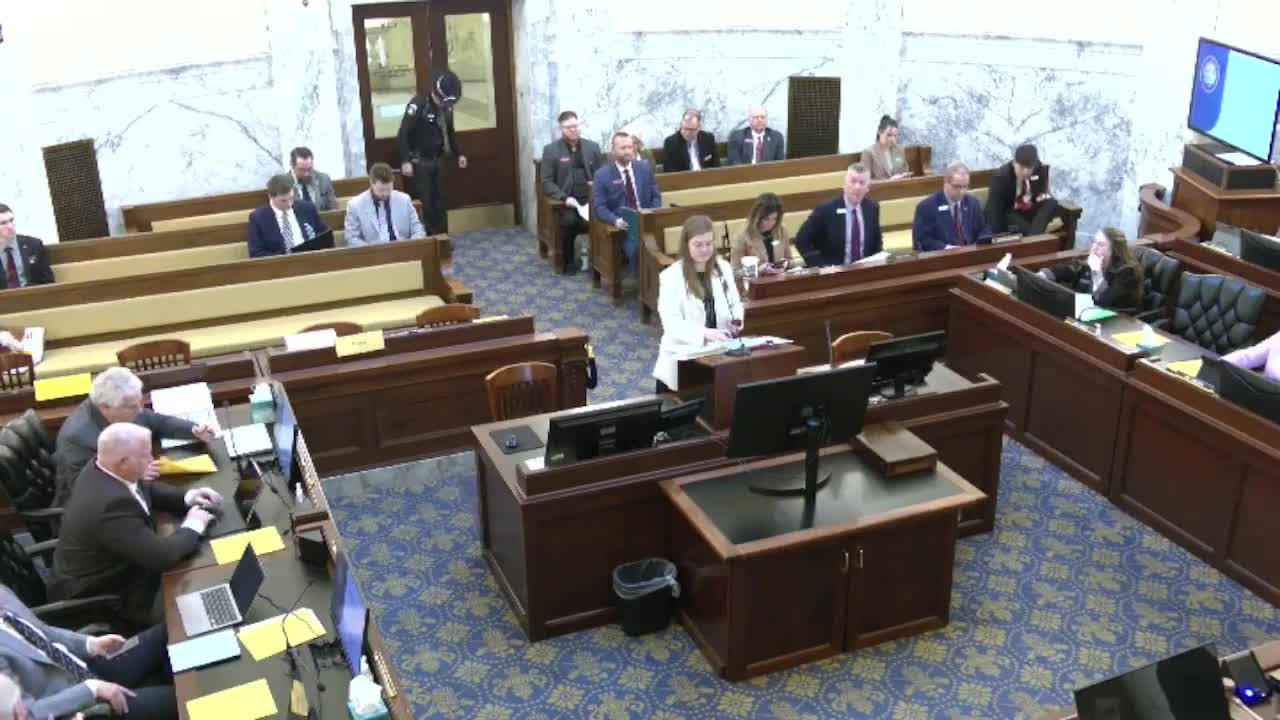
The Idaho Department of Commerce told the Joint Finance‑Appropriations Committee it is deploying a blend of state and federal funds to expand broadband, is moving through pre‑qualification for the federal BEAD program and is coordinating closely with private internet service providers, local jurisdictions and the Idaho Broadband Advisory Board.
Why it matters: broadband investments shape economic development, telehealth, remote work and education. Idaho’s mix of state and federal funds supports projects that aim to connect tens of thousands of unserved or underserved homes and businesses.
Brooke Dupree, Legislative Services Office analyst, summarized Commerce’s FY2026 request and funding picture. She said the Idaho Broadband Fund was initially capitalized with $35,000,000 of state general fund dollars; $26.5 million of that is already obligated and roughly $8.7 million remains. Dupree also described a $124,000,000 ARPA capital projects appropriation used to support broadband and a $100,000,000 IIJA appropriation reappropriated for broadband infrastructure in FY2024; she said those federal and state appropriations explain the spike in available broadband funds in recent years.
Tom Kealey (transcribed as Keeley), director of the Department of Commerce, introduced his leadership team and said broadband, cybersecurity and workforce development are priorities for the department. He said Commerce worked with the governor’s broadband task force and housed the newly created broadband office to oversee distribution and transparency of broadband funds.
Ramon Jabe Sanchez, the department’s broadband manager, provided specifics: the capital projects fund has $120 million obligated across 18 projects that will connect roughly 35,000 homes and businesses statewide. The federal BEAD (Broadband Equity, Access, and Deployment) program — funded under the Infrastructure Investment and Jobs Act (IIJA) — will provide roughly $580,000,000 to Idaho. Sanchez described a timeline: the office opened a pre‑qualification phase in Q1 of the calendar year to vet internet service providers and eligible applicants; a funding application phase is planned for Q2; evaluation and grading would proceed through summer; and a package could be submitted to the federal government by mid‑fall to early winter, with funding potentially moving about a year after that.
Sanchez emphasized collaboration with private ISPs (Idaho currently has roughly 90 ISPs operating) and local communities. He noted Idaho is the only state to use some BEAD planning funds to give subgrants to local jurisdictions to create project plans and indicated the Idaho Broadband Advisory Board — a legislative‑heavy board created in 2021 — will play a central role in policy and project selection.
On technology choices, Commerce staff said the BEAD program prioritizes fiber, then licensed fixed wireless, and allows alternative technologies — including low‑Earth‑orbit (LEO) satellites such as Starlink — where fiber or fixed wireless are cost‑prohibitive. The office expects LEO satellites to be part of the toolbox for remote locations, while noting fiber remains the most durable option where feasible.
Director Kealey and committee members also discussed Commerce’s broader economic work — tourism plans tied to major events, support for energy‑sector supply chain development and workforce issues including childcare and housing — all framed as part of efforts to grow Idaho’s economy and attract or retain talent.
No committee votes were recorded during the Commerce presentation; department staff asked for support of the governor’s recommendations.