Get Full Government Meeting Transcripts, Videos, & Alerts Forever!
Get email alerts on the State Liquor Division Budget topic
No spam. Unsubscribe anytime.
Idaho Liquor Division seeks modest staff pay increases and IT upgrades amid declining free fund balance
Summary
The Idaho State Liquor Division presented FY2026 requests including temporary staff pay increases, network security hardware, website accessibility upgrades and store replacement items while lawmakers questioned turnover and the cost of ADA work.
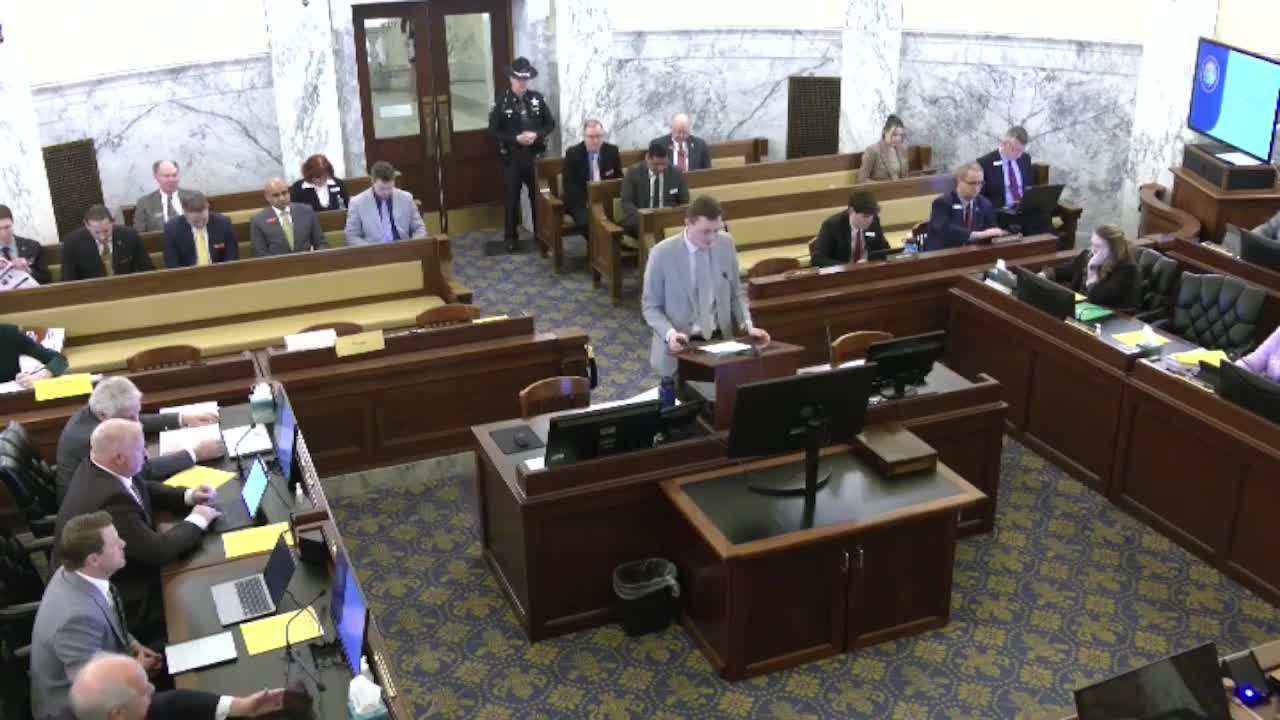
The Idaho State Liquor Division told the Joint Finance-Appropriations Committee on the morning it is seeking modest ongoing and one-time appropriations in FY2026 to address high turnover among retail temporary staff, modernize store and IT infrastructure, and bring its public website into compliance with accessibility standards.
Why it matters: the liquor division distributes statutory revenues to courts, cities, counties and the general fund while operating a statewide retail network. Lawmakers pressed the division on whether requested increases will reduce turnover, how contract stores operate, and why a website upgrade was estimated at $100,000.
Kellen McGurkin, budget and policy analyst with the Legislative Services Office, opened the agency briefing by summarizing the division’s statutory role under Idaho law and noting that FY2024 total distributions from the agency were $118,300,000. The division reported total FY2024 sales of $319,100,000 and reported net income of $116,600,000 used for statutory distributions and transfers.
Director Andrew Arulanandam said the division’s five-year free fund balance declined from about $38,000,000 in FY2022 to $14,000,000 in FY2024. He told the committee that the division’s staffing includes a 257.25 FTP cap for retail operations, roughly 210 full‑time positions, and approximately 185 part‑time store clerks who are not counted in the FTP total.
Lawmakers focused their questions on three priorities in the agency request. First, the division requested $131,400 in ongoing dedicated funds for FY2026 that would include $57,400 to raise the hourly rate for temporary retail staff from $15.00 to $15.45 and $72,000 to cover shrink‑wrap costs required by a new freight contract. Arulanandam said turnover among temporary clerks fell from about 140% annually prior to a previous pay increase to roughly 84% after that adjustment; he described further increases as an incremental approach rather than a single large raise.
Second, the agency requested several IT and security items. The division seeks $200,000 one‑time to purchase 70 network security firewalls and 70 managed switches to complete a network modernization project led by the Office of Information Technology Services (OITS). The division said moving stores from DSL/T1 connections to a cellular solution combined with Cradlepoint routers (already purchased in FY2024) plus the requested firewalls and switches would reduce monthly connectivity costs and improve security. LSO’s impact review team endorsed the OITS recommendation.
Third, the division requested $100,000 one‑time to upgrade its website to meet Web Content Accessibility Guidelines and address Americans with Disabilities Act (ADA) compliance concerns. Director Arulanandam told Senator Cook the agency consulted an accessibility expert and received a report listing multiple items to fix beyond keyboard navigation of the menu; he described the request as a prudent one‑time expenditure to reduce legal risk from ADA‑related suits.
The agency also requested one‑time replacement items totaling $980,300 (including $775,000 for retail store improvements and $205,000 for motorized warehouse equipment and vehicles) and $235,000 for IT and security replacement items (server replacements, battery backups and security systems for stores). Earlier one‑time items in FY2025 included $1,200,000 for replacement shelving, lighting, flooring and signage and vehicles for district managers.
During questions, lawmakers sought clarity on contract liquor stores: Tony Grama, identified as chief deputy and CFO of the liquor division, said contract stores purchase product from the division and are responsible for their own employee pay per the contract language. Representative Price and others explored whether converting temporary hours to full‑time positions would be feasible; Arulanandam said some scheduling needs make a mix of temporary and full‑time staff necessary at certain stores.
The director closed by reiterating that the division is a revenue‑generating agency with substantial front‑line contact with Idaho citizens and thanked the committee for its consideration.
The committee did not take formal action during the presentation.