Get Full Government Meeting Transcripts, Videos, & Alerts Forever!
Get email alerts on the School Construction topic
No spam. Unsubscribe anytime.
Stoughton committee outlines timeline, tax impact and outreach ahead of April debt-exclusion vote
Summary
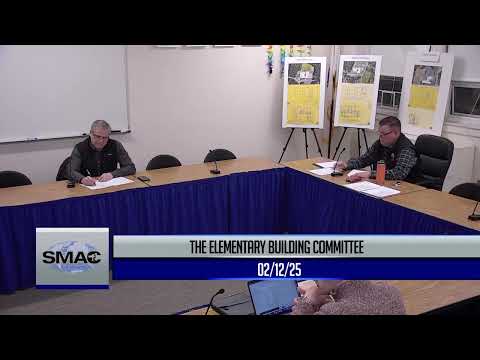
The Stoughton Elementary School Building Committee on Feb. 12 reviewed the construction schedule it would follow if voters approve a debt-exclusion question on April 8, heard public concern about federal education funding, and approved routine committee business including adoption of prior minutes and an invoice for $991.
The Stoughton Elementary School Building Committee on Feb. 12 reviewed the construction schedule it would follow if voters approve a debt-exclusion question on April 8, heard public concern about federal education funding, and approved routine committee business including adoption of prior minutes and an invoice for $991.
The committee’s most consequential update came on project timing and next steps if the debt-exclusion vote passes. Tim, a project consultant, said, “If it gets approved, we will immediately commence working with DRA on the design phase and the permitting,” and outlined a plan that would start early permitting and an early “bridge” package in spring, seek a guaranteed maximum price (GMP) if the committee chooses a Construction Manager at‑risk delivery, start construction in summer and aim for roughly a 20‑month build culminating in occupancy in fall 2028.
The committee emphasized that the plan depends on approvals and budget checks during design. “That budget will be…confirmed at the design development phase,” Tim said, adding the team will investigate a CM at‑risk approach but can alter course if the committee prefers another contracting method.
Why it matters
The timeline and contracting approach determine how quickly construction can begin, how the town secures labor and materials, and how quickly students could move into the new school. Committee members said they hope to use early site packages to avoid losing months on access and utility work.
Discussion and contingency planning
Committee members discussed the option many districts are using to lock prices earlier: a CM at‑risk (CMAR) approach. Tim and committee members said many recent Massachusetts projects have used CMAR to secure materials and pricing sooner, but he did not say the committee had made a final decision.
The committee also reviewed a contingency plan if the April 8 vote fails. Superintendent Joe Baieta told members the district and school committee have discussed modular classrooms as a stopgap: “We were in front of the school committee last night discussing modular classrooms… Project scope for that, well over $30,000,000,” he said, noting modulars could be needed for several schools and that long‑term modular solutions could approach the cost of other options.
Taxpayer impact and tax‑relief outreach
The committee circulated a new estimate from the town’s financial adviser, Hilltop Securities, showing a lower projected taxpayer impact than its April 2024 estimate. The updated calculation was 55 cents per $1,000 of assessed value under a 30‑year borrowing assumption — about $288 a year for a $500,000 home and about $204 a year for a $400,000 home. The adviser estimated a market rate of about 4.25% if the town were to borrow at the then‑current rates; members stressed these are estimates and actual rates will depend on market conditions and timing.
Committee members also summarized four scheduled sessions that explain tax‑relief options for seniors and other residents seeking exemptions or deferrals: March 5 at 11:00 a.m. at the Council on Aging; March 13 at 10:00 a.m. at the Council on Aging; March 20 at 11:00 a.m. at the synagogue listed on the agenda; and March 25 at 6:00 p.m. at the library. The committee noted the state’s circuit‑breaker credit (claimed on Schedule CB of the state return) is a key local concern; presenters said the maximum credit has recently grown and that additional local programs and a tax‑deferral option are administered through the assessor’s office.
Public comment and committee response
A resident who identified herself as Lott said she had lived in Stoughton for 35 years and urged the committee to reassess plans in light of what she described as likely changes in federal support. “...now that you have, orange Jesus in the White House who’s cutting the education department, I think you should revise your thoughts on where you’re gonna get this money from,” Lott said. TJ (the committee chair) replied for informational purposes that “the MSBA portion of this project cost has already been allotted and set aside in an account by the MSBA,” noting the Massachusetts School Building Authority is a separate public entity that has already designated funds for the project.
Public outreach and materials
The committee confirmed an outreach push ahead of the April vote. Sandra Gropie, who the committee asked to lead outreach, said the group would update the website, share a project cost calculator and presentation materials, and attend community events. “We’re gonna be more vocal, in making sure that the truth gets out there and that people are actually hearing real updates,” Gropie said, asking volunteers to help staff school events such as parent‑teacher conferences and spring fairs (Dawes Spring Fair March 8 and a Hansen spring fair March 29 were noted).
Members agreed to prepare a slide deck and handouts that can run on a loop at fairs and be adapted for town organizations. Joe Baieta said he would coordinate with staff to circulate a February–April calendar of school events to make it easier for committee volunteers to schedule informational sessions.
Votes at a glance
- Motion to accept minutes of Dec. 11, 2024 — mover: Diana; second: Melissa Lynch. Vote: approved (11 yes, 1 abstention; abstention not specified in the roll call). Note: the motion and the committee’s roll call were recorded in the meeting minutes.
- Motion to recommend approval of Invoice OPM11929 (Vertex) for $991 — mover: Fran; second: Dennis Rigo. Vote: approved by roll call; multiple members recorded “yes.”
- Motion to adjourn — moved and seconded; approved by roll call.
What’s next
The committee will continue outreach in March and early April and expects to reconvene on March 12. If voters approve the debt exclusion on April 8, the consultant said design and permitting work would begin immediately with the aim of starting construction in summer and achieving occupancy in fall 2028. If voters reject the debt question, the district and the school committee will revisit modular‑classroom plans and other options.
Speakers mentioned in this article are listed in the committee record. The meeting was recorded for later broadcast by Stoughton Media Access.