Get Full Government Meeting Transcripts, Videos, & Alerts Forever!
Get email alerts on the Utilities topic
No spam. Unsubscribe anytime.
Kaysville staff flag utility operating shortfalls; model shows need for rate adjustments or bonding
Summary
Staff presented an enterprise‑fund overview and introduced a WaterWorth model that projects operating shortfalls for water and power unless rates or capital funding approaches change.
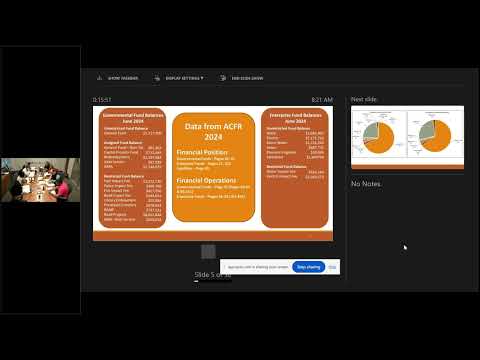
City finance staff and consultants told the council that Kaysville’s enterprise funds (water, electric, stormwater and sanitation) show operating shortfalls on an ‘‘operating basis’’ even though net position and fund balances remain positive.
Staff walked the council through operating revenues and expenses for each utility. The presentation showed that operating revenues did not fully cover operating expenses for several utility funds and that investment income and capital contributions were the primary reasons overall net position increased. Staff warned that relying on non‑operating items (investment earnings, capital contributions) masks whether rates are sufficient to cover ongoing operations and recommended reviewing utility rates and the timing of planned capital projects.
To give councilmembers a scenario tool, staff introduced a WaterWorth financial model that combines operating and capital forecasts with rate scenarios. Staff said the model shows a path in which operating revenues fall short of projected operating expenses in the mid‑2020s and that, with capital needs included, the water fund balance could decline to minimum targets within a decade unless rates are adjusted or the city issues debt. Staff presented examples of rate scenarios and noted that Kaysville currently carries low enterprise debt, a position that makes bonding a feasible option to spread capital costs over time.
Council members pressed staff for detail on metered sales, peak purchase costs for power and the cash effects of recent capital purchases such as transformers; staff pointed to a $560,000 net cash decrease for the year in the cash‑flow statement that reflected capital acquisitions. The presentation also noted a near‑term request to move up a replacement bucket truck purchase because of mechanical safety issues; staff said they will return with a funding plan that would use enterprise fund reserves rather than adding debt.
Staff recommended further rate‑modeling work sessions so council members can evaluate tradeoffs — phased smaller increases now versus larger increases later, or use of bond financing for capital projects — and asked for direction on acceptable scenarios to present in April.