Get Full Government Meeting Transcripts, Videos, & Alerts Forever!
Get email alerts on the School Finance topic
No spam. Unsubscribe anytime.
Committee extends temporary higher cash‑reserve limit for school districts amid recalibration talks
Summary
Education Committee approved Senate File 137 to extend a previously enacted 30% operating reserve allowance for school districts through June 30, 2028; proponents said the extension helps districts manage cash flow while recalibration and federal fund spend‑down continue.
The Education Committee approved Senate File 137 to extend through June 30, 2028, a temporary increase that allows school districts to carry a larger operating balance and cash reserve (30% of prior year operations), a measure sponsors and school finance officials said helps districts manage cash flow as federal COVID funds are spent down and the state recalibrates education funding formulas.
Senator Dockstader, sponsor of the bill, said small districts originally requested flexibility to better cash‑flow operations and that stakeholders now support extending the sunset. "This simply extends the sunset date, helps districts with their operating balances, and allows districts more control of their operations," Dockstader said.
Supporters, including the Wyoming Department of Education and local school finance officers, described practical cash‑flow reasons for the extension: federal reimbursement timing, local tax collection schedules and the need to float expenses for summer payrolls and grant reimbursements. Jed Ciccarelli, chief financial officer for Laramie County School District No. 1, described reserve mechanics and cash‑flow timing, saying districts can face steep consequences if reserves exceed statutory limits because excess funds are recaptured by the state.
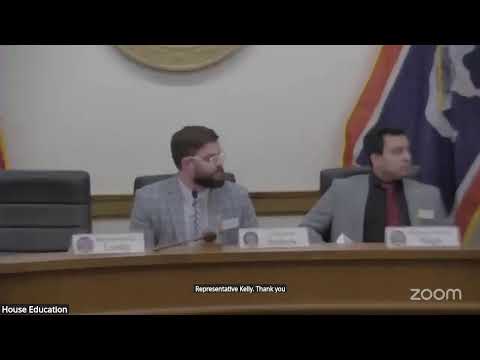
Representative Kelly proposed an amendment to replace the sunset extension with a phased reduction to a 25% permanent cap; the amendment failed on the committee floor. The committee ultimately voted to give the bill a "due pass" recommendation. The roll call showed the bill passed the committee by a majority (recorded as 7‑1 with one excused). Senator Dockstader said stakeholders remain open to discussion about whether a permanent change and what size cap would be appropriate, but argued an extension is needed now to avoid operational disruptions.
Testimony from a parent in a recapture district urged consideration of allowing recapture districts to retain a larger share of locally generated revenue for capital needs; proponents and education officials said recalibration this summer is the appropriate venue to address those kinds of longer‑term distribution questions.
The bill will move forward for further legislative consideration following the committee's approval.