Get Full Government Meeting Transcripts, Videos, & Alerts Forever!
Get email alerts on the Proxy Voting Esg topic
No spam. Unsubscribe anytime.
Committee weighs Senate File 191 to codify proxy-voting limits and reporting for state investments; discussion continued
Summary
Committee members and witnesses debated a bill to codify proxy-voting rules and reporting for state investments, including a provision limiting proxy-voting administrative costs to one basis point; discussion was continued and no committee vote was taken.
Senate File 191, a bill that would codify the state treasurer’s proxy-voting policy and permit a limited expenditure for proxy-voting services, drew extended discussion but no committee vote; members agreed to continue the conversation at the next meeting.
Senator Beau Biedman, who identified himself for the record as “Beau Biedman, senate district 21, Sheridan County,” presented the bill and said it is intended to “protect our investments” by ensuring proxy voting is conducted “with the sole aim of maximizing financial returns rather than advancing an environmental, social, and governance objective.” He told the committee the bill creates a new statutory section and codifies the treasurer’s current practices.
State Treasurer Kurt Meyer testified in support of the codification, saying he “applaud[s] the effort of the senators” and described work the treasurer’s office has already done with a proxy manager to align votes with fiduciary standards. Meyer discussed past examples and said the treasurer’s office has sought ways to preserve returns while managing governance issues in portfolio companies.
Norman LeBlanc, chief operating officer for the State Treasurer’s Office, described the office’s current voting workflow and oversight: “The proxy advisor provides us with a recommendation. That recommendation flows through automatically to a vote. However, prior to it going to a vote, days prior to it going to a vote, it shows up on a screen that we can see and at any time we can override that vote and replace it with a vote that we want to have in place.” He cautioned that close manual oversight would require additional staff if the office expands coverage beyond U.S. domestic equities.
Questions from lawmakers focused on scope, cost and transparency. The bill includes a funding provision limiting administrative spending for proxy voting to “not more than 1 basis point of assets under management from annual investment returns.” LeBlanc told the committee that one basis point would be sufficient for a domestic-only program with the office’s current approach, but that covering global holdings would raise vendor costs “from something in the vicinity of the $70–80 grand level to $202–250 [thousand] pretty rapidly.”
Secretary of State (title used in testimony) supported progressing the effort but urged codifying regular reporting to the State Loan and Investment Board (SLIB) and to the public. The secretary recommended quarterly reporting on proxy votes and said such notice would help preserve continuity if officeholders change.
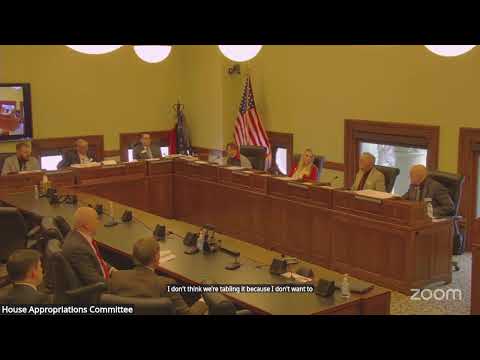
Members did not take a vote on the bill. Chairman Baer said he wanted to “continue the conversation” at the committee’s next meeting rather than table the bill; he and several witnesses discussed options for codifying quarterly online reporting of proxy votes and refining the bill’s funding language. The treasurer’s office representatives agreed to work with legislators on amendment language to reflect what can be produced on short timelines.
Why it matters: The bill would formalize how the State Treasurer’s Office votes pooled assets and would place statutory limits on administrative spending for proxy voting. Proponents framed the measure as a fiduciary safeguard for pension beneficiaries; witnesses discussed tradeoffs between oversight intensity, staff needs and vendor costs.
Next steps: Committee members agreed to continue discussion at the next meeting; no committee vote was recorded on Senate File 191.