Get Full Government Meeting Transcripts, Videos, & Alerts Forever!
Get email alerts on the Public Deposits Credit Unions topic
No spam. Unsubscribe anytime.
Committee advances bill letting credit unions compete for public deposits
Summary
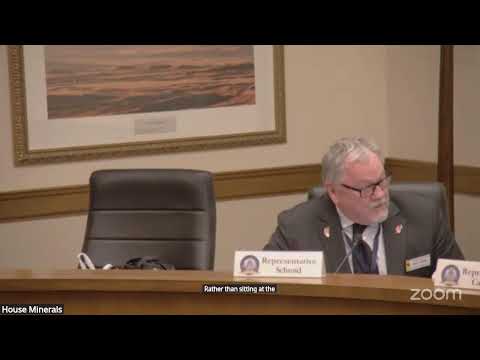
The Minerals, Business & Economic Development Committee voted 8–0 to advance Senate File 143, a bill that would allow Wyoming credit unions to be eligible to receive public deposits alongside banks. Supporters said the change expands options for local governments; opponents warned of regulatory and tax differences between banks and credit unions.
Senate File 143, which would add “credit unions” to the list of financial institutions eligible to receive Wyoming public deposits, was advanced out of the Minerals, Business & Economic Development Committee on a voice/roll call vote of 8–0 with one excused.
The bill’s sponsor, Senator Teran Nethercott, told the committee the measure simply extends to credit unions the same opportunity currently enjoyed by state-chartered banks. “All it simply does is everywhere that our Wyoming banks are allowed to accept public deposits, we are adding the statement credit unions,” Senator Nethercott said, arguing that credit unions are subject to federal insurance and safety measures comparable to banks.
The bill would let local governments include credit unions on lists of approved depositories and allow credit unions to competitively bid for public deposit business. Supporters — including local elected officials and representatives of county governments, municipalities and Wyoming credit unions — said the change would help small communities that have credit unions but no nearby bank branch and would keep more public funds working locally.
Opponents, represented in testimony by Scott Meyer of the Wyoming Bankers Association, raised regulatory and tax distinctions between banks and credit unions. Meyer emphasized the Community Reinvestment Act, a federal law that applies to FDIC‑insured banks and requires community lending and investment activity, and said credit unions are not subject to the same statutory requirements or tax treatment. “The disparity lies in the fact that credit unions and banks are two different types of entities with two different missions,” Meyer said, adding that the CRA imposes obligations on banks that do not apply to credit unions.
Committee members also heard examples from counties and towns that lack a local bank branch and therefore must drive deposits to other towns. Supporters said credit unions are federally insured through the National Credit Union Administration (NCUA) and that members’ deposits receive the same insured protections as bank deposits.
Action and vote: Representative Lolli moved to advance the bill; Representative Schmidt seconded. The committee conducted a roll-call vote. The roll call as recorded: Representative Campbell — aye; Representative Knapp — aye; Representative Larson — aye; Representative Volley — aye; Representative Riggins — excused; Representative Schmidt — aye; Representative Tarver — aye; Representative Weber — aye; Chairman Heiner — aye. The committee recorded the final tally as 8 ayes, 0 noes, 1 excused. Senate File 143 was placed on general file.
What happens next: The bill will proceed to the full floor for further consideration. The committee record includes testimony from multiple local governments, the Wyoming Association of Municipalities and industry associations, which the floor may reference during floor debate.
Ending: Supporters framed the bill as expanding options for local officials and keeping public funds within Wyoming communities; opponents focused on differences in regulatory oversight and tax status between banks and credit unions. The committee advanced the bill for consideration by the full legislature.