Get Full Government Meeting Transcripts, Videos, & Alerts Forever!
Get email alerts on the Good Samaritan Mental Health topic
No spam. Unsubscribe anytime.
Committee approves Good Samaritan expansion to cover layperson response to mental health crises
Summary
The Labor, Health & Social Services Committee on Feb. 14 voted to pass Senate File 130, expanding Good Samaritan protections to include emergency assistance during mental health crises.
The Labor, Health & Social Services Committee on Feb. 14 voted to pass Senate File 130, expanding Good Samaritan protections to include emergency assistance during mental health crises. The committee recorded eight votes in favor and one excused.
Senator Rothfuss, the bill sponsor, said the measure simply adds mental-health related language to existing Good Samaritan law so citizens trained in mental-health first aid and peer-support programs are explicitly protected when they attempt to help someone experiencing suicidal ideation or another acute mental health crisis. "This is a short, sweet bill," Senator Rothfuss told the committee, noting the amendments are conforming language to the existing statute.
Lindsay Semino, representing the Wyoming Behavioral Health Alliance, testified that the change responds to a statewide priority to broaden community-based supports and reduce unnecessary emergency department referrals. Semino described peer support programs in law enforcement, community centers and faith-based organizations and said the fear of litigation has deterred volunteers and local programs from forming in some communities. "We felt like this language was necessary," Semino said, explaining the amendment aims to give community responders confidence to intervene and refer rather than default to emergency-room transport.
Committee members asked about scope and limits. Semino said the bill covers laypersons acting with good intent and does not extend to licensed professionals making clinical judgments. She also said training is a relevant context but that the statute is intended to protect ordinary community responders: "This will cover anybody who is considered a layperson," Semino said. Committee members asked whether the protection would extend to physical restraint; Semino said she could not answer that from the bill language, and Senator Rothfuss said he would not expect the statute to protect forcible restraint.
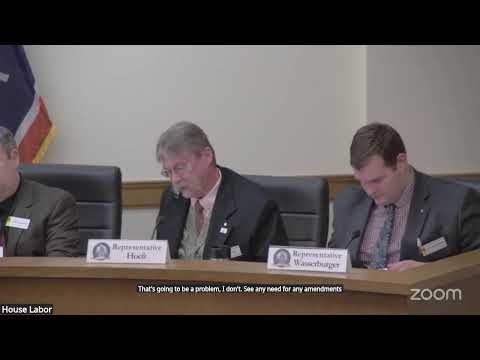
Law enforcement peer-support programs signaled support during committee discussion, according to the sponsor and Semino. Representative McCann moved the bill and Representative Wasserburger seconded; no amendments were offered. The committee voted 8-0 with one excused and recommended the bill be carried to the floor by a House sponsor.
Speakers in the hearing included Senator Rothfuss (bill sponsor), Lindsay Semino (Wyoming Behavioral Health Alliance), Representative McCann (mover), Representative Wasserburger (second), Mr. Caldwell (committee staff), Vice Chair Almond and several committee members who questioned scope and application. Committee members emphasized the bill's purpose is to encourage community-based mental health supports, not to replace professional care or to authorize forcible measures beyond existing law.
What the bill does not resolve in committee testimony: the transcript did not specify whether the bill creates immunity for physical restraints or the precise definition of "training" that would qualify a responder for protection; Semino said those points were not specified in the bill language presented.
Votes at a glance: Senate File 130 '1 8 yes, 0 no, 1 excused; no amendments.