Get Full Government Meeting Transcripts, Videos, & Alerts Forever!
Get email alerts on the Yemen Humanitarian Crisis topic
No spam. Unsubscribe anytime.
UN representative urges release of detained aid workers as Yemen crisis deepens
Summary
At a Security Council briefing, Representative Tom Fletcher warned that nearly 19.5 million people in Yemen need humanitarian assistance, described the death of a World Food Programme colleague in detention, and urged protection and funding so UN operations can resume.
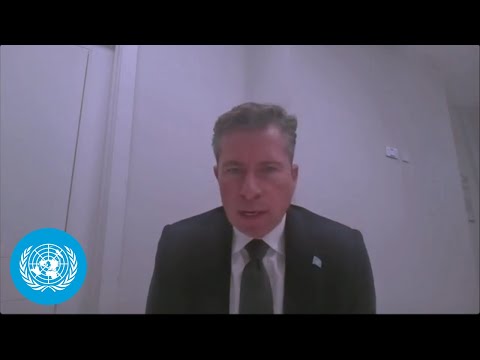
Representative Tom Fletcher, speaking at a United Nations Security Council briefing, urged council members to press for the release of detained United Nations and civil-society staff and warned that Yemen’s humanitarian crisis is worsening, saying almost 19,500,000 people need humanitarian support.
Fletcher said the council should act because humanitarian workers are at risk and civilians depend on uninterrupted access to food and services. “We must protect our courageous humanitarian workers wherever they are,” he told the council, and described the recent death of “our much loved World Food Programme colleague in detention by the Houthi de facto authorities.”
The representative outlined the scale of need and the impacts on children: he said millions are hungry; that children and women make up more than three-quarters of those in need; that about 3,200,000 children in Yemen are not currently in school; and that half of all children under age 5 are acutely malnourished. He also said that in 2023 “an average of 5 every hour” children under 5 died, “mainly from preventable or treatable conditions.”
According to Fletcher, World Food Programme reporting in December showed a majority of the population were unable to meet minimum food needs. He said that figure had risen since November and added that levels are expected to rise further because of the lean season and rising food prices.
Fletcher said that, faced with threats to staff security, the UN system had been forced to pause some operations. “Faced with real risks to the security of our staff, we’ve therefore been forced to temporarily pause operations in Saada governorate,” he said, adding that the UN is “taking all steps to preserve our capacity to restart operations once security guarantees have been obtained.”
He gave three specific requests to the council: “First, get United Nations and civil society staff released. They are there on your behalf. Protect them as humanitarian law demands.” Second, back a return to full UN operations and provide funding: “Give us the money to deliver for those we serve.” Third, he warned against actions that would restrict civilian access to essential services: “Don’t take actions which hit the access of civilians to essential services.”
Fletcher emphasized that severe disruptions to commercial or humanitarian supply pipelines would have “cascading negative consequences for Yemeni communities already on the precipice of disaster,” and he said the UN hopes the operational pause in Saada will be short.
The briefing included no formal council decisions or votes on the matters Fletcher raised. Council members were invited to make statements following his remarks.