Get Full Government Meeting Transcripts, Videos, & Alerts Forever!
Get email alerts on the School Law topic
No spam. Unsubscribe anytime.
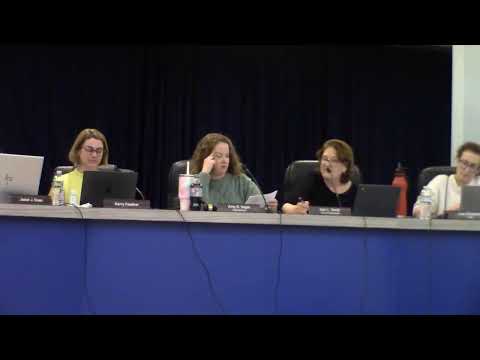
Municipal attorneys brief Cumberland School Committee on common litigation risks and how to limit exposure
Summary
Mark DeSisto and Sarah Boucher, attorneys who represent municipal clients, told the Cumberland School Committee that litigation against school districts is common and urged clear policies, documentation and use of counsel when harassment, discrimination, retaliation or Title IX issues arise.
Mark DeSisto and Sarah Boucher of the DeSisto law firm told the Cumberland School Committee on Feb. 13 that municipalities and school departments should expect occasional lawsuits and take steps to reduce risk.
The presentation, arranged by Superintendent Phil Thornton, reviewed categories of litigation the attorneys said commonly involve school committees: employee discrimination and harassment claims, retaliation claims, negligent hiring/training/supervision, Title IX (student-on-student and staff-on-student sexual misconduct) and slip-and-fall or other negligence suits. "I can tell you as we say to all town councils and school committees that we speak to, you're going to get sued," DeSisto said.
Why it matters: the attorneys framed the risks as a predictable part of governing in the current legal environment and urged the committee to rely on district counsel, maintain up-to-date policies and document personnel actions carefully. Sarah Boucher said documentation is essential when disciplining or terminating staff: "When you have a problem employee ... it's very, very, very important to document that," she said.
Key guidance delivered to the committee included: - Rely on district legal counsel and the Interlocal Trust resources for investigations and litigation strategy. DeSisto warned school committees not to conduct their own fact-finding after complaints: "If you don't listen to your lawyer ... and someone from the town council or the school committee does their own investigation, you've killed the school. You've killed the town." - Keep personnel records and handbooks current. Boucher described discovery problems that arise when records are incomplete: officials told counsel there were no handbooks in discovery, then later discovered an older handbook existed, complicating defense. - Document progressive discipline and give employees notice and an opportunity to be heard where required. DeSisto and Boucher referenced procedural protections (for example, notice and hearing concepts such as in Loudermill-type situations) and stressed that proper process reduces exposure. - Treat harassment and retaliation claims seriously and consider independent investigations when allegations arise. DeSisto described how jokes or offhand comments can become harassment claims and urged avoiding informal investigatory shortcuts. - Be mindful of Title IX obligations. Boucher outlined that claims fall into two broad litigation patterns: student-on-student harassment that migrates into the school setting and incidents that occur during school programs or activities (buses, prom, overnight events). She said the department must treat conduct that affects a student's ability to participate in school programs as potentially implicating Title IX. - Preserve and forward legal documents promptly. Boucher warned about the court's default rule if a complaint is not answered in time and urged staff and committee members to forward any summons or legal paperwork immediately to counsel. - Anticipate discovery of texts and emails. DeSisto emphasized that committee members' emails and many text messages can be discoverable and advised caution in written communications: "Every text that you put in now ... you should assume that it's coming out."
Committee members asked practical questions about conflicts between state and federal guidance (including Title IX). DeSisto noted the supremacy clause generally requires following federal law where a true conflict exists but said the "devil is in the details" when federal and state rules differ.
The presentation concluded with an invitation to consult counsel and the trust for policy reviews, investigations and training. "Use them. Rely on them," DeSisto told the committee.
The committee did not take a vote on policy changes during the presentation; the attorneys' remarks were advisory and procedural.