Get Full Government Meeting Transcripts, Videos, & Alerts Forever!
Get email alerts on the Strategic Plan topic
No spam. Unsubscribe anytime.
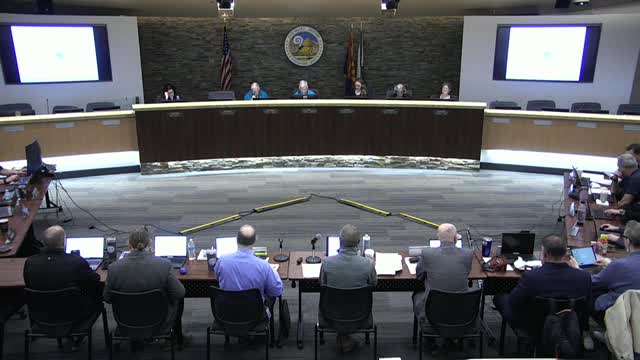
Oro Valley council reviews 2025–27 strategic plan, narrows 62 projects ahead of April draft
Summary
At a Feb. 2025 study session the Oro Valley Town Council and staff reviewed a proposed 2025–27 strategic plan of 62 projects across seven focus areas, agreed to several wording and scope changes, and set an April 2 follow-up to review a revised draft before aiming to adopt the plan in mid‑April.
Oro Valley Town Council met in a Feb. 2025 study session to review projects, guiding principles and timelines for a proposed 2025–27 strategic plan.
The council spent the session working through a staff-compiled list of 62 candidate projects organized under seven focus areas — economic vitality, culture and recreation, public safety, infrastructure and town assets, land use and design, effective and efficient government, and financial sustainability. Consultant Mike Letcher and Town Manager Jeff Wilkins led the discussion with staff, and council members provided project-by-project direction, asked for clarifications and agreed which items should stay in the draft the town will return with on April 2.
Why it matters: The strategic plan steers Oro Valley’s priorities, integrates with the budget and agenda process, and will guide staff work and capital planning for the next two years. Council members repeatedly emphasized the need to balance operational capacity, staff time and available funding when converting priorities into work plans.
What the council did and discussed
Overview and schedule: Letcher said the goal is to refine the plan in the study session, return an updated draft April 2, and adopt the plan around April 16 if the council is ready. Wilkins said staff will come back with more detailed year‑1 and year‑2 assignments, timelines and responsibilities after council direction.
Project count and format: The council reviewed 62 projects across seven focus areas and 30 guiding principles. Letcher explained the new format: a vision and focus areas (“why”), guiding principles (“what”), and projects (“how”), with decision‑point projects returned to council when implementation requires further direction.
Economic vitality and tourism: Councilors supported several tourism and marketing items tied to the town’s new destination marketing work and the Explore OV app while asking staff to clarify the scope and return-on-investment (ROI) expectations. Wilkins said the council previously reallocated funds that had been budgeted for Visit Tucson, creating roughly $522,000 in town tourism investment; the leisure-travel study now underway will recommend whether additional hard or programmatic investments are justified. Council asked staff to treat that funding as an interim pool, prioritize community benefits and return with performance and budget detail in April.
Digital tours and interpretive signage: Council voted to combine two related projects — digital tours (art, trails, nature) and wayside/interpretive signage — into one effort that would supplement, not replace, permanent signs. Members suggested QR codes and integration with the Explore OV app to keep content current while retaining some physical signs for accessibility.
Economic development and supplier attraction: Several members said targeted supplier attraction is being handled operationally by staff and need not be a stand‑alone strategic project; staff confirmed ongoing outreach to employers and suppliers, and the item will be deprioritized from the council project list.
Innovation Park and primary employment: Councilors asked staff to include projects that protect commercially zoned land for primary employment in Innovation Park and to continue efforts to create shovel‑ready sites. Members supported a renewed emphasis on attracting primary employers and clarifying the inventory of employment land.
Public safety and police planning: Councilors asked for a multi‑year look at police workforce and facilities. Police staff and commanders described use of Kronosolutions (a CAD‑data driven staffing tool) to analyze patrol deployment and workloads and said it can support near‑term predictability and help signal when additional staffing or beat realignment is needed. The council agreed to keep a police space/facility evaluation as a strategic item and asked staff to prioritize determining an approach and likely funding paths in the next months.
Culture, parks and recreation: Council supported projects including completion of the trails master plan, senior programming expansion, a comprehensive recreation/arts/venue strategy, and a feasibility study for a permanent outdoor stage at JDK Park (currently the town rents stage equipment for major events). Members asked staff to consolidate financial data for all recreation and golf programming so the council can assess enterprise fund feasibility and operational efficiencies.
Vistoso Trails Nature Preserve and Coronado fields: Councilors discussed ongoing coordination with Amphitheater School District and Pima County over Coronado Little League fields and requested a clear timeline for resolving facility and restroom issues. On the Vistoso preserve, members asked for exploration of restoration options while avoiding shifting costs to nearby residents; language was added to reflect broader funding options and partnership possibilities.
Infrastructure, water and resource conservation: Councilors flagged water and conservation projects — residential landscaping outreach, invasive species control and renewable energy initiatives — and asked for measurable goals and clearer performance metrics. Staff noted a new water conservation specialist and the ability to model consumption impacts, but cautioned that year‑to‑year weather variations complicate precise attribution of savings to outreach alone.
Technology and cybersecurity: Council endorsed a staff study to re‑architect town network security to ensure public‑safety and utility networks are segmented and protected from lateral cyber intrusion. The council also asked staff to research AI tools and customer‑service automation, but members stressed any tool must supplement, not replace, human service; staff will report back with use cases and recommendations.
Land use and design: Council reviewed and edited proposed focus wording and guiding principles; members asked staff to rework code‑related decision projects so they align with the voter‑approved general plan (Your Voice, Our Future) and to avoid premature code changes while state legislation affecting local land‑use authority remains in flux.
Financial sustainability and annexation: Councilors discussed using targeted annexation of mature retail/commercial sites that bring recurring tax and utility revenue as one of several options to bolster revenues. Members asked staff to clarify which annexation opportunities are financially advantageous, and to produce a five‑year forecast and options in the upcoming budget cycle.
Decisions and directions from the session
- Staff to return April 2 with a revised draft that incorporates council edits, clearer project scopes, ROI language for tourism spending and detailed year‑1 and year‑2 responsibilities. - Police facilities and workforce analysis to continue; staff to provide options and cost estimates so the council can decide a funding approach. - Digital tours and interpretive signage combined into a single project and tied to Explore OV; staff to pursue QR integration and hybrid signage options. - Items already being executed by staff (for example, some venture capital and supplier outreach) were identified as operational and will be deprioritized as a formal strategic project. - Council asked for clearer financial summaries for recreation and golf programming; staff will consolidate that data for decision making.
What’s next: Staff will produce a revised strategic plan draft (including refined focus-area wording and guiding principles) for the April 2 council meeting. The consultant said the town aims for council adoption around April 16, pending further refinements.
Quotes: “This is the fifth strategic plan of our current Your Voice, Our Future general plan,” Mayor Winfield said while opening the session. “We’ll bring back more flushed out documents with year 1, year 2 who’s going to be responsible.”
Commander Zak described the staffing analysis tool: “Corona Solutions is a really good tool because it allows us to put in inputs of what our community expects from us… we typically are looking for what we call a 40/40/20 — 40 percent proactive, 40 percent reactive and 20 percent admin time.”
Budget and public engagement: Council members repeatedly asked staff to show measurable returns for proposed spending—especially tourism dollars reallocated from Visit Tucson—and to provide regular updates on the DMO/leisure travel work. Several councilors also requested clearer timelines so the council will not have recurring, multi‑year items linger without resolution.
Ending: The council concluded the study session after a full review and asked staff to return with a consolidated draft on April 2 for further refinement ahead of a targeted mid‑April adoption.