Get Full Government Meeting Transcripts, Videos, & Alerts Forever!
Get email alerts on the Water Sewer Rates Cip topic
No spam. Unsubscribe anytime.
DeKalb committee reviews 10%-per-year water and sewer rate proposal, consent-decree costs and customer protections
Summary
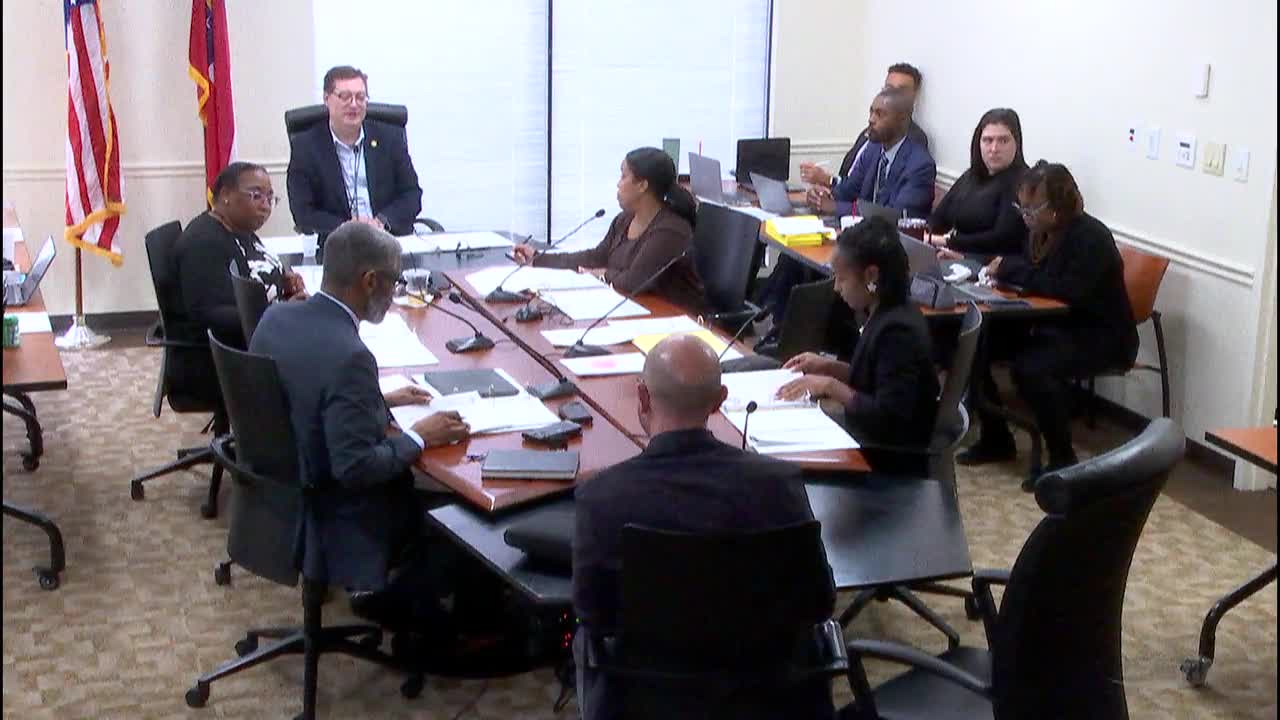
Commissioner Robert Patrick, chair of the Public Works and Infrastructure Committee, reconvened the Feb. 13 meeting to address a proposed uncoupled water-and-sewer rate resolution that would raise rates 10% per year for 10 years and to review the capital-improvement program and related customer-protection proposals.
Commissioner Robert Patrick, chair of the Public Works and Infrastructure Committee, reconvened the meeting Feb. 13 to address water and sewer rates and the capital-improvement program for the county's watershed system.
The administration distributed an “uncoupled” rate resolution that separates a proposed 10% annual increase for water and sewer from a proposed bond authorization. Maria Hauser, Director of Watershed Management, walked commissioners through the CIP 2024 update, the county’s online CIP materials and a new Power BI dashboard intended to make project details and progress more transparent to commissioners and the public.
Why it matters: the county is under a modified consent decree requiring major sewer and wastewater work. Staff and consultants told the committee the 10-by-10 rate option — a 10% annual increase for 10 years — supports a ten-year CIP that includes hundreds of projects and helps fund the consent-decree work. Commissioners raised questions about the revenue sufficiency analysis, the use of 2023 audited numbers, the constructability and timing of the largest trunk-line projects and the scale and timing of potential federal or state penalties for missed deadlines.
Rate resolution and process options
Staff presented two principal pathways: adopt a rate resolution that includes a set of seven customer-protection measures now (the “full BOC draft”), or adopt the rates alone and require the administration to return with the protection measures finalized within a short timeline (a draft with a 30-day timeline was presented). The protections the committee discussed include an Office of (Water and Sewer) Customer Advocacy, an income-based DeKalb Cares affordability program, shutoff protections for vulnerable populations, longer payment-plan options for customers in dispute, and an operational audit of Watershed Management.
Revenue sufficiency and data inputs
Staff and Arcadis, the county's consultant for the revenue sufficiency analysis, used audited 2023 numbers in the draft study. Maria Hauser said audited 2024 financials are not yet available — auditors' work is typically not finalized until midyear — but staff can produce draft updated figures if commissioners want that included. Chief Financial Officer McNabb and other staff said DeKalb has a new general-ledger system installed in 2024; closing and validating 2024 numbers has taken longer as reporting is tested.
Staff and consultants also described key modeling assumptions and costs:
- Consent-decree-related spending: staff said the county expects about $106 million in consent-decree obligations for the current year and about $1.5 billion over a 10-year horizon related to capital and operations tied to the agreement.
- Fines and penalties: a previously negotiated civil penalty related to the modification was cited as roughly $1,047,000; staff said total potential penalties cited in court (an estimate previously quoted as $80–$100 million) assume worst-case spill scenarios but that count could be reduced by incremental project progress. County legal counsel said stipulated penalties and potential negotiated front-end penalties would be part of any modification discussions with regulators.
- Collections and affordability: the revenue-sufficiency model assumes a 93% collection rate. Staff noted collection rates fell to about 85% during the period the county had a disconnection moratorium and that about $30 million per year in accounts became uncollectible during that period; staff said the county expects collection rates to improve but cannot be certain how quickly. Early estimates for a DeKalb Cares discount program were discussed: staff indicated an initial projection in the first year near $1.5 million, rising to about $3 million in later years under one scenario and growing further over the 10-year window depending on program design.
Constructability and the consent-decree timeline
Maria Hauser and the county's engineers described how constructability — not only funding — constrains how quickly major trunk-line projects can be completed. Hauser said some trunk lines are in such poor condition that parallel relief construction is not feasible without full replacement and rerouting; she said the Shoal Creek trunk line is a critical path item and that building new trunk lines (up to 72 inches in diameter and requiring deep excavation and lengthy permitting and construction sequencing under highways) drives the long schedule.
County legal counsel and staff said negotiations with the U.S. EPA and state regulators are ongoing. Attorney Welch told the committee that some penalties are stipulated in the existing documents and that the county will seek to minimize penalties in negotiations; he reiterated that penalties are calculated using formulas tied to timing and the nature of missed milestones.
Transparency and project tracking
Hauser demonstrated the county's external CIP web pages and the internal SharePoint binders for commissioners. She said the project dashboard provides district-level detail (assets in each commissioner district, testing done, priority areas, and project progress) and indicated staff would pilot broader commissioner access to the Power BI dashboards before releasing the view more widely.
Commissioner concerns and follow-up requests
Commissioners sought updated revenue-sufficiency runs that use preliminary 2024 closes if possible, noted the need for specificity around costs of customer-assistance programs and asked for clear SOPs or ordinances tying future rate increases to the customer-protection protocols. Commissioner Spears and others pressed staff about options to shorten the consent-decree schedule and argued the committee should explore whether faster construction could reduce long-term penalties; staff responded that constructability and the physical limits of large trunk-line construction make dramatic compression of the schedule difficult and could materially increase near-term costs.
Formal actions
No formal votes on the rate resolution or CIP were taken at this meeting. Staff circulated two alternate resolutions and a more detailed draft that includes an exhibit describing the proposed Office of Water and Sewer Customer Advocacy; the committee expected to continue the discussion at the next regular PWI meeting.
Ending
The committee agreed to more follow-up: staff said they will (1) confirm whether revenue-sufficiency modeling can be updated with preliminary 2024 closes, (2) provide more detailed cost estimates for proposed customer-assistance programs and (3) continue negotiations and planning for consent-decree timing and finance options. The committee adjourned by motion later in the meeting.