Get Full Government Meeting Transcripts, Videos, & Alerts Forever!
Get email alerts on the Homelessness Shelter Operations topic
No spam. Unsubscribe anytime.
Residents and shelter staff raise safety and food access concerns as city runs overflow shelter
Summary
Public commenters and city staff described multiple incidents at Richmond overflow shelters, including alleged security-guard threats, families denied short-term entry, and ongoing operational strain; city staff say the shelter reached 50 guests of a 60-bed capacity and that a security worker was removed after a reported threat.
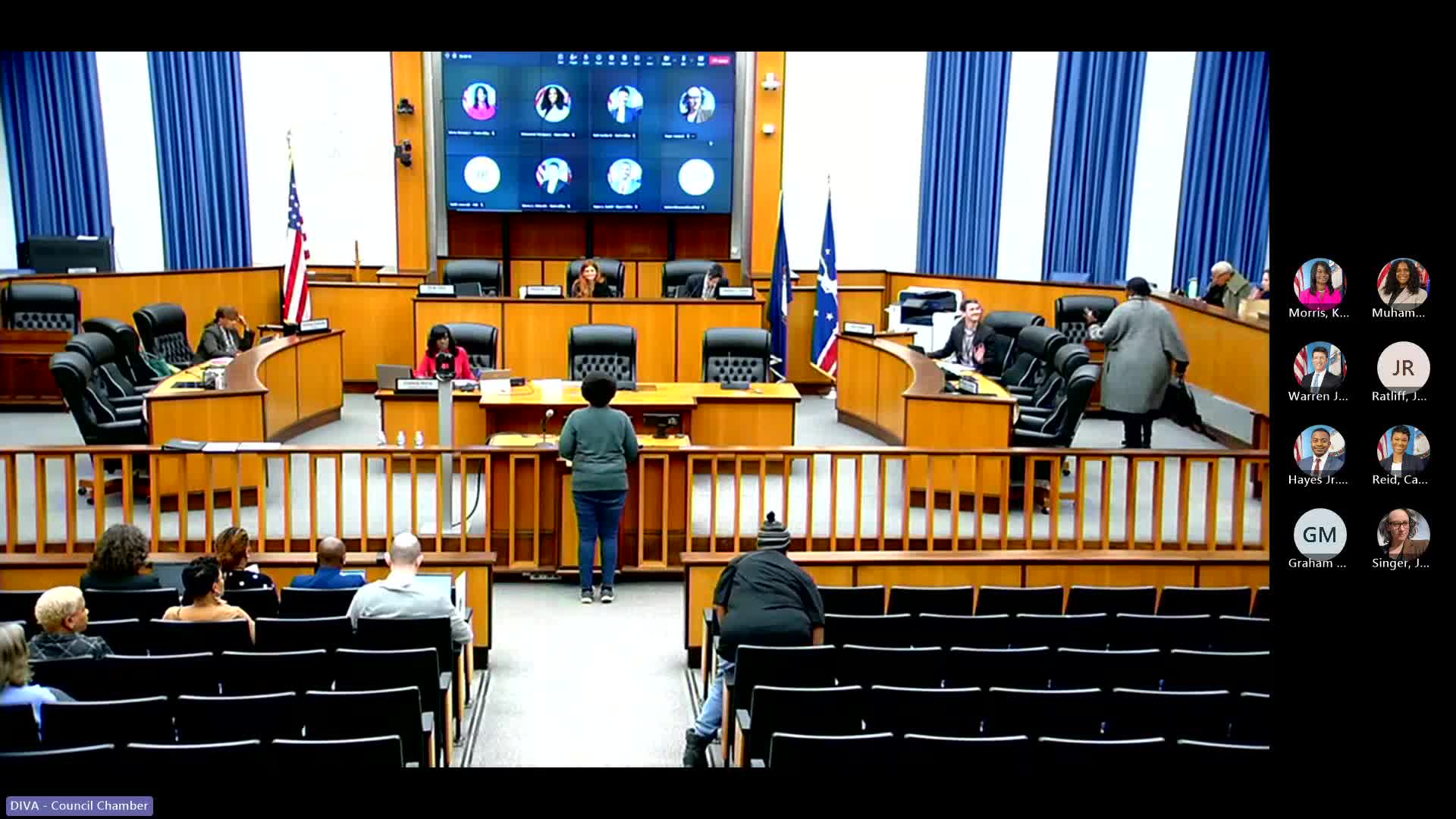
Public comment and staff updates at a Richmond Education and Human Services Standing Committee meeting focused on safety and care at the city’s interim and overflow shelters for people experiencing homelessness.
Multiple community members described incidents they said occurred at city-contracted shelter sites. Nancy Williams, who identified herself as representing 3 Gifts 2 U, said people placed in hotels were not consistently receiving meals: “If you want to provide the services, providing food for your clients is part of the the ordeal,” she told the committee. Bridget Whitaker, who said she is a security officer, urged the city to improve hiring and procedures, saying, “We have a powder keg situation ready to blow.” Leron Gibson, who said he had seen video of a morning incident, called the footage “very unprofessional” and urged immediate action.
Tiffany Ford, director of the Department of Neighborhood and Community Services, said the city opened a 60‑bed inclement‑weather overflow shelter this week and reached as many as 50 guests at peak occupancy, including 45 men and five women. Ford said the city has worked with regional partners to staff the site and credited volunteers and partner agencies for providing meals and clothing. She said the current shelter is the third iteration and that staff have tightened standard operating procedures and done shift‑level briefings to address problems.
Ford addressed a specific complaint about a security guard. Ford said Diane Wilmore, a shelter shift lead, intervened in the incident and the city removed the guard from that shelter. “We called the company, and asked them not to put her on anything that dealt with us going forward,” Ford said. She added that the city dismissed the guard from shelter duty and will not use that employee in future shelter shifts. The committee heard multiple public commenters urge stronger training and more experienced security or mental‑health staff at shelter locations.
Speakers at public comment described an episode in which a mother and six children were told they could not stay in a shelter space if they intended to leave before morning; commenters said the family feared child‑protective action and as a result would not return to shelter. Community members also said untrained or young security staff had threatened residents; one commenter said she had video showing a guard telling people “I have a gun, and I will use it.” Ford said staff had investigated and would apply clarified protocols going forward.
Committee members and staff repeatedly framed the problems as regional and systemic, not solvable by the city alone. Ford said Hanover, Henrico and Chesterfield counties had provided staff support and called for broader, sustained regional partnership and funding to support year‑round sheltering, outreach, and mental‑health resources.
The committee scheduled a regional stakeholder town‑hall on March 20 to solicit input about homeless‑services models and potential solutions, and members asked staff to return with operational details on shelter staffing, security contracting, and referral protocols.
Ending: Committee members thanked the public speakers for detailed accounts and called for continued follow‑up; staff said they would return with more precise operational data and requested a list of videos and incident reports for the city’s review.