Get Full Government Meeting Transcripts, Videos, & Alerts Forever!
Get email alerts on the Georgia Grown topic
No spam. Unsubscribe anytime.
Georgia Grown highlights membership services, innovation centers and retail promotions
Summary
The Georgia Department of Agriculture outlined the Georgia Grown membership program’s marketing, technical-assistance and expansion plans, including innovation centers, trade-show support, farm-to-school efforts and new retail and sporting-event promotions.
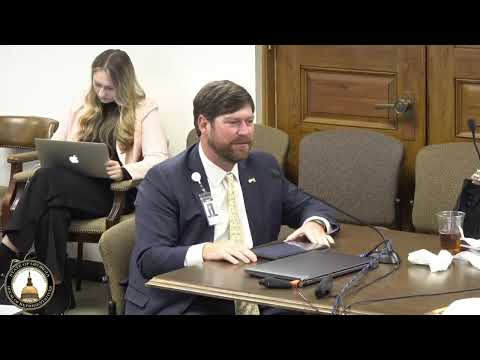
Matthew Kalinski, director of marketing at the Georgia Department of Agriculture, told the Economic Development & Tourism Committee that Georgia Grown is a membership-based economic development program that helps farms and food businesses expand markets and sales.
Kalinski said the program has more than 1,570 paying members and provides marketing, technical assistance and direct-business development services. “Georgia Grown is a program of the Georgia Department of Agriculture,” he said during a presentation to the committee.
The program’s services include the Georgia Grown Innovation Center in Meador, a one-stop site that offers workshops, partner referrals and space for businesses to access technical assistance from partners such as Georgia Southern University, the University of Georgia extension services and nonprofit organizations. Kalinski said the innovation center began about four years ago and the department is expanding similar centers to other communities, with Albany cited as under construction.
Other program elements Kalinski described include a television show, Fork in the Road, now in its fifth season on Georgia Public Broadcasting; federal-funded food‑buying contracts that link small farms to wholesale supply chains and Community Food Banks of Georgia; printed Georgia Grown guides and a membership listing in Georgia Trend distribution; agritourism directional signage in partnership with the Georgia Department of Transportation; and trade-show assistance domestically and abroad via cooperative funding (department funds plus USDA Southern U.S. Trade Association participation).
Kalinski also summarized promotion efforts, including in‑store events such as a multi‑state Kroger peach promotion that brought Georgia peaches to 240 stores, and said the department is developing an e-commerce and fulfillment service to help small producers sell through major online channels. He said the department is pursuing more retail presence through agreements with authorities (including a planned Georgia Grown store at Jekyll Island in coordination with the Jekyll Island Authority) and promotions at sporting events such as the Georgia Grown Bowl.
Committee members asked about expansion timetables and services at new innovation centers. Kalinski said Albany’s site is being built out with a storefront and meeting space in partnership with a local college-and-career academy and emphasized that centers will vary in services depending on community capacity — some will provide physical production or office space while others will host workshops and remote technical assistance.
Kalinski closed by providing contact information for Georgia Grown staff and inviting committee members to direct constituents to those contacts for detailed assistance.