Get Full Government Meeting Transcripts, Videos, & Alerts Forever!
Get email alerts on the Planning And Environment topic
No spam. Unsubscribe anytime.
Commission recommends updated MEA guidelines for historic resources be forwarded to City Council
Summary
Staff presented revised Master Environmental Assessment (MEA) guidelines for historic resources to align with CEQA, Secretary of the Interior standards and the city’s 2021 ordinance; the commission voted to recommend forwarding the update to City Council with staff recommendations and minor clarifications.
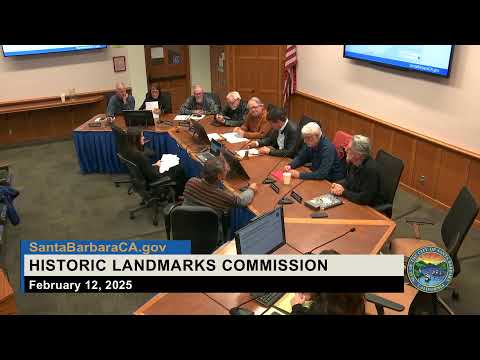
City staff presented an updated Master Environmental Assessment (MEA) for historic resources at the Historic Landmarks Commission meeting on Feb. 12, asking the commission to recommend the guidelines to City Council. The commission voted to forward the updated MEA with staff recommendations and a handful of suggested clarifications.
Nicole Hernandez, the city architectural historian, said the new MEA replaces a document last substantively revised in 2002. The updates streamline procedures for when a historic resources report is required, clarify when the city’s architectural historian may complete evaluations versus when a consultant must be retained, and standardize report formats. Hernandez said the goal is to align local practice with CEQA case law, the Secretary of the Interior’s standards and the city’s Historic Resources Ordinance (adopted 2021), while helping applicants avoid unnecessary consultant expense.
Key changes highlighted in the presentation include: clearer definitions of “phase 1” (historic significance) and “phase 2” (project impact) reports; a checklist-style report format with a short historic summary up front; guidance encouraging early consultation with the city architectural historian; criteria for when qualified historic preservation professionals must prepare reports; and an explicit recommendation to notify the public when historic significance evaluations are being prepared for demolition reviews.
Commissioners and public commenters urged additional emphasis on cultural landscapes and nonbuilding historic features (such as stone walls, street trees and sidewalks), suggested improving public-facing summaries to reduce confusion, and recommended that consultants present concise, illustrated summaries at hearings to aid community understanding. Commissioners also stressed the practical value of the city’s in-house architectural historian in reducing costs for homeowners and applicants.
After discussion and minor clarifying edits requested by commissioners (including adding a clearer list of significant people to the summary page and stronger language about cultural landscapes), the commission voted to recommend the MEA update be forwarded to City Council for approval.