Get Full Government Meeting Transcripts, Videos, & Alerts Forever!
Get email alerts on the Animal Services topic
No spam. Unsubscribe anytime.
Council approves contracts for city-funded sterilization services totaling up to $389,500
Summary
San Antonio City Council approved multiple one-year contracts with local veterinarians to provide sterilization and castration services, funded from the general fund, with execution to begin Sept. 30, 2025.
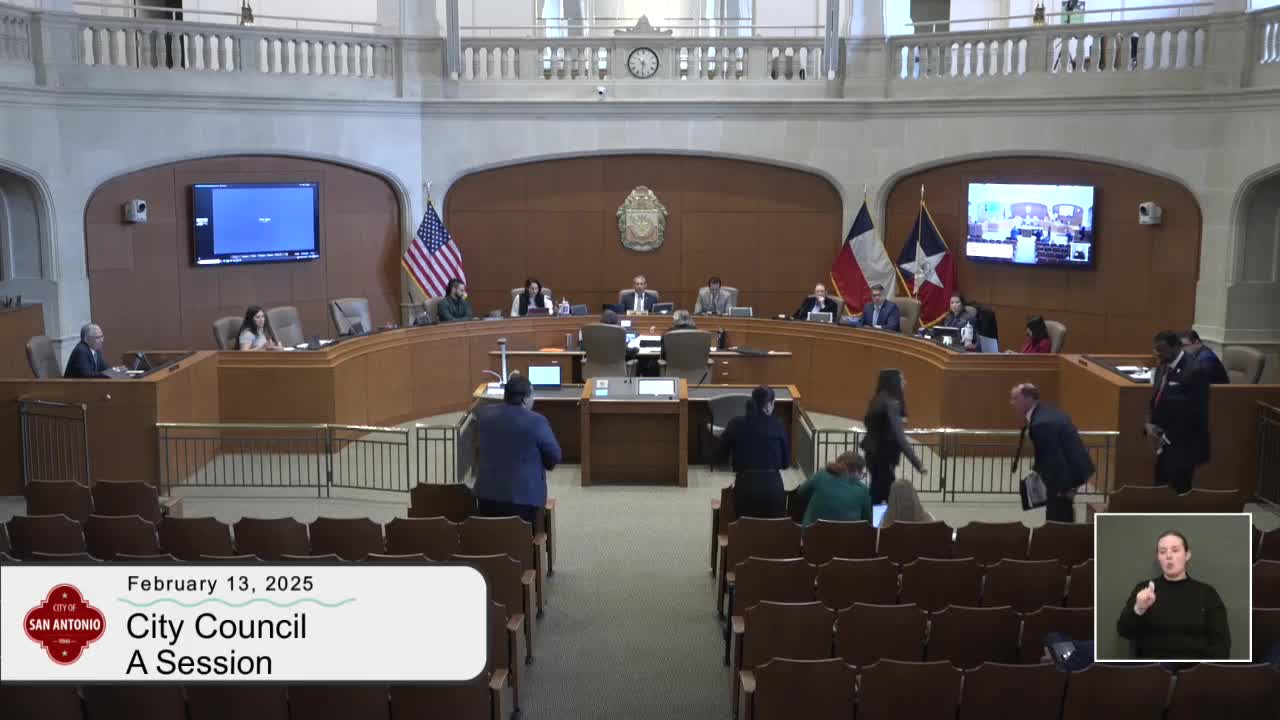
The San Antonio City Council on Feb. 13 approved professional services contracts with several veterinarians and veterinary service providers to deliver sterilization and castration services through city-funded clinics.
The contracts allocate individual amounts to named providers and a combined maximum not to exceed $389,500, with service periods to begin upon execution on Sept. 30, 2025 and funded from the general fund.
Contract details The approved contracts and maximum amounts named in the council item were: Dragonfly Veterinary Services (up to $114,000); Dr. Mangala Krishnapa (up to $76,000); Dr. Kristen Hosala (up to $38,000); Dr. Connie Schmidt (up to $38,000); and Dr. Elizabeth Harrison (up to $9,500). The total listed maximum for the set of agreements is $389,500.
Council and staff comments Council members thanked staff and community partners for advancing two city clinics (east and west) that staff said are expected to open in coming months. Councilmembers and staff described a nationwide shortage of veterinarians and said contracting outside providers is an interim but practical approach to provide consistent, affordable sterilization services at the new centers.
A city staff speaker said the hiring environment and responses to the city's requests for proposals limited the number of full-time providers available, and that contracted services can be scheduled weekly or multiple times per week depending on clinic needs.
Why it matters Council members framed the service expansion as a public-health and public-safety measure that keeps pets and neighborhoods healthier by increasing access to affordable veterinary care. Council members representing west-side neighborhoods said they had received repeated resident requests for these services and welcomed the clinics.
Outcome The council approved the contracts; a motion and second were recorded and the motion passed.