Get Full Government Meeting Transcripts, Videos, & Alerts Forever!
Get email alerts on the Department Budget topic
No spam. Unsubscribe anytime.
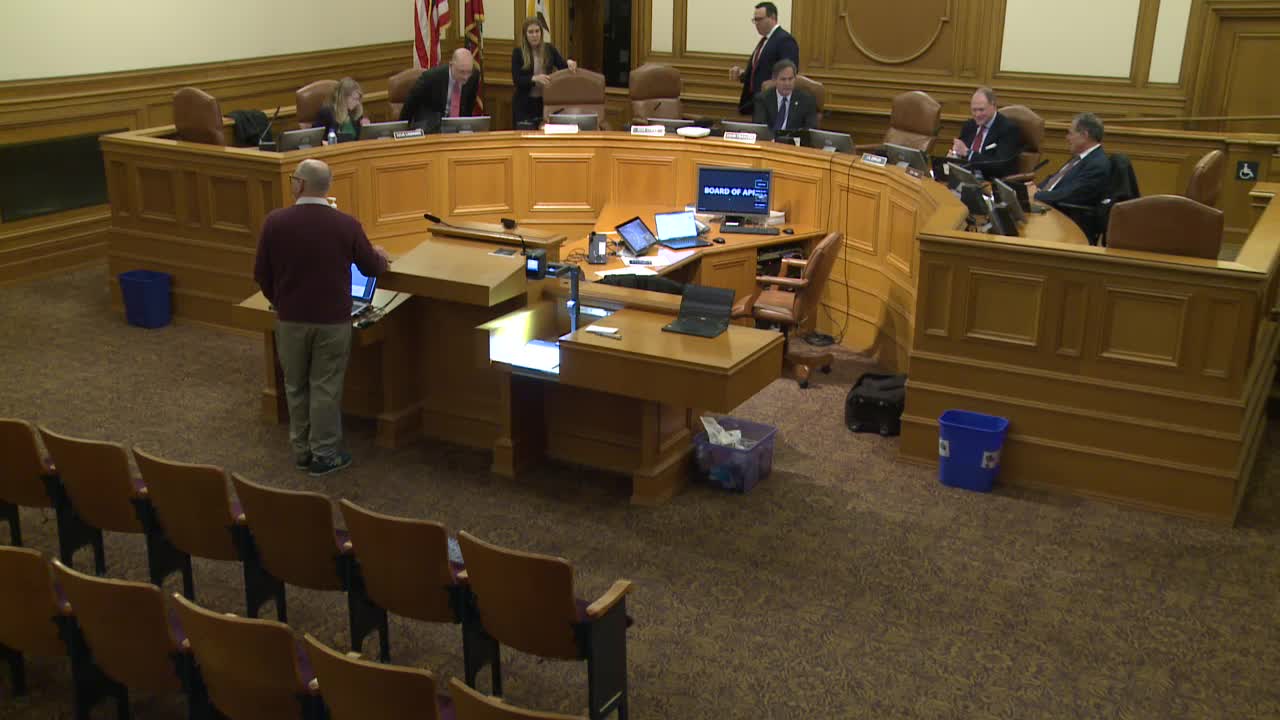
Board of Appeals adopts two‑year departmental budget; commissioners urge prudence on surcharge reserves
Summary
The San Francisco Board of Appeals adopted its departmental budget for fiscal years 2026–27 on Feb. 12, approving a plan that relies primarily on surcharge revenue. Commissioners stressed maintaining an appropriate reserve and asked the controller's office to account for permit-volume variability when setting surcharges.
The San Francisco Board of Appeals on Feb. 12 adopted its departmental budget for fiscal years 2026–27 after a presentation by Executive Director Julie Lamar outlining revenue sources, current-year performance and draft spending for the next two years. The board voted 4–0 to adopt the budget.
Why this matters: The board is funded almost entirely by surcharges on permits; Lamar told the board that "surcharges make up 99% of our budget." Commissioners raised questions about how the city controller’s surcharge analysis should treat surpluses and reserves given year-to-year swings in permit and appeal volume.
What was presented Julie Lamar, the board's executive director, summarized the budget: personnel costs account for about 66% of expenditures, services provided by other departments about 30%, and the remainder is nonpersonnel services such as interpreters, appeal-management software and SFGovTV expenses. Lamar reported that appeal volume has declined and that the board projects a revenue surplus in the current fiscal year (FY25) based on a six-month report.
Commissioners' concerns and guidance Commissioner Rick Swig asked that the comptroller's office be urged to consider the board's historical volatility when conducting its surcharge analysis so that surcharges do not swing unpredictably with short-term permit-volume changes. "We're building a budget based on surcharges and fees," Swig said; he asked the controller to set a reasonable reserve cap and treat any adjustments with the board’s long-term variability in mind.
Lamar said she is in discussions with the controller's and mayor's budget offices about deferred revenue, surplus treatment and appropriate buffer levels, and that the controller will perform an April surcharge analysis before any adjustments are finalized.
Board action Commissioner Jose Lopez moved to adopt the departmental budget for FY26 and FY27; the motion carried 4–0 (Lopez, President Trezvino, Vice President JR Epler and Commissioner Rick Swig voting aye). The board directed staff to continue coordination with the controller’s office on surcharge analysis and reserve guidance.
Ending The board adopted the two-year budget and asked staff to work with the comptroller to ensure surcharges and reserve policy reflect the board’s revenue volatility. The board also noted that fees (filing fees) have not changed since 2010 and that surcharge analysis occurs annually.