Get Full Government Meeting Transcripts, Videos, & Alerts Forever!
Get email alerts on the Food Regulation topic
No spam. Unsubscribe anytime.
Committee advances bill banning sale of cultivated meat in Wyoming
Summary
House Bill 168, which defines and prohibits the manufacture, sale or distribution of cultivated (lab-grown) meat for human consumption in Wyoming, was advanced by the Agriculture, State & Public Lands & Water Resources Committee following brief testimony from industry representatives.
The Agriculture, State & Public Lands & Water Resources Committee voted to advance House Bill 168, a measure that defines "cultivated meat" and prohibits its manufacture, sale, offer for sale or distribution for human consumption in Wyoming.
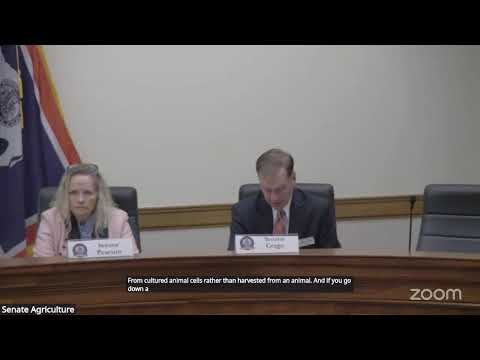
"House Bill 168 is cultivated meat prohibition. Came out of the house and essentially what it does is... it provides a definition for cultivated meat, which is means meat that is grown entirely in a laboratory from cultured animal veil rather than harvested from an animal," a sponsor explained during the committee hearing. The bill text, as described by the sponsor, places a ban on producing or selling cultivated meat in the state and includes enforcement provisions in title 35.
Kelly Carpenter of the Wyoming Farm Bureau Federation testified in support of the bill's intent, saying, "our members, definitely have concerns with lab grown meat, so appreciate the intent of this legislation." Carpenter raised concerns about potential long-term health and safety issues and the possibility that production technology could concentrate processing capacity, but did not propose specific amendments.
Committee members moved and seconded the bill and held a roll-call vote. The clerk recorded four affirmative votes and one negative; the chair announced the motion carried by a 4–1 margin.
Discussion: Committee members characterized the bill as straightforward; no amendments were proposed during the hearing. Public testimony provided industry support and expressed concerns about safety and market concentration. No scientific or public-health agencies provided testimony at this hearing.
The committee took no amendments and advanced the bill to the next step in the legislative process.