Get Full Government Meeting Transcripts, Videos, & Alerts Forever!
Get email alerts on the Transportation Budget Fy26 topic
No spam. Unsubscribe anytime.
Georgia DOT presents $2.79 billion FY26 budget, prioritizes capital projects, local grants and transit
Summary
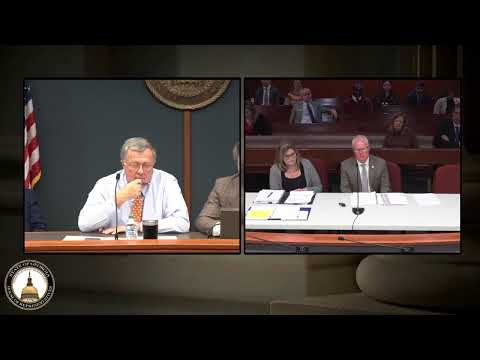
Commissioner McMurray presented the Georgia Department of Transportation’s proposed fiscal year 2026 budget to a joint session of the House Transportation and Appropriations committees, saying the plan totals $2,788,000,000 and increases funding for capital projects, maintenance and transit programs.
Commissioner McMurray presented the Georgia Department of Transportation’s proposed fiscal year 2026 budget to a joint session of the House Transportation and Appropriations committees, saying the plan totals $2,788,000,000 and increases funding for capital projects, maintenance and transit programs.
The budget “sets the table” around four primary revenue streams — motor-fuel excise collections, the Transportation Trust Fund (annual EV and heavy-vehicle fees plus a hotel fee), the Transit Trust Fund (a per-ride fee), and state general funds — and uses formula and look‑back rules to set appropriations for FY26, McMurray said. He described $1.4 billion for capital construction and capital maintenance combined (roughly 52% of the total), with routine maintenance representing about 20% and departmental operations roughly 11%.
Why this matters: the proposed FY26 plan is intended to reduce project deferments caused by inflation, to increase local resurfacing aid and to expand support for transit outside metro Atlanta. McMurray said the total represents “slightly less than a 1.5% overall budget increase” compared with the amended FY25 base.
Most important figures and how the money is used
- Total proposed FY26 budget: $2,788,000,000 (presented by Commissioner McMurray). - Capital construction and capital maintenance together: about $1.4 billion (52% of the budget) for new projects, right‑of‑way purchases, repaving, bridge rehabilitation and similar capital work. McMurray said the administration recommended roughly a $107 million increase in capital construction and about $110 million added to capital maintenance to address rising project costs and avoid deferrals. - Routine maintenance: about 20% of the budget; the department said it contracts much routine work (mowing, guardrail repair, patching) through many small Georgia businesses. - Local Maintenance and Improvement Grants (LMIG): projected at roughly $247 million in FY26 (formula distribution to cities and counties; the department noted an amended‑FY25 one‑time increase of $250 million that accelerated local work). The department said it got about 90% of the amended funds out quickly last year. - Transit Trust Fund: the per-ride fee (60¢ per solo ride, split 30¢ when rides have multiple passengers) produces a larger FY26 allocation; the transcript shows the trust fund rising about 17% in the FY26 projection. McMurray said the Atlanta‑region Transit Link Authority (ATL) receives the bulk of that revenue; GDOT retains roughly $11 million to support 82 rural and non‑small‑urban transit providers. - Excise tax and indexing: motor‑fuel excise collections are the largest single source. McMurray explained Georgia uses a 1‑year look‑back on excise collections and a two‑year look‑back for the transportation and transit trust funds when setting appropriations; the department’s FY26 excise projection reflects calendar‑year 2024 rates and was described as roughly a 1.2% increase over the amended FY25 base. - Heavy‑vehicle fee and EV fee: the heavy‑vehicle impact fee (either $50 or $100 depending on gross vehicle weight) has been in place since 2015, McMurray said; the transportation trust fund also includes an annual alternative‑fuel/EV fee and a $5 per‑night hotel fee. - Debt: GDOT reported general obligation bond debt at roughly $788 million outstanding and described long‑term debt servicing through other authorities, including GARVEE federal borrowing and payments to the State Road and Tollway Authority (SRTA), the Georgia Transportation Infrastructure Bank (GTIB) and the Georgia Regional Transportation Authority. The department said general obligation bond debt has declined compared with past years.
Rail, freight and grants
McMurray described freight and rail programs funded from a combination of state general funds and dedicated freight accounts. Key details included:
- Short line rail: GDOT owns about 460 miles of short‑line track leased to private operators; contracts are typically long‑term (10–20 years). The department said roughly 26–32 operators run those lines and any revenue from leases is reinvested in the lines. - Class 2 standard upgrades: GDOT estimates 70–75% of the short line mileage meets the Class 2 standard (286,000‑lb cars, ~25 mph), with remaining upgrades concentrated on trestles/bridges, which are more expensive than rail or ballast work. - Federal matching grants: GDOT named CRISI (Consolidated Rail Infrastructure and Safety Improvements) as a major federal grant program; federal grants often require state matching dollars and competitive applications. The transcript indicates state diesel/locomotive funds are used for rail access, preservation/enhancement and grade‑crossing/safety projects.
Operational issues and customer service
GDOT staff discussed operational items that accompany funding increases: cybersecurity and IT modernization, traffic‑management technology and permit processing.
- IT and cybersecurity: McMurray said GDOT operates an internal, closed system, works with the Georgia Technology Authority (GTA), uses vendors and consultants for projects and shares traffic data with commercial providers such as Google and Waze behind one‑way firewalls. - Traffic‑permit backlog: GDOT reported an average commercial driveway/access permit turnaround of about 92 days statewide, with a target of 45 days. The FY26 request includes contract support to speed permit processing without an immediate increase in headcount.
Airport aid and one‑time items
Committee members pressed GDOT on airport aid. McMurray said airport grants lack a dedicated revenue source and have fluctuated; a large, one‑time state general fund allocation (about $98 million in the prior year, with $7.5 million returned to the base in an amended budget) boosted airport aid recently. The department noted federal aviation funding for local airports is generally tied to FAA programs and typically remains at the airport level.
FEMA reimbursement and disaster recovery
Members asked about storm and disaster spending. McMurray said GDOT had advanced emergency funds — the amended budget included money to address winter/storm costs — and that FEMA reimbursement timing varies. He estimated roughly $135–$140 million could be eligible for FEMA reimbursement from recent storms but said timing and final amounts depend on federal review; until reimbursements are received, GDOT needs carryover to maintain routine maintenance and emergency response.
What was not decided
The session was a budget presentation and Q&A; there was no recorded formal committee vote or final appropriation action in the transcript. Committee members asked for follow‑ups on per‑capita spending comparisons with neighboring states, short‑line lease revenue amounts and specific debt ratios; GDOT offered to supply those figures later.
Speakers and source notes
Direct quotes and attributions in this story are taken from the joint committee transcript; only persons who spoke or were clearly identified in the transcript are quoted or attributed. Example direct lines from the transcript include Commissioner McMurray’s statement that the department is “proud to present the FY26 budget” and the department’s characterization of the funding mixture and look‑back rules that shape FY26 appropriations.
Ending
GDOT said the FY26 plan aims to reduce project deferrals caused by inflation, accelerate local resurfacing and maintain and expand rural transit service. Committee members asked the department to provide additional, follow‑up data on per‑capita spending, short‑line lease revenue and FEMA reimbursement timing before appropriation decisions are finalized.