Lifetime Citizen Portal Access — AI Briefings, Alerts & Unlimited Follows
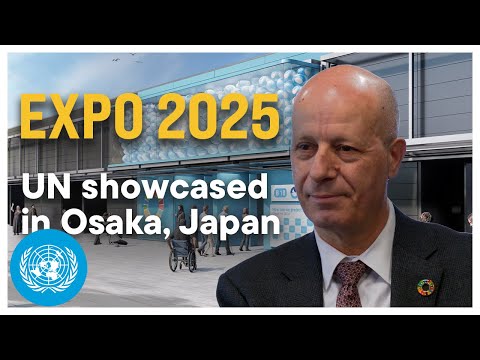
United Nations previews 'United for a better future' pavilion for Expo 2025 Osaka
Loading...
Summary
A United Nations representative described a three-part pavilion at Expo 2025 Osaka marking the UN's 80th anniversary, emphasizing the organization's past, its role in daily life and a future focused on the Sustainable Development Goals; the pavilion will include a virtual component for remote visitors.
A United Nations representative previewed the UN pavilion for Expo 2025 Osaka, saying the exhibit will mark the UN's 80th anniversary and run under the theme "United for a better future," with subthemes described as saving, connecting and empowering lives.
The representative said the pavilion will have three parts: a look back at the UN's first 80 years, an exhibit showing how the UN system is woven into daily life through agencies such as the International Telecommunication Union, the World Health Organization and UNICEF, and a forward-looking section imagining what could be achieved if countries commit to the Sustainable Development Goals.
"Our own pavilion will be under the theme united for a better future," the UN representative said, adding that the exhibit will highlight humanitarian work along with programs that promote human rights, peace and equality. The representative said the pavilion will run an "intensive program" over the six months of the expo and will encourage participating countries to showcase sustainability and progress on the 2030 Agenda inside their national pavilions.
The speaker also noted that the UN presence will include a virtual pavilion component so people who cannot travel to Osaka can experience the exhibits online. "We have also created and will be part of the virtual expo," the UN representative said.
Asked how an expo helps address global challenges, the UN representative said expositions are not a forum for negotiating solutions but serve as a place for cultural exchange, showcasing innovation and bringing people together to see many countries in one place. The representative pointed to past expos that produced enduring landmarks, noting the Eiffel Tower as an example of a structure built for a world's fair that remained.
"It's not a place where you go to solve problems. It's actually a place where humanity goes to see other parts of humanity," the representative said. The remarks closed with the observation that "it's not the buildings, it's the people," underscoring an emphasis on personal and cultural exchange.
The preview named specific UN system agencies as part of the pavilion content and tied the exhibit's future-oriented portion directly to the Sustainable Development Goals, but did not specify staffing, budget, or exact programming dates beyond the expo's six-month run. The representative recommended visitors plan on more than one day to explore national and specialized pavilions and to speak with pavilion staff, whom the representative described as "their country's ambassadors."