Get Full Government Meeting Transcripts, Videos, & Alerts Forever!
Get email alerts on the Agency Staffing topic
No spam. Unsubscribe anytime.
Fox Canyon staffing analysis: consultants say agency is understaffed, board asks for phased implementation plan
Summary
A consultant study concluded the agency needs roughly 20 full‑time staff to meet its workload; the board received the report and directed staff to return with a phased implementation plan for hiring and prioritization.
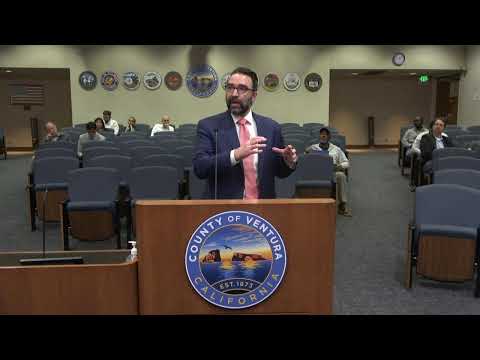
A consultant group presented a year‑long staffing analysis to the Fox Canyon Groundwater Management Agency on Feb. 12 and concluded the agency is currently understaffed for the work it must perform.
Consultant Jim Beck and his team detailed a bottom‑up review of work tasks, interviews with agency staff and an accounting of one‑time and recurring efforts. The report estimated the agency needs roughly 20 full‑time equivalents (FTEs) to carry out current priorities and periodic workload spikes; the agency’s existing headcount at the time of the meeting was closer to 12–15 staff performing those tasks.
“The bottom line: you’re understaffed,” Beck told the board, describing both the gap in routine capacity and additional one‑time requirements tied to multi‑year evaluations and SGMA‑related duties. Consultants noted current time‑tracking does not capture overtime and that some work now contracted to third parties would be more efficiently handled in‑house if staffing were increased.
Consultants recommended a deliberate, phased approach to hiring and emphasized the need for competitive compensation and for time set aside for employee development, supervision and strategic planning. Beck also described a second, larger option — evaluating whether a different management structure (for example, contracting operations to an outside firm) could be more cost‑effective — but warned that transition risks are high and such a change requires a long‑term commitment.
Board members pressed for practical next steps. Director Tremblay and others said the board needs a concrete implementation plan that phases new hires and prioritizes the highest‑value tasks; board members asked staff to return with a draft staffing implementation plan that sequences hires and identifies which contracted tasks should be converted to staff work. Interim Executive Officer Arnie Anselm said staff would prepare that plan for board consideration.
The board received and filed the consultant report. No personnel hires were authorized at the meeting; members emphasized that any hiring should be phased, competitive and accompanied by an onboarding plan so new employees become fully productive without disrupting current operations.