Get Full Government Meeting Transcripts, Videos, & Alerts Forever!
Get email alerts on the Legislation Gsp Validation topic
No spam. Unsubscribe anytime.
Fox Canyon GMA backs bill to limit court review of groundwater sustainability plans
Summary
The Fox Canyon Groundwater Management Agency voted to support a legislative proposal that would make a statutory validation proceeding the exclusive, time-limited forum for challenging technical findings in groundwater sustainability plans.
The Fox Canyon Groundwater Management Agency on Feb. 12 voted to back a legislative proposal that would make a validation proceeding under Water Code section 10726.6 the exclusive and time-limited method for challenging technical findings in groundwater sustainability plans (GSPs).
The board voted, by roll call, to authorize the chair to sign a letter of support. Chair West and Directors Lopez and Tremblay voted in favor; Director Craviotto voted no.
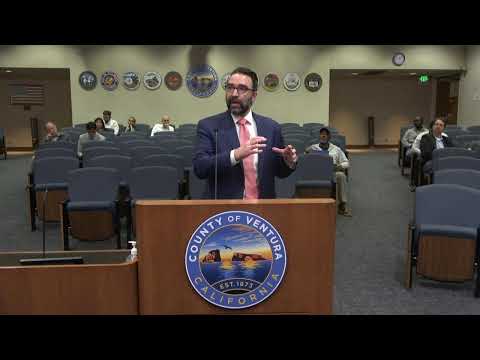
Proponents, who include attorneys for the Indian Wells Valley Groundwater Authority and other water agencies, told the board the bill would clarify existing law and speed GSP implementation. “The bill is designed to just clarify what’s supposed to already be the law,” said Kyle Brochard, an attorney for the Indian Wells Valley Groundwater Authority, in public comment. He told the board that allowing repeated technical challenges in separate court proceedings can be expensive and delay the projects and infrastructure the plans contemplate.
Opponents urged caution. Russell McLaughlin, counsel for the Las Posas Farming Group and the OPV Coalition, said the proposal would remove a layer of judicial review that has for decades provided a neutral forum to test technical modeling and allocations. “This legislation seeks to eliminate the checks and balances that are afforded by the comprehensive adjudication statute,” McLaughlin said, arguing that adjudications and court oversight have helped parties negotiate durable, enforceable solutions in contested basins.
Agency staff and outside counsel framed the proposal narrowly: it would limit duplicative litigation over technical findings such as a basin’s sustainable yield, while leaving implementation challenges, allocation disputes and other remedies available through existing processes. During discussion, board members referenced recent local adjudications and the complexity of balancing court involvement with timely plan implementation.
The board’s action was to approve sending a letter of support and did not itself change local policy or operations. The proposal as presented would not affect finalized court judgments, but agency staff said it could apply to adjudications that are still pending.
The vote: Chair West — yes; Director Lopez — yes; Director Tremblay — yes; Director Craviotto — no.