Get Full Government Meeting Transcripts, Videos, & Alerts Forever!
Get email alerts on the Parks And Recreation topic
No spam. Unsubscribe anytime.
Arboretum San Antonio outlines master plan, aims for $25 million bond ask for first phase
Summary
Arboretum San Antonio briefed the City Council on Feb. 12 on a nearly complete master plan for a proposed 200‑acre arboretum on Southeast Military Drive, noting a planned April 2025 master‑plan finish, a tree nursery, and a proposed $25 million request for the 2027 bond to help fund phase one.
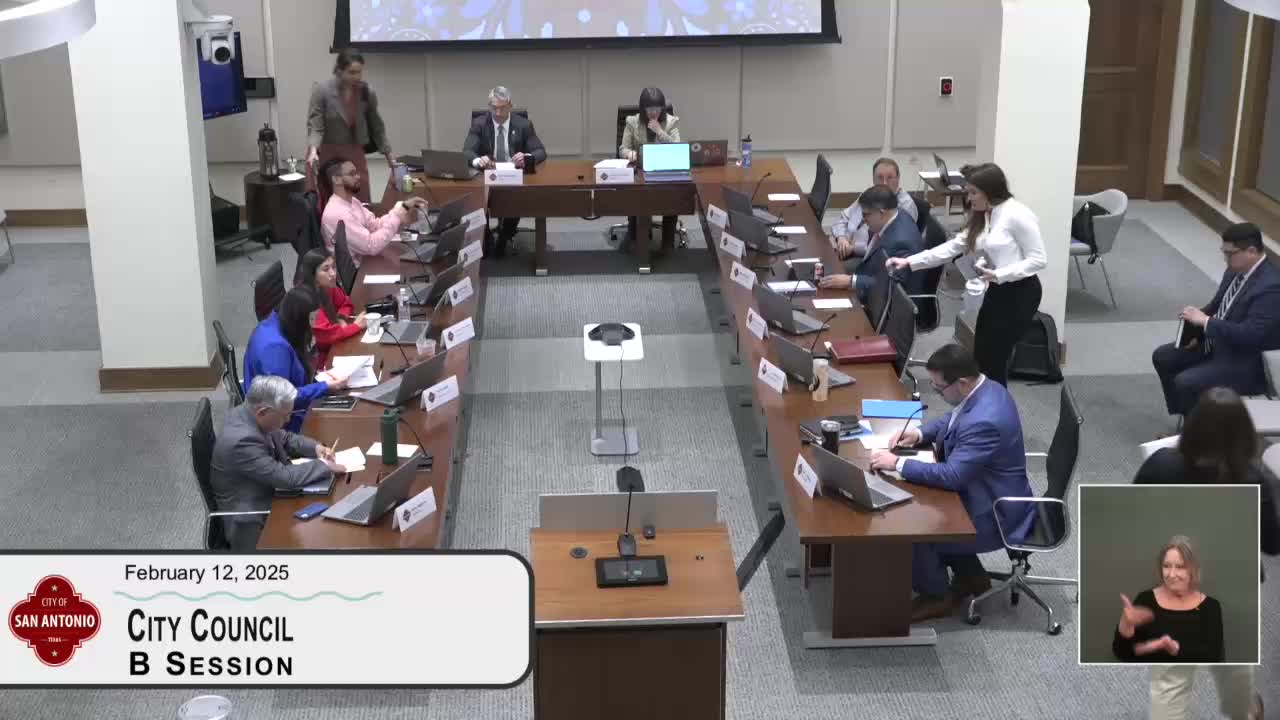
City and nonprofit leaders on Feb. 12 briefed the San Antonio City Council on the Arboretum San Antonio master planning process, saying the project aims to convert an 188‑acre former golf course on Southeast Military Drive into a free, publicly accessible arboretum and that the group plans to seek $25 million in the 2027 municipal bond for phase one.
The Arboretum San Antonio has nearly completed a master plan and expects to finish work in April 2025, Henry Cisneros, founder of Arboretum San Antonio, told the council. “This is not an arboretum that is just a physical place, but it's a concept, and the concept is appreciate San Antonio's tree cover, our tree canopy,” Cisneros said.
The nonprofit told council members the site is an initial 188 acres, with the organization under contract to purchase roughly 18.5 adjacent acres including a parking lot and several buildings; that purchase would bring the total to about 200 acres. The group said it has planted roughly 140 tree seedlings at an on‑site nursery and is developing water infrastructure and other operations planning while the master plan is finalized.
Arboretum leaders described a three‑part master plan — strategic, site and operations plans — with an added fourth deliverable covering community engagement. Tom Courser, the interim CEO, said Sasaki, an international design firm, is the lead master‑planning consultant and that about 18,000 people have been reached through the engagement process.
The group outlined anticipated funding sources and phasing rather than a final cost estimate. Courser said the organization views a $25 million ask in the 2027 bond as “a number that we feel comfortable covers us in terms of what phase 1 will land,” but he and other presenters stressed additional fundraising, grants and philanthropy would be required and that $25 million would not fund the entire project.
Council members asked about public access, connectivity to the Howard Peak Greenway and Mission Reach trail systems, neighborhood impacts, equity and safety. Courser and other presenters said the arboretum would be free to the public, and Courser stated during the meeting that “the fundamental point that Henry was adamant about about this arboretum is that it's going to be free to the public.”
Presenters said the arboretum borders Salado Creek, is adjacent to Brooks, and will connect to existing trailheads. Leo Gomez of Brooks described coordinated plans and an MPO award to Brooks for a project to take trails under Highway 37 and connect to Solado Creek; the arboretum team said two points of trail access are planned across Southeast Military Drive and near Woodbridge at Monte Viejo.
Council members pressed for clarity about the master plan's final cost, the share $25 million would cover, and how the arboretum would complement — not supplant — the city's park system. Council member Rocha Garcia said, “I wanna ensure that while things are moving and the community engagement is taking place, that we keep the sustainability component at the forefront.” Several council members asked that Parks and Recreation and Sustainability staff be closely involved if bond funding is pursued.
The nonprofit said it has an 18‑acre area reserved for a county‑funded accessible children’s play site; presenters credited a $7.3 million county contribution and said the county and local officials are working with the arboretum on that element. Courser described the site as largely in the floodplain, with heritage trees and existing cart paths from the former golf course that can be repurposed.
Adriana Quinones, the new CEO, said the project will emphasize inclusive access and continuity with local workforce and education partners such as Palo Alto College, which the presenters said is assisting with irrigation and tree‑nursery maintenance. The organization also said some consultant dollars have been retained locally and that an additional 18 acres at the front of the site would accelerate opening by providing parking and existing buildings that could be repurposed.
Council members expressed broad interest but asked for more detailed, itemized cost estimates and a clearer breakdown of other funding sources before any formal bond request. Several members said they support a free, publicly accessible facility and recommended a future B session briefing when the master plan is finalized.
The arboretum team said it will return with a final plan and that staff and the board intend to continue working with city departments on connectivity, safety, accessibility and phasing. The council did not take formal action; the item was presented as a briefing and status report.