Get Full Government Meeting Transcripts, Videos, & Alerts Forever!
Get email alerts on the Dual Achievement Program topic
No spam. Unsubscribe anytime.
Committee hears bill to make TCSG dual‑achievement pilot permanent after four years of enrollment gains
Summary
House Bill 217 would make permanent a dual‑achievement pilot program run by the Technical College System of Georgia that lets students who have dropped out finish a high school diploma while earning technical credentials; sponsors presented enrollment and outcome figures and asked the committee for further consideration.
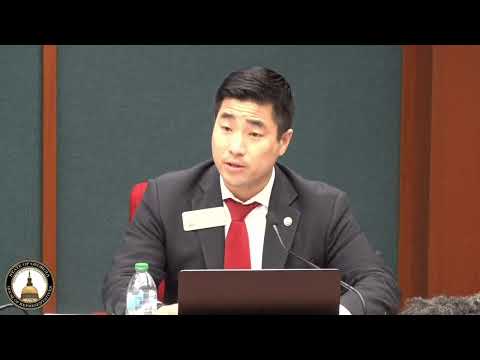
Representative Hong presented House Bill 217 to make permanent a dual‑achievement pilot that allows students who have withdrawn from high school to complete remaining high‑school coursework at participating technical colleges while also earning technical certificates.
The pilot was created by SB 204 in 2021 and operates at five pilot sites: Albany Technical College, Athens Technical College, Atlanta Technical College, Central Georgia Technical College and Chattahoochee Technical College. Representative Hong told the committee the program has enrolled more than 2,300 students since inception. Testimony and system officials reported that, to date, 344 students have earned a high‑school diploma through the program and 898 have earned at least one college credential.
Mark Peevey of the Technical College System of Georgia (TCSG) appeared at the hearing and described the program structure: students must have completed six required high‑school courses, be withdrawn from high school, sign a waiver and be between 16 and 21 years old to participate. TCSG submitted that the pilot served 982 students in February of one reporting year and that cumulative enrollment has been 2,322 since the program started. Peevey said the most common technical credentials earned include automotive technology, welding, computer networking, criminal justice and early childhood education.
Committee members asked about funding and placement. Peevey said initial pilot funding was appropriated to start the five sites and cover high‑school‑phase instructors and support staff; once students move into the technical portion they are funded according to the technical college funding formulas and are eligible for HOPE and other standard student aid as applicable. TCSG officials said the program’s placement metrics are consistent with the system’s high placement rates for technical programs; TCSG told the committee its direct field placement rate is roughly 93 percent and placement including continued education is about 99 percent, and staff said these students are included in those outcomes.
Several members asked procedural questions about eligibility (ages, readiness assessments, services for students with disabilities) and about geographic expansion; TCSG said the five pilot colleges were early volunteers and that the system uses e‑campus and partnership arrangements to extend access beyond the five locations. The committee did not take a final vote; sponsors asked the committee to schedule the bill for further consideration and indicated that additional appropriations requests would go through the standard budget process if needed.