Get Full Government Meeting Transcripts, Videos, & Alerts Forever!
Get email alerts on the Public Health topic
No spam. Unsubscribe anytime.
County agencies ask supervisors for help as unpermitted pop‑up food vendors spread into unincorporated Monterey County
Summary
Environmental Health and Housing & Community Development told the Planning Commission that pop‑up taco vendors operating without health permits are presenting food‑safety and enforcement challenges; the commission voted to forward the presentation and request additional resources and interagency enforcement to the Board of Supervisors.
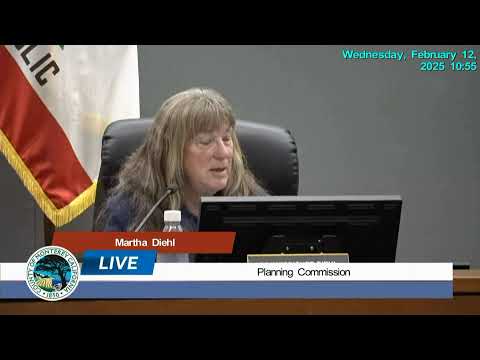
County environmental health and planning staff told the Monterey County Planning Commission on Feb. 12, 2025 that a recent influx of unpermitted pop‑up food vendors operating in unincorporated Monterey County poses public‑health and enforcement challenges, and staff requested assistance from law enforcement and the District Attorney’s Office.
Armando Gonzales, supervising environmental health specialist, said environmental health received 66 complaints about unpermitted vendors in the current fiscal year and described frequent hazards observed during field responses: food from unapproved sources, lack of refrigeration, absence of hand‑washing stations, unsafe propane storage near open flame, and cross‑contamination of raw and cooked foods. Gonzales said inspectors have encountered intimidation and uncooperative vendors, and that environmental health inspectors are not peace officers, do not carry radios or weapons, and have limited authority to require identification or confiscate equipment without law enforcement support.
Gonzales and staff outlined the enforcement gap: - California law (Senate Bill 972) decriminalized some food vending on public sidewalks but does not exempt larger‑scale food preparation activities; the retail food code requires essential facilities (restrooms, hand‑washing) for many types of food preparation and sales. - Environmental health staff are able to provide education and to offer existing permit pathways (mobile food facility permits, farmers’ market or special event permits, cottage food permits, and others) but said many pop‑up vendors lack the physical infrastructure to qualify for those permits. - Inspectors reported that some vendors appear to travel from other counties and use nearly identical equipment and set‑ups at different locations, limiting inspectors’ ability to trace operators through identification or licensing.
Gonzales described a local example: inspectors documented unsafe cooking and storage practices at a site on Salinas Road and said equipment configurations and food handling raised concern for foodborne illness and immediate hazards (propane near open flame, bare‑hand handling of cash and food). He also raised one notable incident: environmental health was notified of a suspected mushroom‑poisoning hospitalization tied to mushrooms purchased from a truck vendor in East Salinas on New Year’s Eve; the department flagged such incidents as an example of the risk these operations can pose.
Katie Scarry, assistant planner with Housing & Community Development, reviewed land‑use constraints: Monterey County Code generally prohibits vending from parked vehicles or within the public right of way in unincorporated areas, and the county’s zoning regulations can be applied to mobile food facilities considered restaurants or eating establishments. Scarry said HCD is drafting a formal interpretation to clarify when a mobile food facility is subject to county zoning and land‑use permitting. She also noted that county sign, noise and parking codes could be applicable and that coordination with Public Works, Facilities and Parks would be useful.
Staff requested increased enforcement resources, including coordinated responses with the Sheriff’s Office and county code enforcement, authority to request operator identification and confiscate food and equipment, and the possibility of misdemeanor prosecution through the District Attorney’s Office for noncompliance under Health and Safety Code §114395. The District Attorney indicated a willingness to pursue misdemeanor charges where appropriate, staff said. Staff pointed to a City of Salinas case study in which retired officers formed a task force to proactively patrol and enforce against unpermitted vendors.
After discussion, the Planning Commission voted unanimously to send the presentation and a referral memo to the Board of Supervisors asking the board to consider directing additional interagency enforcement resources and to review county responses to unpermitted mobile food operations. Commissioners asked that the presentation slides be shared with the commission and recommended that any memo emphasize the public‑safety risks to customers, the risks to inspectors in the field, and the need for enforcement presence during the hours these vendors operate.
What this means: Environmental health will continue education and permit assistance for vendors seeking compliance, but county staff said more coordinated enforcement and resources from law enforcement, the district attorney and county departments will be needed to address organized, unpermitted operations successfully.