Get Full Government Meeting Transcripts, Videos, & Alerts Forever!
Get email alerts on the Manufacturing Sales Tax Exemption topic
No spam. Unsubscribe anytime.
Senate panel keeps manufacturing sales-tax exemption permanent after rejecting reporting amendment
Summary
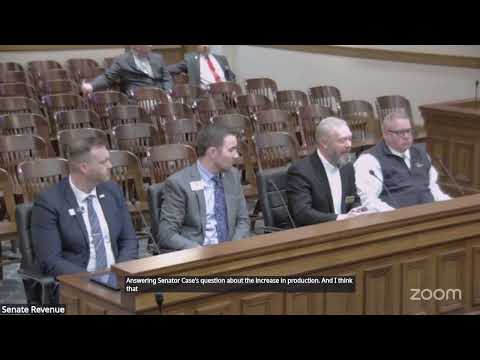
The Senate Revenue Committee voted 3–1 to remove the sunset on the manufacturing sales-and-use tax exemption in House Bill 11, after testimony from mining, manufacturing and economic-development representatives and a Department of Revenue briefing on past reporting limitations.
The Senate Revenue Committee on Thursday voted 3–1 to approve House Bill 11, which removes the sunset provision for Wyoming’s manufacturing sales-and-use tax exemption, making the exemption permanent.
Supporters told the committee the exemption helps Wyoming retain and attract manufacturing and mining-related investments. Jody Levin, representing the Trona industry, said, “The entire US soda ash market is in Sweetwater County in about a thousand, square miles,” and described manufacturing tied to trona processing as both concentrated and export-oriented.
The bill’s backers said the exemption affects a wide range of Wyoming manufacturers — from large trona and bentonite processors to smaller metal shops and bakeries. Travis Detai of the Wyoming Mining Association and other industry witnesses said the exemption keeps local operations competitive and supports capital investment and high-paying jobs. Kylie Doerr of Admiral Beverage Corporation described equipment investments at the Worland plant and told the committee the exemption helped the company invest in a new blow-molder and other upgrades.
Brett Fanning, excise tax administrator at the Wyoming Department of Revenue, told the committee the department supports the clarifying statutory adjustments in the bill and noted previous administrative challenges tied to classification and reporting. “The last exemption survey ... was 38%,” Fanning said, and added, “Of that 38%, we had $4,300,000 in tax foregone,” reflecting incomplete responses to earlier voluntary reporting efforts.
Senator Case proposed an amendment to reintroduce a reporting requirement that would require businesses using the exemption to report exempted purchases, related employment, and other measures to improve legislative oversight. The committee debated the administrative burden and historical response rates; the amendment failed on voice vote. The committee then moved and passed the engrossed bill, which removes the 10-year sunset and leaves in place the conforming statutory language clarifying which machinery and equipment qualify.
Committee members recorded the roll-call vote on final passage: Senator French, Senator Eyde and Chairman McEwen voted aye; Senator Case voted no; Senator Pappas was excused. The clerk reported the tally as three ayes, one no and one excused.
Supporters framed the bill as a tool to secure manufacturing investment across Wyoming: witnesses cited examples including a recent $380,000,000 trona expansion that yielded about 20 new jobs, two pending trona projects they described as totaling more than $9,000,000,000 with projected hundreds of new jobs, Admiral Beverage’s multimillion-dollar equipment investments, and testimony that 47 other states offer similar manufacturing exemptions. Department of Revenue testimony noted about 1,342 firms on its rolls classified as manufacturers and that historical estimates of tax foregone have ranged from a few million dollars up to about $18,000,000 depending on project activity and survey response rates.
The committee closed public comment after questioning and advanced House Bill 11 without the reporting amendment. The bill now proceeds per committee practice.
The committee’s action left unresolved the policy trade-offs the amendment sought to address: supporters warned that an added reporting requirement could be administratively burdensome for some small firms and for the department; proponents of reporting said better, consistent data would help the Legislature evaluate whether the exemption meets its stated goals.