
Santa Clara staff and organizers discuss new fee categories, turf pricing and field prioritization
Get AI-powered insights, summaries, and transcripts
Sign Up Free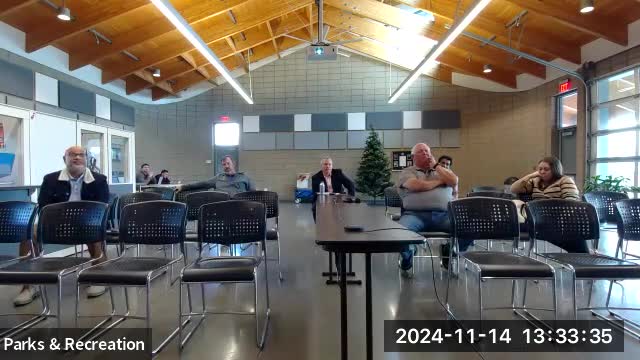
Summary
Parks staff presented fee benchmarking and prompted organizers to endorse a priority framework that would give Santa Clara youth-based groups preferential field access and create separate rates for adult nonprofits, residents and commercial users.
Santa Clara Parks and Recreation staff and community sports organizers discussed proposed changes to field-use categories and fees, including higher charges for turf fields, clearer priority rules for Santa Clara-based youth organizations and separate rates for adult nonprofit and commercial users.
Staff presented benchmarking data from neighboring jurisdictions and materials from the Santa Clara Unified School District, noting that the city's cost-recovery policy had previously lumped all nonprofits into a single category. The discussion focused on restoring more granular categories: first priority for city programs and Santa Clara-based youth organizations with more than 50% Santa Clara participants (residents or students who attend Santa Clara schools); then adult resident nonprofits; then resident non-nonprofit or recreational groups with lower residency percentages; and, finally, nonresident and commercial/for-profit users.
A staff member summarized the recommended framework: "City programs and nonprofit Santa Clara organizations serving more than 51% youth get first priority," followed by Santa Clara adult nonprofits, resident non-profit groups with mixed age rosters and commercial or nonresident renters at the bottom of the priority list. Participants discussed how to verify residency and roster percentages, with staff noting that the school district requires annual proof for some categories and that the city could require rosters and documentation.
Organizers raised operational issues including how to treat competitive teams whose competitive and recreational rosters are combined for organizational purposes. Several participants said combining rosters can mask the competitive program's true residency percentage; staff acknowledged determining priority will require relying on the documentation organizations provide and noted the practical limits of detailed vetting.
Staff also explained past problems with organizations overbooking fields when fees were zero or very low, and said adopting hourly fees tied to actual use reduced blocking and improved field availability. The consultant's benchmarking showed the city's prior flat fee (for many nonprofits) had been about $14 per unit in past schedules; staff said the analysis will examine raising turf-field fees and other adjustments designed to keep overall revenue neutral while better matching fees to field-maintenance costs.
Participants asked staff to return with proposed new rates and an analysis of revenue impacts. Staff said the city would update the fee numbers and return to the committee, with the goal of maintaining revenue while shifting costs toward higher-use turf fields and commercial renters.
Staff emphasized there were no immediate billing changes: groups that submitted reservations for January'May will be scheduled but not billed while the policy and fee schedule are finalized. The committee agreed to continue the conversation at follow-up meetings and invited feedback from organizations outside the meeting.