Get Full Government Meeting Transcripts, Videos, & Alerts Forever!
Get email alerts on the Board Votes topic
No spam. Unsubscribe anytime.
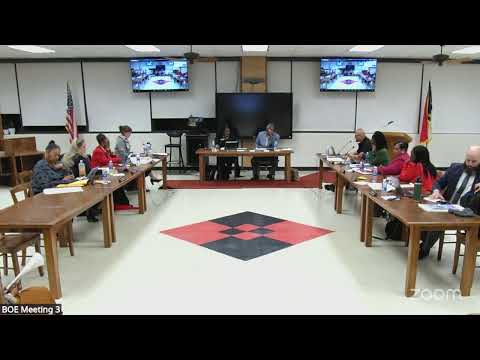
Board approves 2025–26 calendar, E-Rate bids and state budget amendment; moves to closed session
Summary
During the meeting the board approved the 2025–26 school calendar, E-Rate bond bids and a state budget amendment (Amendment No. 3); it then voted to enter closed session under state statute for confidential personnel matters.
The Hoke County Board of Education voted on several action items during the meeting, approving the district calendar for the 2025–26 school year, E-Rate bond bids and a state budget amendment titled 'state amendment number 3.' The board also voted to enter a closed session citing state statute for confidential personnel matters.
A motion to approve the 2025–26 school calendar was made and seconded; the motion carried with board members responding “aye” and no opposition recorded in the meeting transcript.
The board next approved action on E-Rate bond bids after a motion and second; the minutes transcribed the affirmative vote as “aye” with no opposition recorded. The presenter indicated the E-Rate item had been discussed during a prior meeting.
For the state amendment number 3, a district staff member presented budget adjustments: the presenter said the previous balance was $77,055,182.72, net adjustments totaled $416,509.52 and the amended state budget would be $77,471,692.24. The packet identified affected program reference codes (PRCs) including PRC 9 (noncontributory employee benefits), PRC 13 (career technical education months of employment), PRC 16 (summer reading camps), PRC 48 (principal and other teacher performance bonuses) and a new allocation for PRC 63 (children with disabilities and special funds); staff also described a direct-purchase allocation for bus enhancement funds. A motion to approve the state amendment was made and seconded; the motion carried with “aye” votes and no recorded opposition.
Finally, the board voted to enter closed session under North Carolina law to discuss confidential personnel matters; the motion to go into closed session was made, seconded and approved with “aye” votes and no recorded opposition. The presenter cited the North Carolina General Statutes as the authority for the closed session.
No roll-call tallies with individual board member votes were provided in the transcript; the actions were recorded by motion/second and unanimous “aye” responses with no recorded 'no' or 'abstain' votes.