Get Full Government Meeting Transcripts, Videos, & Alerts Forever!
Get email alerts on the School Budget topic
No spam. Unsubscribe anytime.
Ocean Township schools face multimillion-dollar shortfall; tentative budget due March 19
Summary
District officials presented a draft 2026 budget showing a gap of roughly $4.3 million before waivers and $3.6 million after available waivers; administrators will revise program and personnel requests before the board adopts a tentative budget by March 19.
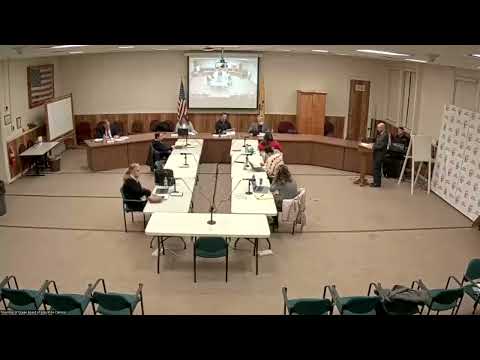
Mr. Hastings, the district’s business administrator, told the Board of Education on Feb. 11 that preliminary budget work for fiscal 2026 shows rising costs and uncertainty in state and federal aid.
The district’s current-year revenues for 2025 are $85,900,000 and projected revenues for 2026 — if the local tax levy is increased by the 2% cap — would be roughly $87,500,000. The administration’s preliminary expenditure estimate for 2026 is about $91,700,000, producing a gap of about $4,300,000. After applying an available health-care waiver (about $450,000) and roughly $200,000 in unused “bank cap” from prior years, the remaining deficit is about $3,600,000, Hastings said.
Why it matters: the district must adopt a tentative budget by March 19 and present a final budget between April 24 and May 7, according to the timetable Hastings set out. At the same time, the state budget and the School Funding Reform Act (SFRA) changes remain unsettled, meaning the numbers the district ultimately receives from Trenton could change after the local deadlines.
Hastings told the board that several cost drivers are outside local control: projected health-insurance premium increases of 15–20 percent; expected utility increases of 20–30 percent following recent regional capacity changes and higher commodity costs; and advice to reduce estimates of federal grant funding under ESSA and IDEA. He said out-of-district special-education placements and transportation also remain significant cost pressures.
Board members pressed for details. Miss Gilman, the district’s New Jersey School Boards Association representative, said the broader funding picture is “pretty dire” and urged administrators to make tough choices. Miss Talarico asked how much shared services has saved the district; Hastings said the district receives revenue from shared custodial services and uses cooperative purchasing for commodities, and that staff would provide specific savings figures later this week.
Hastings said administration will return in the next several weeks to reexamine capital requests, personnel and program lists, and technology items to produce a revised draft budget for the board’s March 11 meeting. He emphasized that the state releases final district-aid figures about 48 hours after the governor’s budget address; until then, some inputs remain estimates.
The board discussed ramifications if the gap is not closed, including program reductions, personnel cuts and larger class sizes. Several board members said they would continue to press legislators and seek grants, but that local choices may be required if state and federal funding do not materialize.
Ending: Hastings and the board scheduled a work sequence: administration will return with revised numbers and cost-cutting options before the March 11 meeting, when the board expects to vote on a tentative budget. The board also noted the county review step between tentative and final adoption.